First Impressions
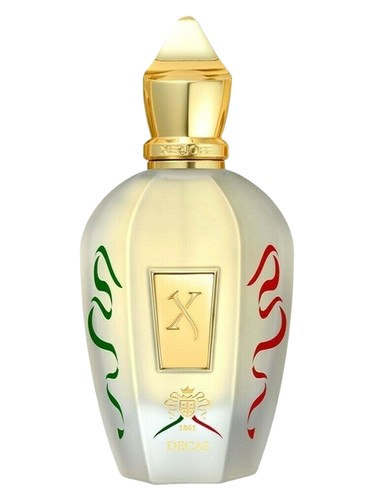
The first spray of XJ 1861 Decas announces itself with an audacity that borders on aggressive. Calabrian mandarin bursts forth not as a polite citrus greeting but as a radiant halo around something far stranger—tuberose and tobacco engaged in an unlikely tango, their combined effect more surreal than sensual. This is not the Xerjoff of gentle Italian refinement; this is the house showing its experimental edge, and within seconds, you''ll know whether you''re intrigued or overwhelmed. The projection is nothing short of nuclear, filling a room before you''ve had time to process what exactly has just landed on your skin.
Released in 2021 as part of the prestigious Decas collection, XJ 1861 Decas presents itself as a feminine fragrance, though gender seems almost beside the point when faced with something this deliberately unconventional. With 1,153 ratings averaging 4.02 out of 5, the numbers suggest appreciation, but the reality is more complicated.
The Scent Profile
The opening trio of Calabrian mandarin, tuberose, and tobacco creates an immediate cognitive dissonance. The mandarin provides brightness but not freshness—instead, it seems almost candied, synthetic in its intensity. The tuberose, typically a creamy, heady floral, reads more abstract here, while the tobacco adds a leathery, resinous quality that prevents any softness from taking hold. This is tuberose as concept rather than botanical reality.
As XJ 1861 Decas transitions to its heart, benzoin and opoponax introduce a balsamic sweetness that begins to make sense of the chaos. Italian orris root attempts to add powdery sophistication, and you can sense the perfumer''s intention—a bridge between the jarring opening and what promises to be a luscious base. Yet the orris struggles to assert its aristocratic elegance against the sheer volume of resinous sweetness.
The base notes of resin, Bourbon vanilla, and musk finally reveal the fragrance''s true character: an amber-dominant composition (registering at 100% on the amber accord) with significant vanilla support (52%) and balsamic undertones (45%). The vanilla is thick and almost烟雾-like, wrapped in enough resin and musk to prevent it from becoming dessert-like. The 35% powdery accord from the orris makes a late appearance, softening the edges after hours of wear. What emerges is undeniably warm, undeniably sweet, but executed with such intensity that "wearable" becomes a relative term.
Character & Occasion
The data tells an interesting story: XJ 1861 Decas scores perfectly for fall wear (100%) and near-perfectly for spring (99%), suggesting it thrives in transitional weather. Winter compatibility at 79% and even summer at 74% indicate remarkable versatility—or perhaps that its extreme projection makes seasonal considerations secondary.
Day wear scores at 95%, notably higher than its 76% night rating, which seems counterintuitive for such a bombastic fragrance. Perhaps this speaks to the mandarin''s brightness preventing it from becoming a true evening seductress, or maybe it''s simply too much for the intimate spaces where evening fragrances usually shine.
The comparison to fragrances like Grand Soir by Maison Francis Kurkdjian and Herod by Parfums de Marly places it squarely in the luxury amber-vanilla category, though XJ 1861 Decas takes the genre in decidedly weirder directions.
Community Verdict
Here''s where reality crashes into the 4.02 rating: the Reddit fragrance community sentiment scores a concerning 3.5 out of 10, decidedly negative. One reviewer even listed it among 2022''s worst releases. This disconnect between numerical ratings and actual enthusiasm is telling.
The community acknowledges genuine positives: Xerjoff''s generous sampling program means you can test before investing, and there''s respect for its "unique and distinctive scent profile." For adventurous collectors, the composition offers something genuinely different.
But the criticisms are damning. The consensus describes it as lacking broad appeal, with many finding it "overly synthetic or strange." The extreme projection—mentioned repeatedly—requires what one commenter called "minimal application," turning every wear into a calculation. Perhaps most tellingly, the community notes it "takes significant time to appreciate or understand the scent," which is rarely a compliment in a market overflowing with immediately gratifying options.
The recommendation? Fragrance collectors seeking unconventional scents, niche enthusiasts with adventurous taste, and those interested in layering experiments. Notably absent: anyone seeking a signature scent or straightforward luxury.
How It Compares
Among its similar fragrances, XJ 1861 Decas occupies the rebellious corner. Grand Soir offers amber elegance; Herod provides tobacco warmth with crowd-pleasing appeal; Noir Extreme delivers drama without alienating. XJ 1861 Decas, by contrast, seems almost confrontational—daring you to find it beautiful, refusing to meet you halfway.
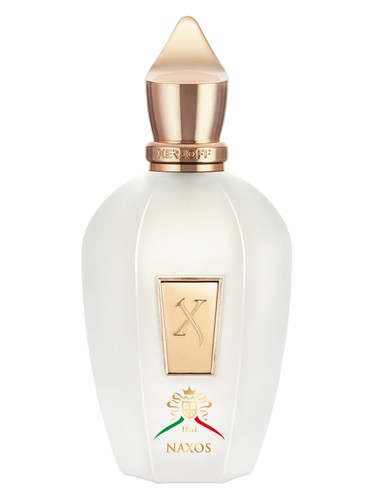
In Xerjoff''s own catalog, it represents the house at its most experimental, a departure from the refined Italian sensibility that defines releases like Naxos or Renaissance.
The Bottom Line
XJ 1861 Decas is a fascinating failure or a niche triumph, depending entirely on your perspective. That 4.02 rating from over a thousand voters suggests it has its defenders, but the negative community sentiment reveals a fragrance that works beautifully for a small minority while puzzling or actively repelling the majority.
Should you try it? Absolutely—this is exactly what sampling exists for. The composition is genuinely unusual, and for collectors building a cabinet of olfactory curiosities, it offers something money rarely buys: weirdness from a prestigious house.
Should you blind-buy a full bottle? Almost certainly not. Even enthusiasts recommend sampling or layering rather than committing to the full experience.
XJ 1861 Decas asks an important question about modern perfumery: does artistic experimentation require commercial palatability? Xerjoff has answered firmly in the negative, creating something bold and uncompromising. Whether that boldness translates to beauty remains, quite literally, a matter of personal interpretation.
AI-generated editorial review