First Impressions
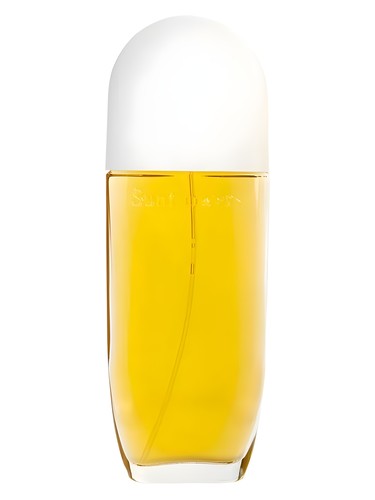
The first spray of Sunflowers is an unabashed burst of optimism. There''s no subtlety here, no quiet whisper of fragrance—this is a full-throated announcement of summer. Melon and peach crash into citrus in a wave that feels both retro and surprisingly resilient. It''s the olfactory equivalent of a yellow sundress and chunky platform sandals, a time capsule from 1993 that refuses to fade quietly into the archives. The opening is heady, sweet, and unmistakably cheerful—but also, as many have discovered, a warning sign for those whose chemistry doesn''t play well with fruit-forward compositions.
Elizabeth Arden captured something specific with Sunflowers: the democratization of joy. This wasn''t a fragrance for special occasions or evening elegance. It was bottled sunshine for everyone, accessible and unapologetic. That philosophy remains evident in every spritz, for better or worse.
The Scent Profile
The opening act delivers exactly what the name promises—brightness, warmth, and an almost aggressively sunny disposition. Melon leads the charge, supported by peach''s fuzziness and a citrus quartet of lemon, mandarin, bergamot, and orange blossom. Brazilian rosewood adds a subtle woodiness that hints at the structure beneath all that fruit, though it''s easily overshadowed by the juicier elements in these first minutes.
As the initial sweetness settles, the heart reveals a more traditional floral bouquet. Cyclamen brings a green, slightly peppery quality that tempers the fruit, while osmanthus contributes its characteristic apricot-leather nuance. Rose and jasmine provide classic floral elegance, and orris root adds a powdery sophistication that feels like the fragrance taking itself slightly more seriously. This middle phase is where Sunflowers finds its balance—the fruit recedes just enough to let the flowers speak, creating that fruity-floral harmony that defined an entire era of perfumery.
The base, however, is where opinions truly diverge. Amber, sandalwood, and musk form a surprisingly substantial foundation for what begins as such a light, airy composition. Cedar and oakmoss add depth and a touch of chypre-like earthiness, creating a drydown that''s considerably heavier than the opening suggests. This musk-heavy base is precisely what causes headaches for some wearers while providing impressive longevity for others. It''s a tug-of-war between old-school perfume construction and modern freshness that doesn''t always resolve cleanly.
Character & Occasion
The data tells a clear story: Sunflowers is a summer daytime fragrance, and it knows its lane. With 91% of wearers reaching for it in summer and 100% considering it a day scent, this is not a perfume with an identity crisis. Spring claims 64% of the seasonal vote, making it the obvious choice for garden parties, weekend errands, and any occasion that involves sunlight and casual clothing.
Fall (29%) and winter (11%) wearers are the outliers, the rebels who''ve found a way to make this work in cooler weather—perhaps with lighter application or simply through the power of scent memory overriding seasonal convention. The night-wearing 12% are likely those for whom Sunflowers has become such a signature that they''re immune to its "daytime only" reputation.
This is a fragrance for someone who values approachability over mystique, brightness over sophistication. It''s for the person who wants their perfume to smile, who isn''t chasing compliments in dimly lit restaurants but rather seeking a reliable companion for everyday living. The nostalgic appeal is significant—many wearers report strong emotional connections from the 90s, when Sunflowers represented affordable luxury and aspirational femininity.
Community Verdict
The community sentiment scores a middling 6.5 out of 10, and those 47 opinions paint a picture of a fragrance that inspires devotion and discomfort in nearly equal measure. The pros are compelling: genuinely long-lasting wear that carries through a full day, a balanced composition that hasn''t aged as poorly as some 90s contemporaries, remarkable affordability, and that powerful nostalgic pull.
But the cons are impossible to ignore. The most frequent complaint centers on how "heady" or "heavy" the fragrance becomes, particularly in warm weather—ironic for a scent so clearly designed for summer. Multiple users report headaches or breathing discomfort, suggesting that the musk-heavy base simply overwhelms certain body chemistries. Even those who appreciate the fruity-floral top notes often find themselves battling that persistent musky drydown.
The overall rating of 3.48 out of 5 from nearly 6,000 votes confirms this division. It''s not poorly made or offensive, but it''s far from universally beloved. It works beautifully for some and fails spectacularly for others, with little middle ground.
How It Compares
Sitting alongside comparisons to Dior''s J''adore, Dolce & Gabbana''s Light Blue, and Lancôme''s Trésor feels generous—until you remember that Sunflowers predates most modern fruity florals and arguably helped pave their way. It lacks the polish of those prestige counterparts but shares their fundamental DNA: fruit, flowers, accessibility.
Light Blue offers a cleaner, more modern take on fruity freshness. J''adore brings elegance and refinement that Sunflowers never attempts. But at a fraction of the price, Sunflowers carved out its own territory in the crowded feminine fragrance market and held it for thirty years. That''s worth respecting, even if it''s not your personal taste.
The Bottom Line
Sunflowers is best approached as a historical artifact that happens to still be in production. It captures a specific moment in fragrance history when fruit was revolutionary and accessibility was a virtue, not a compromise. The 3.48 rating is fair—it''s a perfectly competent fragrance that works wonderfully for some and terribly for others.
The value proposition remains unbeatable. For those whose chemistry embraces the composition rather than fights it, Sunflowers delivers hours of cheerful, uncomplicated wear at drugstore prices. But sample first. This is not a blind-buy fragrance unless you''re chasing nostalgia, in which case, the memory might be worth more than the scent itself.
AI-generated editorial review