First Impressions
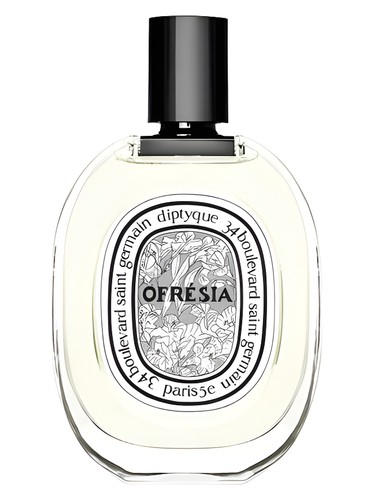
The first spray of Ofresia announces itself with a surprising crack of pepper—not the ornamental whisper you might expect from a floral eau de toilette, but an assertive snap that makes you pay attention. This is Diptyque at its most paradoxical, launching a 1999 fragrance ostensibly about freesia with the kind of spicy opening that belongs in a winter kitchen rather than a spring garden. Yet within seconds, the pepper softens just enough to reveal what lies beneath: the dewy, green-tinged sweetness of freesia beginning to emerge. It''s an introduction that feels deliberately contrarian, as though the perfume is testing whether you''re willing to look beyond convention to find beauty in unexpected juxtaposition.
The Scent Profile
Ofresia''s structure is refreshingly transparent, built on three distinct pillars that never quite blend into seamless harmony—and that''s precisely its charm. The pepper top note dominates those crucial first minutes with a fresh, almost tingling spiciness that reads more white than black, more bright than brooding. There''s a crispness here that clears the palate, preparing you for the heart.
And what a heart it is. Freesia takes center stage with the kind of singular focus that justifies building an entire fragrance around a single floral note. For those unfamiliar with freesia''s particular character, imagine the meeting point between hyacinth''s soapy sweetness and lily''s fresher, greener profile. It''s simultaneously delicate and substantial, ephemeral yet distinctly present. In Ofresia, this freesia note maintains remarkable fidelity to the living flower—slightly powdery, subtly fruity, with that characteristic coolness that makes freesias smell like they''re perpetually damp with morning dew.
The transition to the base is where Ofresia reveals its minimalist philosophy. The woodsy notes aren''t specified beyond that broad categorization, and in practice, they function more as scaffolding than statement. There''s a gentle, almost abstract warmth that grounds the freesia without overwhelming it, a whisper of dry woods that keeps the composition from floating away entirely. This restraint means Ofresia remains predominantly a floral experience from first spray to final fadeout, with the woody base serving as punctuation rather than plot twist.
Character & Occasion
The data tells us Ofresia performs equally across all seasons, and a few wears confirm why: this is a fragrance of moderation, never too heavy for summer nor too light for winter. That pepper opening gives it enough presence for cooler months, while the fresh floral heart keeps it appropriate when temperatures rise. It''s the olfactory equivalent of a well-cut white shirt—adaptable, unfussy, reliably elegant.
What''s particularly interesting is the absence of a clear day or night preference in the community data. Ofresia occupies that rare middle ground where it feels equally appropriate at a morning meeting or an evening dinner, though its character leans decidedly toward daytime sensibilities. The freshness factor—comprising 47% of the accord profile through that spicy opening—prevents it from feeling too formal or nocturnal. This is a fragrance for the in-between moments: brunch, afternoon appointments, early evening drinks that might extend into dinner.
The dominant floral accord, registering at 100% with woody notes trailing at 38%, positions Ofresia firmly in the garden rather than the woods. Yet it never reads as conventionally pretty or safe. That persistent peppery edge gives it an intellectual quality, a slight architectural coolness that might appeal more to those who appreciate perfume as art rather than accessory.
Community Verdict
With a solid 3.8 out of 5 stars from 1,156 votes, Ofresia occupies that interesting territory of being genuinely liked without inspiring the kind of cult devotion that pushes fragrances into 4.5+ territory. This rating suggests a perfume that delivers on its promise—a well-executed floral with distinctive character—without necessarily becoming anyone''s signature scent or desert island pick. The relatively large vote count indicates sustained interest over its 25-year existence, a testament to Diptyque''s enduring appeal and the fragrance''s quiet reliability rather than showstopping brilliance.
How It Compares
Positioned alongside La Tulipe by Byredo, En Passant by Frederic Malle, and Bal d''Afrique by Byredo, Ofresia finds itself in rarefied company—these are fragrances that privilege artistry and nuance over mass appeal. Like En Passant''s lilac reverie or La Tulipe''s minimalist floral portrait, Ofresia commits to exploring a single bloom with intellectual rigor. It shares Un Jardin Sur Le Nil''s fresh spiciness and La Fille de Berlin''s unexpected pepper note, creating a constellation of sophisticated, unconventional florals.
Where Ofresia distinguishes itself is in its relative simplicity. While Frederic Malle''s offering layers cucumber and bread notes into its floral narrative, and Byredo''s fragrances tend toward more complex development, Ofresia maintains laser focus on freesia flanked by pepper and woods. It''s less conceptual than its peers, more direct in its intentions.
The Bottom Line
Ofresia isn''t trying to revolutionize floral perfumery or make bold statements about gender and scent. Instead, it does one thing exceptionally well: it captures freesia''s particular beauty and frames it with just enough spice and wood to make the portrait interesting. That 3.8 rating reflects exactly what you get—a well-crafted, wearable fragrance that never quite reaches transcendent but never disappoints either.
For those building a fragrance wardrobe who want a sophisticated floral that won''t read as overtly romantic or traditionally feminine, Ofresia deserves serious consideration. It''s particularly suited to those who find most florals too sweet or too loud, offering instead a restrained elegance that whispers rather than shouts. At eau de toilette concentration, it won''t last all day, but during its tenure on skin, it provides quietly confident companionship.
Is it essential? Perhaps not. But in a landscape crowded with bombastic florals and overly sweet bouquets, Ofresia''s peppery integrity feels increasingly valuable.
AI-generated editorial review