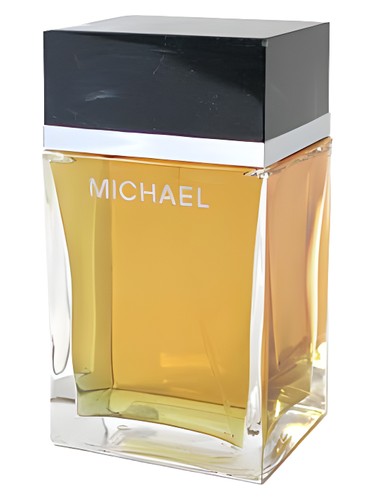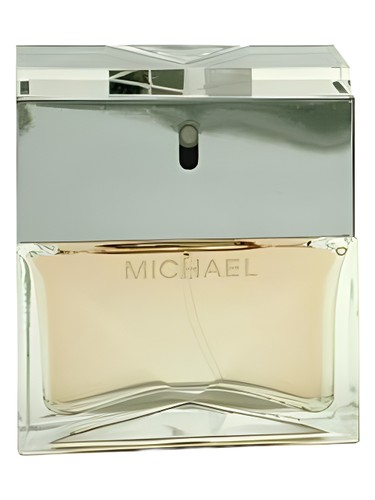
First Impressions
The first spray of Michael transports you immediately to the threshold of a new millennium—a time when white florals weren''t subtle suggestions but bold declarations. This is tuberose at full volume, framed by the unexpected brightness of freesia and the delicate sweetness of Chinese osmanthus. There''s an intriguing counterpoint of tamarind and incense in the opening, lending an almost spiritual quality to what could otherwise be a straightforward floral composition. It''s assertive without aggression, announcing itself with the confidence of a woman entering a room in a perfectly tailored blazer—very Michael Kors, very 2000.
Yet there''s something in that first impression that feels like déjà vu, a scent memory that doesn''t quite align with the present moment. For those who wore Michael in its early years, that disconnect becomes immediately apparent.
The Scent Profile
The opening act is a swirl of contrasts. Freesia provides an airy, almost ozonic freshness, while Chinese osmanthus contributes its characteristic apricot-leather undertones. The tamarind adds an unexpected tangy sweetness, and the incense—subtle but present—lends a resinous depth that prevents the opening from becoming too saccharine. This is a complex introduction that promises sophistication.
As the fragrance settles into its heart, the tuberose emerges as the undeniable star. It arrives with creamy, almost narcotic intensity, flanked by a supporting cast of arum lily and peony that amplify the white floral character. The iris and orris root provide a powdery, slightly rooty elegance that grounds the more exuberant blooms. This middle phase is where Michael truly earns its reputation—a lush, unapologetic white floral bouquet that dominated the early 2000s landscape and still commands attention today.
The base reveals unexpected restraint. Musk provides the foundation, smooth and skin-like, while cashmere wood adds a soft, almost suede-like texture. Vetiver brings a touch of earthy greenness that prevents the composition from floating away entirely into floral abstraction. The dry down is where the "animalic" accord becomes apparent—not aggressively so, but enough to give the fragrance a lived-in, sensual quality that contrasts beautifully with the pristine white florals above.
Character & Occasion
Michael demonstrates remarkable versatility across seasons, scoring highest in spring (83%) and fall (77%), though it holds its own in winter (65%) and summer (61%). This adaptability speaks to its balanced composition—floral enough for warmer months, yet substantive enough for cooler weather when its musky, woody base can truly shine.
The data shows it''s primarily a daytime fragrance (100%), though it transitions respectably into evening wear (77%). This makes sense: the white floral character feels appropriate for professional settings and daytime events, while the tuberose intensity and animalic undertones give it enough presence for dinner or formal occasions.
This is a fragrance for someone who appreciates classic white floral compositions and isn''t afraid of a scent with presence. It suits formal occasions particularly well—the kind of fragrance you''d wear to an art gallery opening or an elegant lunch rather than casual weekend errands.
Community Verdict
Here''s where the narrative becomes complicated. With a respectable 4.12 out of 5 rating from 2,511 votes, Michael clearly has its admirers. The community praises its beautiful tuberose-forward composition, its longevity, and its nostalgic appeal for those who wore it during its early 2000s heyday. The creamy, slightly sweet character still resonates with fans of generous white florals.
However, the sentiment score of 6.5 out of 10 tells a more nuanced story. The most consistent complaint centers on reformulation—the consensus suggests that the original formulation was significantly superior to what''s currently available. Some describe the modern version as overly sweet, even banana-like, a departure from the more sophisticated original. Performance issues emerge as well, with certain wearers experiencing poor longevity despite others praising its staying power—a discrepancy that likely reflects both skin chemistry variations and potential batch inconsistencies.
The availability of older formulations varies, creating a two-tier experience: those lucky enough to own vintage bottles speak of it reverently, while those purchasing new bottles often feel underwhelmed, wondering what the fuss was about.
How It Compares
Michael finds itself in distinguished company, drawing comparisons to J''adore by Dior, Poison by Dior, Alien by Mugler, Flowerbomb by Viktor & Rolf, and Narciso Rodriguez For Her. This is the white floral royalty of the late ''90s and early 2000s—fragrances that defined an era of unapologetic femininity and substantial sillage.
Within this category, Michael occupies a unique space with its tuberose-forward approach and the unexpected incense-tamarind opening. It''s less fruity than J''adore, less gothic than Poison, more classically floral than Alien''s avant-garde approach. However, given the reformulation concerns, it may struggle to justify its place against these powerhouses, particularly Flowerbomb, which has maintained more consistent quality over time.
The Bottom Line
Michael by Michael Kors represents a fascinating case study in fragrance legacy. Its 4.12 rating reflects genuine appreciation from those who love it, but the community sentiment reveals a fragrance caught between past glory and present reality. If you can locate a vintage bottle from the early 2000s, you''ll likely understand why it inspired such devotion—a sophisticated, creamy tuberose composition that balanced sweetness with depth.
For those considering current formulations, approach with measured expectations. This isn''t a bad fragrance, but it may be a shadow of its former self. Sample before committing, and pay attention to how it performs on your skin over several hours. If you''re seeking nostalgic comfort or simply love big white florals with tuberose at the helm, Michael still offers moments of beauty. Just know that you might be falling for the memory of what it was rather than what it is.
Best suited for those with existing affection for early 2000s white florals, formal occasion dressers, and anyone willing to hunt for vintage formulations. At its best, Michael deserves its place in fragrance history; at its current state, it''s a pleasant if not essential experience.
AI-generated editorial review