First Impressions
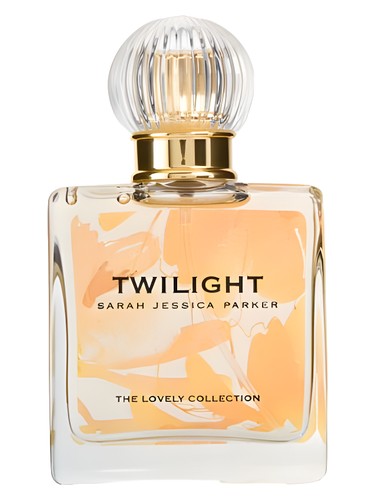
The first encounter with Twilight is a masterclass in contradiction. Your finger meets the atomizer expecting another safe celebrity fragrance, but what blooms on skin is something altogether more daring—a pink pepper bite softened by the green snap of galbanum, with citrus notes of bergamot and mandarin playing supporting roles rather than headlining the show. This isn''t the predictable fruit cocktail that dominated women''s fragrance counters in the late 2000s. Instead, Sarah Jessica Parker''s 2009 release announces itself with a spiced, almost resinous opening that suggests the twilight hour in its name might refer to something more than just romantic marketing copy. There''s an intentional obscurity here, a willingness to embrace shadow rather than sparkle.
The Scent Profile
The evolution of Twilight reads like a journey from dusk into full darkness. Those opening notes—the pink pepper providing warmth rather than heat, the galbanum lending a verdant bitterness, and the citrus duo offering just enough brightness to keep things interesting—create an introduction that''s refreshingly unsweetened. This isn''t a fragrance that apologizes for itself or seeks immediate approval.
As the top notes settle, the heart reveals a surprisingly restrained floral composition. Jasmine and peony emerge as the dual heroines of this middle chapter, but they''ve been directed to whisper rather than shout. The jasmine avoids the indolic intensity that can overwhelm, while the peony contributes a soft, almost watery quality that creates breathing room in what could otherwise become oppressively dense. This floral heart serves as a brief interlude, a moment of relative lightness before the base asserts its dominance.
And dominance is precisely what the base notes achieve. Amber claims the throne with absolute authority—the accord data confirms this at 100%—but it''s the supporting cast that makes this foundation fascinating. Incense weaves through the composition with smoky tendrils (that 40% smoky accord manifesting in earnest), while sandalwood and musk create a woody-musky framework that registers at 54% and 43% respectively. The powdery accord at 50% suggests a vintage sensibility, a throwback to the great oriental fragrances that understood the power of restraint and mystery. The balsamic quality at 41% ties it all together, adding a resinous depth that prevents the amber from reading as purely sweet or simplistic.
Character & Occasion
Twilight defies easy categorization when it comes to occasion. The data suggests it performs equally across all seasons—a rare achievement that speaks to its balanced composition. The amber and incense provide enough warmth for cold weather contemplation, while the citrus and floral notes offer sufficient lift for warmer months. This versatility comes from that careful calibration of elements: nothing is so heavy it becomes suffocating in heat, nothing so light it disappears in winter''s chill.
The complete absence of day/night preference data (both registering at 0%) initially seems odd, but it actually reveals something important about this fragrance''s identity crisis—or perhaps its refusal to be pigeonholed. Twilight exists in that liminal space its name suggests, appropriate for neither bright noon nor deep midnight, but perfect for transitions. Late afternoon at the office. Early evening drinks. The commute home as natural light fades. It''s a fragrance for the in-between moments.
Who is Twilight for? The woman who finds most modern fruity florals juvenile but doesn''t want to smell like she''s raiding her grandmother''s vanity. Someone who appreciates the bones of classic oriental fragrances but wants them in a more contemporary, less bombastic package.
Community Verdict
With a rating of 3.7 out of 5 from 420 votes, Twilight occupies interesting territory. This isn''t a polarizing fragrance that splits opinion between lovers and haters—those typically show wider rating variations. Instead, this solid, slightly above-average score suggests a fragrance that many people respect and enjoy without becoming obsessed with. It''s competent, well-crafted, and delivers what it promises, even if it doesn''t inspire evangelical devotion. For a celebrity fragrance from 2009, this rating represents something of a triumph, suggesting that Twilight has found an audience willing to judge it on its merits rather than its pedigree.
How It Compares
The similar fragrances list reads like a who''s who of powerful oriental perfumes: Obsession by Calvin Klein, Shalimar Eau de Parfum, Dune by Dior, LouLou by Cacharel, and Poison by Dior. This company reveals Twilight''s true ambitions. These are all fragrances with serious presence and vintage sensibilities, complex compositions that prioritize depth over accessibility.
Where Twilight distinguishes itself from these legends is in its restraint. It nods to Shalimar''s incense and vanilla, to Obsession''s spiced amber, to Dune''s woody sophistication—but it turns the volume down several notches. This makes it more approachable for those intimidated by the powerhouse orientals of decades past, but perhaps less memorable for those who love them.
The Bottom Line
Twilight deserves more attention than it receives. At 3.7 stars, it''s clearly connected with its audience, but that audience remains relatively small at 420 votes. This is a fragrance that challenges preconceptions about celebrity perfumes, offering genuine sophistication and a well-constructed amber oriental structure. It won''t replace Shalimar in the hearts of oriental purists, but it might serve as an excellent introduction to the category for those curious about where powdery, smoky, amber-driven fragrances can take them.
The unknown concentration adds an element of mystery—perhaps fitting for a fragrance named Twilight—but the longevity and projection seem adequate based on the robust base note construction. For anyone seeking a versatile, season-spanning oriental that can transition from professional to personal settings, this is absolutely worth exploring. Don''t let the celebrity name fool you; there''s genuine craftsmanship in this bottle.
AI-generated editorial review