First Impressions
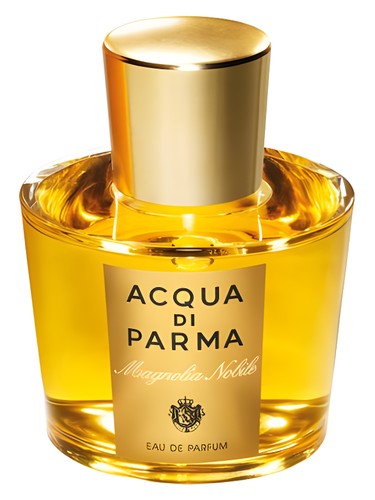
The first spray of Magnolia Nobile announces itself with the kind of bright, crystalline citrus that Acqua di Parma has spent over a century perfecting. This isn't the sharp wake-up call of synthetic lemon—it's the gentler, more nuanced trio of citron, lemon, and bergamot, creating a halo of sunshine that feels both refreshing and refined. Within moments, magnolia begins to emerge through this citrus veil, not as a heavy southern belle but as something more poised and architectural. There's an immediate sense of cleanliness here, of pressed linens and polished marble, that speaks to the brand's Italian heritage of understated luxury.
The Scent Profile
Magnolia Nobile's opening is definitively citrus-forward—the data confirms it dominates the composition at 100% of the accord profile. The citron provides a slightly bitter, green edge that keeps the lemon and bergamot from veering into cleaning product territory. This citrus introduction is generous and long-lasting, establishing the fragrance's personality as bright and optimistic.
As the composition settles, the heart reveals itself as a masterclass in white floral arrangement. Magnolia takes center stage, supported by a sophisticated quartet of jasmine, rose, and tuberose. What's remarkable here is the restraint—tuberose, often an indolic powerhouse that can overwhelm a composition, is kept in careful check. The magnolia itself reads as fresh petals rather than heady, creamy blooms. The jasmine adds a subtle greenness, while rose provides just enough classic floral structure to anchor the more ethereal magnolia. This heart accounts for 57% floral and 32% white floral in the accord breakdown, yet it never feels heavy or cloying.
The base brings unexpected depth for such a luminous fragrance. Vetiver and patchouli provide an earthy, slightly woody foundation (24% woody accord) that prevents the composition from floating away entirely. Sandalwood adds a creamy smoothness, while vanilla offers the barest hint of sweetness—enough to round out the edges without transforming this into a gourmand. The aromatic quality (24%) that runs through the entire composition keeps everything feeling fresh and wearable, even as these richer base notes emerge.
Character & Occasion
The data tells a clear story: Magnolia Nobile is a spring and summer fragrance, scoring 95% and 80% respectively for these seasons. It's the kind of scent you reach for on the first genuinely warm day of the year, when winter coats are finally shed and everything feels possible again. Fall wearability drops to 39%, and winter to just 20%—this is decidedly not a cold-weather fragrance.
Even more telling is the day/night split: 100% day, only 26% night. This is a boardroom fragrance, a brunch-with-colleagues scent, the olfactory equivalent of a crisp white shirt. It's designed for environments where you want to smell beautiful without announcing your presence from across the room. The clean, inoffensive floral profile makes it ideal for professional settings, close quarters, and situations where subtlety is valued over projection.
This is a fragrance for someone who has moved beyond the need to make a statement, who understands that true luxury often whispers. It appeals particularly to those with refined tastes—people building curated, sophisticated wardrobes rather than chasing viral trends.
Community Verdict
With a solid 4.11 rating from 2,596 votes and a community sentiment score of 7.5/10, Magnolia Nobile enjoys genuine appreciation among those who've experienced it. Based on 66 opinions from the fragrance community, the praise centers on its beautiful, elegant interpretation of magnolia and its position within Acqua di Parma's prestigious cologne collection.
The community notes that it fits naturally into sophisticated, curated fragrance wardrobes and particularly complements preferences for clean, light florals—a taste profile popular in Asian markets. Users appreciate its suitability for daytime wear, office environments, and spring weather.
The criticisms, however limited in the discussion, are worth noting. Some find the magnolia-forward composition potentially traditional or even dated compared to more contemporary interpretations. The price point raises eyebrows—Acqua di Parma commands premium pricing, and for a fragrance with modest projection and longevity, value becomes a consideration.
How It Compares
The similarity data places Magnolia Nobile in distinguished company: Coco Mademoiselle and Chance Eau Fraiche from Chanel, Hermès' Un Jardin Sur Le Nil, Chance Eau Tendre, and Pure Poison from Dior. This positioning reveals the fragrance's character—it sits comfortably among refined, elegant compositions that prioritize taste over trendiness.
Where Coco Mademoiselle leans more oriental and Chance Eau Fraiche skews aquatic, Magnolia Nobile occupies a sweet spot as a true floral-citrus blend with just enough woody depth to feel complete. It's less playful than the Chance variations, more classically structured than Un Jardin Sur Le Nil, and significantly lighter than Pure Poison.
The Bottom Line
Magnolia Nobile is not a fragrance for everyone, and that's precisely the point. With its 4.11 rating, it's well-liked but not universally adored—a reflection of its unabashedly refined character. This is a fragrance that rewards those who appreciate subtlety and sophistication over performance and projection.
The value proposition requires honest consideration. You're paying for Acqua di Parma's heritage, for beautifully sourced ingredients, and for a composition that prioritizes elegance over longevity. If you need a fragrance that lasts twelve hours or projects across a room, look elsewhere. But if you're building a wardrobe of beautiful, appropriate scents for professional life and warm-weather elegance, Magnolia Nobile deserves serious consideration.
Try this if you're drawn to clean florals, if you appreciate Italian luxury, or if you've grown tired of fragrances that shout for attention. Magnolia Nobile is for those who understand that sometimes, a whisper carries more weight than a scream.
AI-generated editorial review