First Impressions
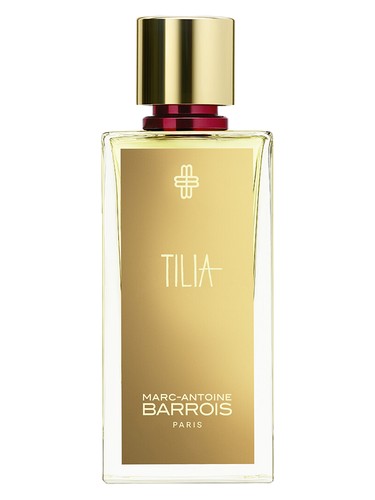
The first spray of Tilia stops you in your tracks—not with aggression, but with sheer luminosity. This is Marc-Antoine Barrois stepping into decidedly feminine territory for 2024, and the house does so with the kind of confidence that comes from knowing exactly what story it wants to tell. Lime blossom (also known as linden or tilleul) dominates immediately, wrapped in a golden haze of jasmine sambac and the gentle honey-hay sweetness of broom. It's the olfactive equivalent of late afternoon sunlight filtering through leaves, warm and dappled and impossibly inviting. There's nothing tentative about this opening—it announces itself as a yellow floral through and through, the kind that makes you understand why this accord scores a perfect 100% in its profile.
The Scent Profile
Tilia builds its narrative around lime blossom with an architectural precision that betrays the expert hand behind it. The opening trio of linden, jasmine sambac, and broom creates a complex introduction that walks the line between fresh and indulgent. Linden blossom brings that characteristic honeyed-green quality, slightly aqueous and infinitely comforting, while jasmine sambac adds fruity richness and just a whisper of indolic depth. Broom, that underutilized botanical gem, contributes a hay-like sweetness that prevents the composition from leaning too clean or soapy.
As Tilia settles into its heart, the structure reveals itself more fully. Heliotrope emerges as a crucial player here, adding its powdery-almond facets that register as both comforting and sophisticated. Orange blossom joins the conversation, reinforcing the white floral character (which scores 71% in the accord breakdown) without overwhelming the linden's starring role. The surprise is vetiver's appearance in the heart—a grassy, slightly earthy anchor that keeps all this floral opulence from floating away entirely. It's a smart compositional choice that adds depth without masculinizing the fragrance.
The base is where Tilia shows its contemporary credentials. Ambrofix™ and Georgywood—modern synthetic molecules—provide a woody-amber foundation that's sheer rather than heavy. These aren't your grandmother's base notes; they create a skin-like warmth that allows the florals to continue singing rather than being smothered by traditional heavy woods or vanilla. The result is a fragrance that maintains its brightness well into the drydown, with just enough powdery sweetness (37% and 69% respectively in the accord data) to create a subtle gourmand quality that never tips into dessert territory.
Character & Occasion
Tilia knows its season. Spring scores a perfect 100% suitability rating, and one wearing confirms why—this is a fragrance that captures the energy of nature waking up, of flowers actually blooming rather than being cut and arranged. Summer follows closely at 86%, which makes perfect sense given the composition's luminous, heat-friendly character. The modern base keeps it from becoming cloying in warmth, while the floral bouquet reads as refreshing rather than suffocating.
Interestingly, fall still registers at 60%, suggesting Tilia has more versatility than typical spring florals. That heliotrope and vetiver combination likely earns it this extended season appeal, providing enough depth to feel appropriate as temperatures drop. Winter's 30% rating is honest—this isn't a cold-weather fragrance, and it doesn't pretend to be.
The day/night split tells its own story: 91% day versus 39% night. Tilia is unabashedly a daytime fragrance, the kind you wear to feel polished and optimistic. That said, the 39% night rating isn't negligible—there's enough sophistication here for casual evening occasions, garden parties, warm-weather dinners. This is marketed as feminine, but the composition's quality and the vetiver's presence mean it could easily be enjoyed by anyone drawn to yellow florals with backbone.
Community Verdict
With 4,634 votes landing at 4.09 out of 5, Tilia has clearly resonated with a substantial audience. That's a strong rating, particularly for a 2024 release that's still building its reputation. The voting volume suggests genuine enthusiasm rather than niche obscurity, while the rating itself indicates a fragrance that delivers on its promise without radical polarization. It's worth noting this sits comfortably in "very good" territory without quite reaching "masterpiece" status—which feels appropriate for a beautiful, well-executed floral that doesn't necessarily reinvent the wheel.
How It Compares
The comparison to XJ 1861 Naxos by Xerjoff is intriguing—that honey-tobacco-lavender composition shares Tilia's golden warmth but takes it in a decidedly different direction. The connection likely lies in the honeyed sweetness both fragrances share. Fleur Narcotique by Ex Nihilo makes more immediate sense as a comparison point, both being sophisticated white-yellow florals with modern sensibilities. The Black Orchid reference is surprising until you consider both fragrances' willingness to embrace sweetness alongside their floral hearts, though Tilia is infinitely lighter and more transparent.
Within the yellow floral category, Tilia distinguishes itself through its commitment to naturalism in the top and heart, balanced with unabashedly modern base work. It's less powdery than classic heliotrope-centered fragrances, less sharp than many citrus-heavy compositions.
The Bottom Line
Tilia represents Marc-Antoine Barrois successfully expanding its range without diluting its identity. This is a fragrance for anyone who's been waiting for a yellow floral that feels contemporary rather than nostalgic, sophisticated rather than simple. At 4.09/5, it's a fragrance the community has validated as worth your time and money—not groundbreaking, perhaps, but exceptionally well-executed.
If you've been curious about lime blossom but found many interpretations too literal or too fleeting, Tilia deserves your attention. If you love jasmine but want it wrapped in something less conventional than white musks or sandalwood, same recommendation. And if you simply want a spring and summer signature that will earn compliments without smelling like everyone else at the garden party, consider this a strong contender. It's specific enough to be interesting, crowd-pleasing enough to be safe—and sometimes, that balance is exactly what you need.
AI-generated editorial review