First Impressions
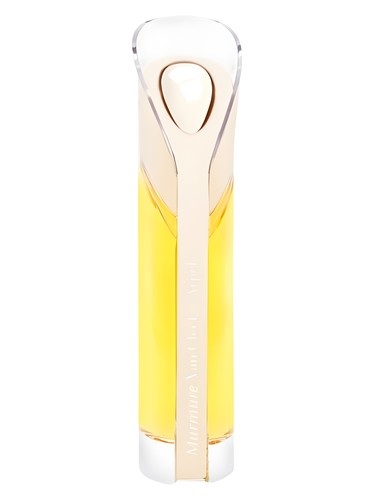
The first spray of Murmure delivers exactly what its name promises—a whisper rather than a shout. This is Van Cleef & Arpels translating their jeweler''s precision into olfactory form, opening with a crystalline triad of freesia, mandarin orange, and white rose that feels like morning light filtering through silk curtains. There''s an immediate luminosity here, a pearlescent quality that suggests this fragrance was composed with the same attention to refraction and clarity that goes into cutting a diamond. The mandarin provides just enough brightness to keep the white florals from feeling too solemn, while the freesia adds a peppery, almost metallic edge that prevents any drift toward the overly sweet.
The Scent Profile
The opening act is brief but purposeful. That mandarin-freesia-rose trinity establishes Murmure''s intentions within the first fifteen minutes: this will be a white floral composition, but one with structure and restraint. The citrus element, accounting for 20% of the fragrance''s accord profile, never dominates—it simply provides the scaffolding for what''s to come.
The heart reveals Murmure''s true character, and it''s here that the fragrance earns its 100% white floral accord designation. Jasmine, lily, orange blossom, and tuberose converge in a quartet that could easily become cacophonous but instead maintains an almost choir-like harmony. The tuberose, which registers as its own distinct accord at 17%, brings that characteristic creamy richness without tipping into the mentholated territory that can make the note polarizing. Lily adds a clean, soapy dimension—the kind of scent that evokes high-thread-count linens and expensive hotel lobbies. Then comes the surprise: a thread of cinnamon weaving through the white florals, adding warmth and a subtle spice that prevents the composition from floating away entirely.
This cinnamon note is crucial. It bridges the gap between the heart and base, preparing the nose for the transition to woods. Brazilian rosewood and cedar form the foundation, contributing to that 24% woody accord, while vanilla (mercifully restrained) adds just enough sweetness to round out the edges. The base isn''t meant to steal attention; it''s architectural, providing the support that allows those white florals to keep blooming on the skin for hours.
There''s also that intriguing 17% animalic accord lurking beneath the surface—likely emerging from the tuberose''s naturally indolic character. It''s the scent''s secret weapon, adding depth and a subtle skin-like muskiness that keeps Murmure from reading as purely decorative.
Character & Occasion
The community has spoken definitively on this question: Murmure is a daylight fragrance, scoring 100% for day wear compared to just 29% for evening. This isn''t a perfume that thrives under dim lighting or pairs naturally with cocktail attire. Instead, it belongs to morning meetings, garden lunches, and afternoon appointments where you want to project polish without drama.
Seasonally, spring claims Murmure with an overwhelming 89% preference, and this makes perfect sense. The fragrance captures that moment when winter finally breaks—when bare branches suddenly burst with magnolia and lily, when the air itself seems perfumed. Fall follows at 53%, suggesting the fragrance''s cinnamon-wood base gives it enough warmth for transitional weather. Summer (37%) and winter (26%) lag behind, and understandably so—Murmure lacks the freshness for true heat and the density for deep cold.
This is a fragrance for someone who wants to be remembered as elegant rather than bold, memorable rather than unforgettable. It suits professional contexts beautifully, and it''s particularly well-matched to those who find most white florals either too sharp or too sweet.
Community Verdict
With 486 votes landing at a 3.65 out of 5 rating, Murmure occupies interesting territory. This isn''t a polarizing fragrance—it''s a well-liked one that doesn''t quite reach universal acclaim. That rating suggests a competent, beautiful composition that may lack the distinctiveness to become truly beloved. The relatively modest vote count for a fragrance from a prestigious house that''s been on the market for over two decades also tells a story: this is something of a hidden gem, or perhaps a forgotten one.
Those who''ve discovered it clearly appreciate its qualities—3.65 is solidly above average—but it hasn''t captured widespread attention in the way some of its contemporaries have.
How It Compares
The community draws parallels to some heavy hitters in the white floral and feminine powerhouse categories: Organza by Givenchy, Alien by Mugler, Poeme by Lancôme, Dior Addict, and Poison by Dior. This comparison set is revealing. Most of these fragrances are bolder, more extroverted compositions than Murmure. Where Alien dominates with jasmine sambac intensity and Poison seduces with its intoxicating spice, Murmure maintains its whispered elegance.
If anything, this positions Murmure as the quieter sister in a family of attention-seekers—the one you''d choose when you want the sophistication of a white floral without announcing your presence before you enter a room.
The Bottom Line
Murmure succeeds at exactly what it sets out to do: deliver a refined, wearable white floral for daylight hours and temperate seasons. Its 3.65 rating reflects not failure but the reality that restraint rarely generates passionate devotion. This is a fragrance that will never disappoint, but it may not thrill.
For those seeking a versatile spring signature or a professional-appropriate white floral with actual personality (courtesy of that cinnamon-wood base), Murmure deserves attention. It''s particularly suited to those who found Alien too intense or who want something more substantial than a simple floral soliflore. The challenge is availability—Van Cleef & Arpels'' fragrance line doesn''t command the counter space it once did, making Murmure something of a treasure hunt.
If you can find it, and if you appreciate white florals that prioritize elegance over impact, Murmure is absolutely worth exploring. Just don''t expect it to shout its virtues from across the room. True to its name, this one speaks softly.
AI-generated editorial review