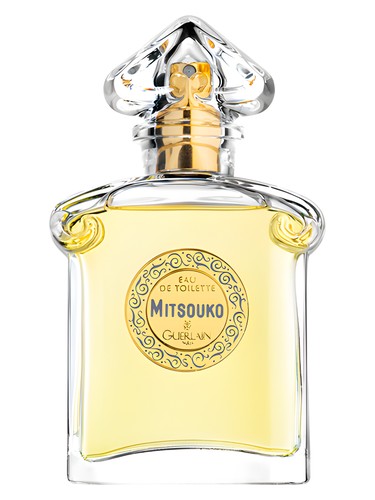
First Impressions
The first spray of Mitsouko is an education. This isn''t a fragrance that announces itself with sugary fruit or clean musks—it declares something far more complex. Bergamot cuts through the air with its sharp citrus brightness, but it''s immediately complicated by a whisper of spice and an unexpected fuzziness. That note, elusive and almost indescribable, is peach—not the candied, syrupy peach of modern fruity florals, but something darker, earthier, like the skin of the fruit left to warm in dappled sunlight. Within moments, you understand you''re in the presence of something historic.
Created in 1919 by Jacques Guerlain, Mitsouko emerged from a world irrevocably changed by war, yet it captured something timeless: the tension between restraint and sensuality, between the garden and the forest floor. Its name, borrowed from the heroine of Claude Farrère''s novel "La Bataille," means "mystery" in Japanese, and the perfume lives up to that promise with every wear.
The Scent Profile
Mitsouko''s opening is deceptively bright. Bergamot leads the charge alongside citrus notes, while rose and jasmine provide a floral framework that feels classical rather than romantic. But these top notes don''t linger in sunny territory for long. Within minutes, the heart reveals itself as something altogether more intriguing.
The peach note—created using a then-revolutionary synthetic aldehyde—remains Mitsouko''s calling card, but it''s woven so tightly with ylang-ylang, lilac, and additional waves of rose and jasmine that it never reads as purely fruity. Instead, these heart notes create a soft, powdery haze that feels vintage without being dated. The florals are restrained, almost melancholic, as though viewed through gauze or remembered rather than experienced fresh.
But it''s in the base that Mitsouko reveals its true nature. Oakmoss—the backbone of the chypre family—dominates with its earthy, almost bitter greenness. This isn''t the crisp moss of a morning walk; it''s deeper, damper, the scent of ancient forests and stone walls covered in lichen. Vetiver adds woody dryness while cinnamon and warming spices prevent the composition from becoming too austere. Amber rounds everything out with a subtle sweetness, but make no mistake: this is a fragrance where earth and moss reign supreme.
Character & Occasion
The data tells a clear story: Mitsouko is definitively an autumn fragrance, with fall registering at 100% suitability. This makes perfect sense. As summer''s heat fades and leaves begin their transformation, Mitsouko''s complex earthiness comes alive. Winter follows at 62%, where its warmth and spice provide sophisticated armor against the cold. Spring sees 55% compatibility—possible on cooler days when you want depth without heaviness. Summer, at just 33%, is Mitsouko''s weakest season, as heat can amplify its intensity in ways not everyone will appreciate.
Remarkably versatile in terms of timing, this is primarily a daytime scent (98%), though it transitions respectably into evening (78%). There''s something about Mitsouko that feels appropriate for intellectual pursuits, artistic endeavors, or simply moving through the world with quiet confidence. It''s not a fragrance that seeks attention; it commands respect.
Who should wear Mitsouko? The data suggests a feminine fragrance, but its earthy, mossy character transcends simple gender categories. This is for someone who appreciates complexity, who doesn''t need their presence announced by a sugar cloud. It''s for the person who owns vintage furniture not because it''s trendy but because it''s beautifully made. It asks something of its wearer: confidence, patience, and a willingness to be misunderstood by those still swimming in mainstream tastes.
Community Verdict
With a solid 4.03 out of 5 rating from 5,225 votes, Mitsouko enjoys genuine respect from the fragrance community. This rating is particularly meaningful given the perfume''s challenging profile—earthy and mossy fragrances rarely achieve blockbuster approval ratings in an era dominated by sweet gourmands and fresh aquatics. That over five thousand people have taken the time to rate this century-old composition speaks to its enduring relevance.
The rating suggests honest appreciation rather than blind veneration. Mitsouko isn''t for everyone, and the community seems to acknowledge this. It''s not trying to achieve universal love; it''s succeeding at being precisely what it is.
How It Compares
Mitsouko sits comfortably among perfumery''s intellectual elite. Its kinship with Aromatics Elixir by Clinique and Chanel N°19 places it firmly in the category of uncompromising chypres—fragrances that prioritize character over likability. The connection to Paloma Picasso suggests shared DNA in terms of vintage sophistication, while the nod to Dune by Dior hints at desert-like dryness and restraint.
The mention of Black Orchid by Tom Ford is interesting—both fragrances are earthy and complex, though Ford''s creation skews darker and more overtly sensual. Where Black Orchid is nighttime decadence, Mitsouko is daytime intelligence. It''s the difference between velvet and tweed.
The Bottom Line
Mitsouko Eau de Toilette isn''t an easy love, but the worthwhile ones rarely are. At over a century old, it remains startlingly relevant—a testament to Jacques Guerlain''s genius and the timelessness of quality composition. The Eau de Toilette concentration offers a slightly more approachable entry point than the parfum, though "approachable" is relative when discussing a fragrance this uncompromisingly earthy.
Should you try it? Absolutely, particularly if you''ve grown tired of contemporary perfumery''s safer choices. If you love autumn, appreciate vintage aesthetics, or simply want to understand what a legendary chypre smells like, Mitsouko is essential education. Just don''t expect it to smell like anything else in your collection. That''s precisely the point.
AI-generated editorial review