First Impressions
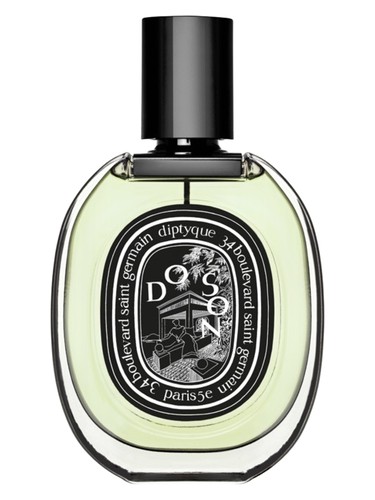
The first spray of Do Son Eau de Parfum unfolds like stepping into a moonlit garden where tuberose blooms hang heavy on the vine. This is Diptyque''s 2013 reinterpretation of their beloved Do Son, amplified into Eau de Parfum concentration, and it announces itself with unmistakable clarity. The tuberose here isn''t shy—it dominates at 100% in the accord breakdown—yet there''s a sophisticated restraint that prevents it from overwhelming. Within moments, you understand you''re wearing something that straddles the line between lush femininity and clean, almost austere elegance.
What strikes you immediately is the white floral character that wraps around that central tuberose pillar, creating a softly diffused halo effect. There''s a whisper of green freshness that keeps the composition from feeling too heavy, too indolic, too much. Instead, Do Son presents tuberose as both subject and frame, a study in how a single note can contain multitudes.
The Scent Profile
Without specified individual top, heart, and base notes, Do Son reveals its structure through the interplay of its dominant accords. The opening carries subtle citrus brightness—registering at 18% in the accord profile—that lifts the white floral bouquet without competing with it. This isn''t a citrus you can necessarily name; it''s more like the memory of citrus, a bright edge that frames the composition.
As the fragrance settles, the tuberose reveals its full complexity. The white floral accord at 87% creates a creamy, almost narcotic richness, but the green accord (34%) acts as a counterbalance, suggesting stems and leaves rather than just petals. This botanical honesty keeps Do Son from veering into the territory of overly sweet or synthetic white florals.
The most intriguing development happens in the dry down, where musky notes (39%) and unexpectedly animalic undertones (35%) emerge. This is where Do Son distinguishes itself from more straightforward tuberose fragrances. The musk adds skin-like warmth, while those animalic whispers—subtle but present—give the composition a lived-in sensuality. It''s the difference between admiring a flower in a vase and experiencing it growing in warm soil, slightly humid, breathing with life.
Character & Occasion
Do Son is overwhelmingly a daylight fragrance, scoring 90% for day wear versus 39% for evening. This makes perfect sense: it has the freshness and clarity that thrives in natural light, whether you''re wearing it to the office or a weekend garden party. Spring claims it at 100%, with summer following closely at 75%—seasons when white florals feel most at home, when their tropical lushness doesn''t seem out of place.
But here''s where Do Son surprises: it maintains relevance into fall (48%) and even retains a toehold in winter (29%). This speaks to its versatility, that underlying muskiness and green quality that prevents it from feeling exclusively warm-weather. Those who build their signature scent around a single fragrance will find Do Son adaptable enough to carry through most of the year.
This is decidedly feminine in its traditional presentation, marketed and perceived as such, but the quality of the tuberose—neither candy-sweet nor overtly sensual—gives it a sophistication that transcends age. It works equally well on someone discovering their first serious fragrance as it does on a collector seeking a refined tuberose representation.
Community Verdict
The Reddit fragrance community awarded Do Son their letter D vote with 81 upvotes, and the overall sentiment scores a strong 8.2 out of 10 across 22 opinions. This isn''t just polite approval—it''s genuine enthusiasm.
The praise centers on two key strengths: longevity and composition quality. Multiple users celebrate its "excellent longevity and lasting power," describing it as a "beautiful, elegant tuberose fragrance" and even calling it a "masterpiece" of high-quality composition. For those seeking a signature scent, the community consistently recommends Do Son as versatile enough for all-season wear.
But honesty demands acknowledging the contradiction: while many praise its longevity, others report "short projection and performance," noting it "may project or last significantly less than expected." This split suggests Do Son performs differently on different skin chemistries, or that expectations around Eau de Parfum performance vary widely. The fragrance seems to have excellent staying power close to the skin while not broadcasting aggressively—a quality some users love and others find disappointing.
How It Compares
Do Son sits among distinguished company. Its closest sibling, the original Do Son Eau de Toilette, offers a lighter interpretation of the same concept. The community also draws parallels to Frédéric Malle''s Carnal Flower—the tuberose standard-bearer known for its bold, uncompromising approach. Where Carnal Flower goes full operatic drama, Do Son offers chamber music: intimate, refined, no less accomplished but scaled for different moments.
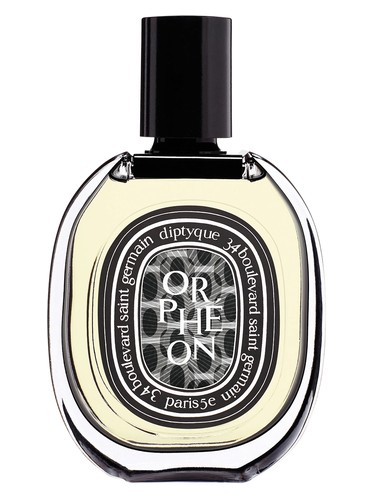
The comparison to Alien by Mugler seems less about tuberose similarity and more about signature scent potential—both have devoted followings who wear them exclusively. Orphéon Eau de Parfum, also by Diptyque, shares that house''s sophisticated approach to building fragrances around single ideas with exceptional execution.
The Bottom Line
With a rating of 4.08 out of 5 from 2,824 votes, Do Son Eau de Parfum stands as a widely respected interpretation of tuberose—not the loudest or most daring, but perhaps the most wearable. This isn''t a fragrance that demands attention through volume; it earns appreciation through quality and balance.
The performance question mark prevents this from being a universal recommendation. If you need substantial projection and announcement, test this carefully before committing. But if you''re drawn to white florals that stay close, that create an intimate scent aura rather than filling a room, Do Son could be exactly what you''re seeking.
At its price point, expect Diptyque''s characteristic quality: natural-smelling materials, thoughtful composition, and that ineffable sense of good taste. This is a fragrance for those who appreciate subtlety as a form of luxury, who understand that a signature scent needn''t shout to be memorable. Try it in spring when tuberose makes the most sense, wear it through summer''s heat, and discover whether it becomes one of those fragrances you reach for without thinking—the highest compliment any perfume can receive.
AI-generated editorial review