First Impressions
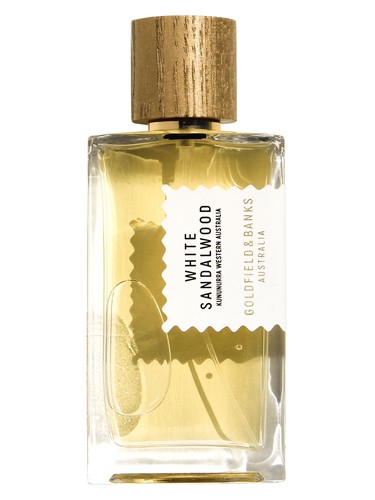
The first spray of White Sandalwood reveals an immediate contradiction—this is no delicate, creamy sandalwood whisper. Instead, Goldfield & Banks opens with a blast of warmth that reads almost amber-like in its intensity, the spice hitting your senses with unexpected vigor. There's heat here, the kind that makes you pause and reconsider what you thought you knew about Australian sandalwood. The 100% warm spicy accord dominance makes itself known immediately, while a sophisticated rose accord (87%) weaves through the composition like a secret, adding an unexpected floral depth that keeps this firmly in feminine territory despite its bold woody backbone at 92%.
What strikes you most isn't what's there, but how it all comes together—this is sandalwood reimagined through a distinctly Australian lens, where the landscape itself seems to inform the composition. There's a dryness, an aromatic quality (66%) that suggests eucalyptus-kissed air and sunbaked earth, even if these notes aren't explicitly listed.
The Scent Profile
Without specific note breakdowns provided, White Sandalwood becomes something of a beautiful mystery, forcing you to rely purely on the accord structure to understand its evolution. The journey begins with that warm spice dominance—imagine cardamom's electric tingle married with perhaps pink peppercorn's gentle heat, or the resinous warmth of elemi. The fresh spicy accord (65%) suggests there's brightness here, not just heat, a citrus-adjacent quality that keeps the opening from feeling heavy.
As the fragrance settles, the woody accord asserts itself with increasing confidence. This isn't the polished, creamy sandalwood of Indian varieties, but something with more character—possibly the Australian sandalwood (Santalum spicatum) that's rougher around the edges, less sweet, more aromatic. The rose accord becomes more apparent in the heart, not as a traditional floral centerpiece but as a supporting player that adds texture and depth. Think rose oil rather than rose petals—something with warmth and slight spice of its own.
The powdery accord (51%) emerges in the dry-down, softening the composition's edges without dulling its impact. This isn't iris-style face-powder softness, but rather the velvety quality that well-aged wood can possess. The fragrance maintains its warm, aromatic character throughout, never quite settling into traditional base note territory but rather hovering in that compelling middle space where spice, wood, and rose continue their intricate dance.
Character & Occasion
The data tells a clear story: White Sandalwood is a transitional season specialist, scoring 95% for fall and 93% for spring. This makes perfect sense—it's too warm and enveloping for the peak heat of summer (36%), yet lacks the dense, insulating quality needed for deep winter (27%). This is a fragrance for those in-between moments when the air carries both warmth and coolness, when you need something substantial but not suffocating.
At 100% day-appropriate versus just 36% for evening wear, White Sandalwood reveals itself as a daytime companion. It's office-appropriate with character, sophisticated enough for important meetings but approachable enough for casual weekend errands. The spice gives it presence without aggression, the woody notes provide grounding without becoming austere.
This is decidedly marketed as feminine, and the rose accord supports that positioning, but the composition's boldness might appeal to those who prefer their fragrances with backbone. It's for the woman who wears tailored blazers with unexpected jewelry, who appreciates complexity over obvious beauty.
Community Verdict
With a rating of 2.89 out of 5 from 547 votes, White Sandalwood sits squarely in divisive territory. This isn't a crowd-pleaser, and that's worth acknowledging. The relatively middling score suggests that what makes this fragrance distinctive—its unconventional approach to sandalwood, its bold spice profile, its dry aromatic quality—may not resonate universally.
However, nearly 550 votes indicate genuine interest and engagement. This isn't a forgotten release languishing in obscurity; people are seeking it out, forming opinions, engaging with it. The polarization often indicates a fragrance with a strong point of view, one that rewards those whose tastes align with its vision while leaving others cold.
How It Compares
The comparison to Baccarat Rouge 540 is intriguing—both share that warm, ambiguous quality that defies easy categorization. The connection to Nishane's Ani suggests shared territory in the warm, spicy, slightly gourmand space, while the link to Tauer's L'Air du Desert Marocain points to a shared dry, aromatic sensibility. Most tellingly, the comparison to Blue Cypress by the same house suggests Goldfield & Banks has carved out a distinctive aesthetic: bold, woody, distinctly Australian interpretations of familiar fragrance families.
Within its category, White Sandalwood occupies a unique position—neither purely woody nor traditionally spicy oriental, it exists in that compelling gray area that either captivates or confuses.
The Bottom Line
White Sandalwood isn't here to be universally loved, and that's precisely what makes it worth exploring. The 2.89 rating reflects a fragrance that commits to a specific vision rather than playing it safe. If you're drawn to warm, spicy fragrances with genuine woody depth—and particularly if you've been disappointed by thin, synthetic "sandalwood" fragrances—this Australian perspective deserves your attention.
It's best approached as a daytime signature for transitional seasons, when its warmth feels like a welcome embrace rather than an imposition. The price point and longevity would need to be evaluated individually (data not provided), but for those seeking something distinctly different in the warm woody category, White Sandalwood offers an alternative to the mainstream.
Try before you buy, ideally during spring or fall, and give it time on your skin. This is a fragrance that reveals itself slowly, rewarding patience with its complex interplay of spice, wood, and unexpected rose. It may not be for everyone—but for the right wearer, that's exactly the point.
AI-generated editorial review