First Impressions
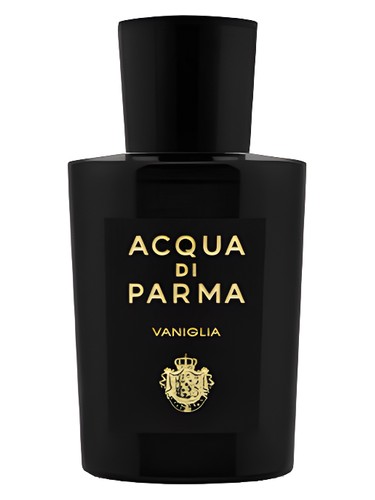
The first spray of Acqua di Parma''s Vaniglia Eau de Parfum delivers an immediate contradiction—one that might surprise anyone expecting a straightforward gourmand experience. Yes, vanilla announces itself at the center stage, but it arrives dressed in the house''s signature Italian refinement: a halo of Calabrian bergamot and neroli providing bright, almost sparkling citrus uplift, while heliotrope adds an almond-like powderiness that softens every edge. This isn''t vanilla as dessert; it''s vanilla as an elegant accent, the olfactory equivalent of cream-colored cashmere. The opening moments suggest comfort without cloying sweetness, sophistication without coldness—a careful balancing act that reveals Acqua di Parma''s expertise in making classics feel contemporary.
The Scent Profile
The composition opens with a quartet of luminous notes that immediately distinguish Vaniglia from its heavier, more overtly sweet counterparts. Calabrian bergamot and mandarin orange provide sparkling citrus brightness, while neroli adds a subtle orange blossom dimension that hints at the white florals to come. But it''s the heliotrope that proves most essential here, introducing that characteristic powdery quality (scoring 83% in the main accords) that permeates the entire fragrance journey. This opening phase feels airy and refined, more boudoir than bakery.
As the citrus notes begin their gentle recession, the heart reveals the fragrance''s true personality. Vanilla takes its rightful place as the dominant accord (registering at a full 100%), but it''s beautifully tempered by jasmine sambac. This isn''t the indolic, heavy jasmine of certain vintage orientals; instead, it provides a clean, slightly green floral counterpoint that prevents the vanilla from becoming one-dimensional. The vanilla itself reads as smooth and creamy rather than caramelized or intensely sweet, maintaining that powdery softness established in the opening.
The base extends the composition''s refined character through a subtle foundation of musk and cedar. The cedar (contributing to the 31% woody accord) adds just enough structure to ground the sweetness, while musk (33% musky accord) creates an intimate, skin-like quality that allows the fragrance to settle close to the wearer. This isn''t a vanilla that projects across rooms; it''s one that invites closeness, creating a personal scent bubble that feels both comforting and elegantly restrained.
Character & Occasion
The seasonal data tells a clear story: Vaniglia is fundamentally a cold-weather fragrance, scoring perfect marks for fall (100%) and near-perfect for winter (94%). This makes intuitive sense—the vanilla warmth and powdery softness feel naturally aligned with cashmere scarves and cozy interiors. That said, it maintains respectable wearability in spring (69%), likely thanks to that bright citrus opening and the overall restraint in sweetness. Summer (40%) is where it struggles most, as even this refined vanilla can feel heavy in genuine heat.
What''s particularly interesting is the day/night versatility, with both scoring at 80%. This speaks to Vaniglia''s chameleon-like adaptability. The citrus brightness and powdery elegance make it entirely appropriate for daytime professional settings—office-friendly warmth without overwhelming. Yet the vanilla depth and musky base allow it to transition seamlessly into evening wear, especially for more understated occasions where you want comfort rather than drama.
Marketed as feminine, Vaniglia certainly leans that way through its soft, powdery character, but the citrus brightness and cedar structure make it approachable for anyone drawn to elegant, restrained vanilla compositions. This is vanilla for those who appreciate the note but have grown weary of intensely sweet or heavy interpretations.
Community Verdict
The Reddit fragrance community discussion reveals an interesting gap: while vanilla fragrances generate considerable enthusiasm and debate, Vaniglia Eau de Parfum itself hasn''t sparked significant conversation in the sampled opinions. With 22 opinions analyzed but no specific feedback about this particular fragrance emerging, it appears to occupy a quieter position in the vanilla discourse. The community readily discusses alternatives from Van Cleef & Arpels, Nishane, Tom Ford, and Xerjoff, but Acqua di Parma''s entry hasn''t yet captured widespread attention or strong reactions—positive or negative.
This absence of community buzz, paired with a neutral sentiment score (0/10), suggests Vaniglia may be flying somewhat under the radar, neither polarizing nor generating passionate advocacy. For a fragrance with a respectable 4.08/5 rating from 582 votes, this relative quietness is telling: it''s clearly satisfying its wearers without creating the kind of distinctive signature that sparks conversation.
How It Compares
Vaniglia sits within a prestigious family of vanilla-centric perfumes. Compared to its listed similars—Orchidée Vanille by Van Cleef & Arpels, Nishane''s Ani, Tom Ford''s Noir Extreme, and Xerjoff''s Lira and XJ 1861 Naxos—Acqua di Parma''s interpretation is arguably the most restrained. Where Ani brings ginger spice and Lira amplifies citrus to gourmand levels, Vaniglia maintains elegant composure. It shares common ground with Orchidée Vanille in prioritizing sophistication over sweetness, though Vaniglia''s powdery character distinguishes it from that orchid-focused composition.
This is vanilla for those who find Tom Ford Noir Extreme too intense or Xerjoff Naxos too honeyed. It occupies the refined, daytime-appropriate end of the vanilla spectrum.
The Bottom Line
With a solid 4.08/5 rating from nearly 600 voters, Vaniglia Eau de Parfum delivers on its promise: a sophisticated, wearable vanilla that respects Acqua di Parma''s heritage of Italian elegance. It won''t be the most memorable or distinctive vanilla in your collection, but that''s somewhat the point. This is vanilla as daily luxury, the fragrance equivalent of perfectly tailored basics—beautifully executed, versatile, and quietly confident.
Who should seek this out? Anyone searching for a grown-up vanilla that works in professional settings. Those who love the comfort of vanilla but need something less sweet than mainstream gourmands. Cold-weather fragrance lovers seeking daytime warmth without evening-only intensity.
The relative lack of community discussion might actually be a positive indicator: sometimes the best fragrances are those that simply work, without needing to shout about it.
AI-generated editorial review