First Impressions
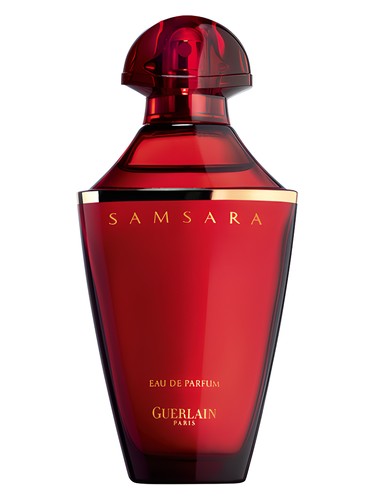
The first spray of Samsara Eau de Parfum announces itself like a velvet curtain drawing back on a grand stage. There''s an immediate plushness—creamy ylang-ylang tangled with a whisper of peach and bergamot—that settles into something far more substantial than its fruity-floral opening suggests. This is Guerlain in 1989, at the tail end of the powerhouse era, and Samsara wears that heritage proudly. Within minutes, the verdant green notes fade and what emerges is unmistakably a study in contrasts: soft yet assertive, feminine yet formidable, sweet yet grounded by something profoundly woody.
The Scent Profile
Samsara''s architecture reveals itself in waves, each layer more complex than the last. The opening act—ylang-ylang, peach, bergamot, lemon, and green notes—provides a deceptively bright introduction. The peach here isn''t the juicy, bite-into-it variety of modern fruity florals; it''s more of a diffused glow, a soft-focus lens through which the ylang-ylang''s creamy richness is viewed. The citrus elements and green notes add lift without dominating, creating just enough brightness to prevent the composition from feeling heavy from the start.
But Samsara''s true character lives in its heart, where an opulent bouquet unfolds with aristocratic confidence. Iris and orris root form the powdery backbone—not the cool, rooty iris of niche modernism, but a warmer, more cosmetic interpretation. Jasmine and rose add floral depth, while narcissus and violet contribute an almost old-fashioned femininity. This heart is where Samsara earns its 100% powdery accord rating and its 67% yellow floral designation. It''s lush, it''s full, and it holds nothing back.
The base is where devotion is tested and loyalty is earned. Sandalwood—specifically the creamy, milky Indian sandalwood that was more readily available in 1989—dominates with a warmth that borders on enveloping. Vanilla, tonka bean, and amber provide sweetness and depth, while musk adds skin-like intimacy. The iris reappears here, bridging heart and base with its powdery persistence. This foundation explains the 95% woody accord rating and why Samsara wears like a second skin for some and a full costume for others.
Character & Occasion
Samsara is decisively a cold-weather companion. The data confirms what the nose already knows: this is 95% winter and 87% fall perfume. Its 51% vanilla accord and substantial woody backbone make it feel like cashmere against bare skin when temperatures drop. Spring wearers account for only 32% and summer a mere 23%—this is not a fragrance that plays well with heat and humidity.
The day/night split tells an interesting story: 60% day versus 100% night. Samsara can absolutely be worn during daylight hours, particularly in professional or formal settings where its powdery sophistication reads as polished rather than overpowering. But it truly comes alive in evening contexts—dinners, cultural events, intimate gatherings—where its sillage and presence can expand without constraint.
This is a fragrance for someone who isn''t afraid of being noticed, who appreciates the grand gestures of traditional French perfumery. The woman who reaches for Samsara likely has appreciation for quality materials, patience for fragrances that reveal themselves slowly, and confidence in her own taste regardless of trending preferences.
Community Verdict
The community sentiment presents a notable gap in available data. While Samsara boasts an impressive 4.07 rating from over 11,000 votes on the broader fragrance database—indicating solid appreciation from a large audience—specific Reddit community discussion about this particular fragrance was limited in the source material. The provided thread focused on other Guerlain classics like Shalimar and Vol de Nuit without substantive commentary on Samsara itself.
This absence is itself telling. Samsara may occupy a middle ground in the Guerlain lineup: respected but perhaps overshadowed by more iconic siblings, appreciated by those who discover it but not generating the passionate discourse of true cult classics or controversial releases.
How It Compares
Samsara sits comfortably among the grande dames of French perfumery. Its kinship with Chanel No. 5 Parfum and Coco Eau de Parfum places it firmly in the powdery-aldehydic-floral tradition, though Samsara leans warmer and woodier than No. 5''s soapy coolness. The connection to LouLou by Cacharel suggests shared DNA in the plush, sweet-floral register, while Dune by Dior offers a more modern, ozonic alternative to Samsara''s unabashedly retro character.
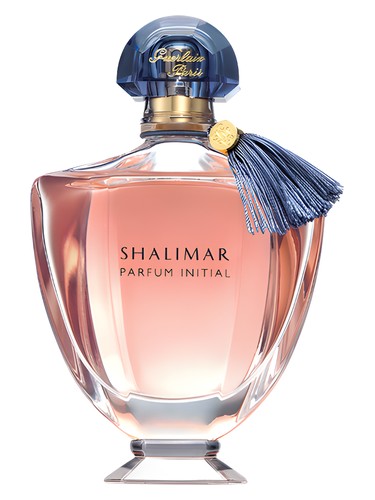
Within Guerlain''s own stable, its similarity to Shalimar Parfum Initial indicates a family resemblance—both built on opulent bases with creamy, vanillic warmth—though Samsara pivots toward sandalwood where Shalimar embraces the darker, more resinous qualities of its oriental heritage.
The Bottom Line
Samsara Eau de Parfum is not a fragrance for the timid or the trend-conscious. Its 4.07 rating from more than 11,000 voters suggests broad appreciation, but this is clearly a perfume that demands something from its wearer: confidence, patience, and a willingness to embrace a style of perfumery that prioritizes richness over restraint.
For those who find modern fragrances too sheer, too linear, or too safe, Samsara offers a masterclass in traditional composition. The sandalwood-iris-vanilla axis creates something genuinely beautiful—if admittedly polarizing. This is not a reach-for-every-day fragrance for most; it''s a statement piece, best deployed when you want to feel wrapped in luxury.
Should you try it? Absolutely, if you appreciate woody orientals, have nostalgia for the perfumery of the 1980s and 1990s, or simply want to understand what Guerlain does so masterfully with sandalwood. Sample it in winter, wear it in the evening, and give it time to reveal its full character. Samsara rewards patience—and for some, becomes an irreplaceable part of the wardrobe.
AI-generated editorial review