First Impressions
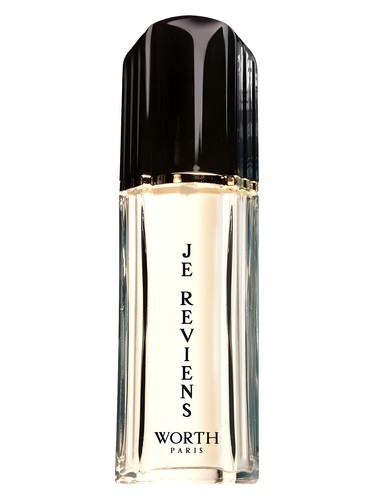
The name alone carries weight: "Je Reviens"—I will return. When Worth launched this fragrance in 1932, the world stood between wars, caught in that peculiar interlude where glamour and uncertainty danced together. The first spray makes that era tangible. A bright, almost electric burst of aldehydes announces itself with the confidence of old Hollywood, immediately softened by the narcotic sweetness of ylang-ylang and the citrus sparkle of bergamot and lemon. This is not a gentle introduction—it's a statement rendered in abstract florals and soapy shimmer, the olfactory equivalent of silk charmeuse catching light.
What strikes immediately is the greenness threading through that aldehydic brilliance. Where many aldehydic florals of this vintage lean powdery or exclusively bright, Je Reviens has a freshness that feels almost herbal, a verdant quality that keeps the composition from becoming too formal, too untouchable. Orange blossom and jasmine join the opening fanfare, but they're sketched rather than painted in bold strokes—impressionistic touches that hint at the floral profusion to come.
The Scent Profile
The evolution of Je Reviens follows the classic structure of pre-war French perfumery, but with a particular emphasis on maintaining that green, fresh character throughout. The top notes don't so much fade as they fold into the heart, where the real floral architecture reveals itself. Narcissus takes center stage here, its honeyed, slightly indolic nature given brilliant support by hyacinth's waxy, cool-green facets and lilac's delicate, nostalgic sweetness.
This heart is extraordinarily dense with white and yellow florals. Ylang-ylang appears again, this time in fuller bloom, while rose and orris root provide classical structure. The orris is particularly notable—it lends a lipstick-like creaminess and a subtle powderiness that feels sophisticated rather than dated. A whisper of cloves adds warmth and just a touch of spice, preventing the florals from becoming cloying or one-dimensional.
The base unfolds slowly, revealing the complexity that allows Je Reviens to maintain its 71% green accord even as it settles into skin. Oakmoss provides that quintessentially vintage backbone—earthy, slightly bitter, utterly essential to understanding perfumery before IFRA restrictions changed the landscape. Violet adds a soft, almost suede-like texture, while incense brings an unexpected ceremonial quality, as if these flowers were being offered at some elegant altar. Sandalwood and vetiver provide woody depth, musk adds skin-like intimacy, and tonka bean with amber round everything into a warm, slightly vanillic finish that manages to feel both comforting and refined.
Character & Occasion
The data suggests Je Reviens transcends typical categorization—it's marked as suitable for all seasons, neither explicitly day nor night. This speaks to the fragrance's remarkable versatility and its origins in an era when women owned fewer perfumes but wore them with greater intention. In practice, this is a fragrance that adapts beautifully to context.
In cooler weather, that oakmoss base becomes more prominent, grounding the florals in something earthy and substantial. The incense notes emerge more clearly, giving the scent a contemplative, almost meditative quality. In warmth, the narcissus and ylang-ylang bloom more generously, while the green notes feel fresher, more vital. The aldehydes maintain their shimmer in any temperature, though they soften considerably as the fragrance settles.
This is unequivocally a feminine fragrance in the classical sense—not because modern men couldn't wear it, but because it speaks the formal language of mid-century femininity with absolute fluency. It's for someone who appreciates perfume as craft, who understands that vintage doesn't mean outdated. The woman who reaches for Je Reviens knows herself, has likely tried countless modern fragrances, and returned to this with recognition and relief.
Community Verdict
With a rating of 3.83 out of 5 from 913 votes, Je Reviens occupies interesting territory. This isn't the overwhelming acclaim of a universally beloved classic, nor is it languishing in obscurity. Instead, it reflects a fragrance that rewards specific tastes—those who seek it out tend to appreciate what they find, even if it doesn't convert everyone who tries it.
The rating suggests honest complexity rather than easy charm. This isn't a crowd-pleaser in the contemporary sense. It doesn't announce itself with aggressive projection or follow current trends toward gourmand sweetness or fresh cleanliness. What it offers instead is sophistication, remarkable construction, and a genuine connection to perfumery's golden age. For those attuned to its particular beauty, it's absolutely worth exploring.
How It Compares
Je Reviens sits comfortably among the great aldehydic florals of the twentieth century. Its closest companions—Fidji by Guy Laroche, Rive Gauche by Yves Saint Laurent, L'Air du Temps by Nina Ricci, Arpège by Lanvin, and of course Chanel No 5—all share that aldehydic sparkle and classical floral construction, but each speaks with its own accent.
Where Chanel No 5 is abstract and austere, Je Reviens feels slightly warmer, more approachable. Compared to L'Air du Temps's delicate dove-like gentleness, Je Reviens has more presence, more personality. It lacks Rive Gauche's sharper green bite but offers greater floral complexity. Among this distinguished company, Je Reviens distinguishes itself through that persistent green-fresh quality and the unusual inclusion of incense in the base.
The Bottom Line
Je Reviens Eau de Toilette isn't trying to compete with modern launches, and that's precisely its strength. This is a fragrance that knows what it is—a meticulously constructed aldehydic floral with green bones and warm skin. The nearly 4-star rating from over 900 voices tells you this isn't a safe blind buy for everyone, but for those drawn to vintage compositions, it's a masterclass in classical perfumery.
At eau de toilette concentration, it offers accessibility to this style without overwhelming projection. It's beautiful for someone building a vintage fragrance education, perfect for those who already know they love aldehydics, and potentially revelatory for anyone curious about what "elegant" meant in 1932. The value proposition is strong—Worth's history and craftsmanship at a price point far below many modern niche offerings. Try it if you've ever wondered what promises smell like, or if you understand that sometimes, the best way forward is to return.
AI-generated editorial review