First Impressions
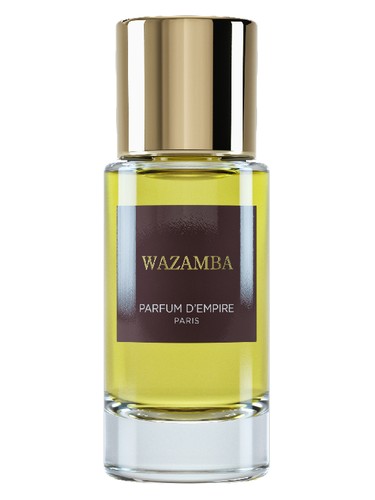
The first spray of Wazamba feels like stepping into a centuries-old cathedral just as the censer begins to swing. But this isn''t the austere, penitential incense of monastic silence—it''s warmer, more inviting, almost playful. The opening salvo pairs the expected smokiness of incense with an unexpected twist: a crisp red apple note that cuts through the haze like a shaft of colored light through stained glass. Aldehydes add a subtle sparkle, while cypress brings its green, resinous backbone. It''s a composition that announces itself as serious perfumery while refusing to take itself too seriously—a balance that Parfum d''Empire''s Marc-Antoine Corticchiato achieved brilliantly in 2009.
The Scent Profile
Wazamba''s evolution is a masterclass in how to layer resins without creating a monotonous wall of smoke. Those opening moments of incense and cypress are brightened by red apple and lifted by aldehydes, creating an almost effervescent quality to what could have been a heavy start. The apple doesn''t read as fruity-sweet; instead, it provides a fresh, slightly tart counterpoint that makes the composition breathable.
As the fragrance settles into its heart, the ecclesiastical theme deepens. Myrrh, olibanum, and labdanum form a trinity of golden resins that overlap and interweave, each adding its own character. The myrrh brings a slightly medicinal, honeyed quality; the olibanum (frankincense) reinforces that church incense association; and the labdanum adds amber-like warmth and a touch of leathery depth. Here, a plum note emerges—not jammy or gourmand, but dark and slightly dried, like fruit left to macerate in wine. It adds a subtle sweetness that prevents the resins from becoming too austere.
The base is where Wazamba truly reveals its amber dominance—and the data confirms this, with amber registering at 100% of the main accords. Incense continues its smoky thread throughout, joined by additional resins and the distinctive, sweet-spicy warmth of opoponax. Sandalwood provides a creamy, woody foundation that''s never overtly sweet, while an unexpected fern accord adds a green, slightly bitter edge that keeps the composition from becoming cloying. This interplay between warmth and restraint, sweetness and dryness, is what elevates Wazamba beyond typical amber fragrances.
Character & Occasion
The community data tells a clear story about when Wazamba shines: this is unquestionably a cold-weather companion, rating 100% for fall and 89% for winter. Those percentages make perfect sense once you experience the fragrance''s rich, enveloping warmth. Spring sees a respectable 37%, suggesting that Wazamba can work in cooler spring weather, but summer''s 24% confirms what you''d suspect—this isn''t beach territory.
Interestingly, the day/night split is remarkably balanced: 79% day versus 71% night. This versatility is one of Wazamba''s quiet triumphs. Despite its intensity and the typically evening-associated amber and incense notes, there''s something about the composition''s clarity and that bright opening that makes it office-appropriate and daytime-friendly. It''s contemplative without being somber, warm without being overwhelming.
While marketed as feminine, Wazamba occupies that increasingly common territory of gender-transcendent perfumery. The incense and woody elements (47% woody in the accords) give it unisex appeal, and anyone who loves resinous, amber-forward fragrances will find much to appreciate here regardless of the label.
Community Verdict
With a rating of 4.03 out of 5 based on 1,169 votes, Wazamba has earned solid appreciation from a substantial community of wearers. This isn''t a niche curiosity with a handful of devotees; over a thousand people have weighed in, and the consensus is clearly positive. A rating above 4.0 indicates a fragrance that delivers on its promise, with broad appeal among those who seek it out. It''s not quite in the rarefied air of all-time classics, but it''s firmly in "very good" territory—a fragrance that rarely disappoints those drawn to its style.
How It Compares
Wazamba''s spiritual siblings are telling. Comme des Garcons'' Avignon is the obvious comparison—both tackle incense in a wearable way—but Wazamba is notably warmer and more amber-forward. Serge Lutens'' Ambre Sultan shares the amber dominance but leans more herbaceous and less overtly smoky. L''Artisan Parfumeur''s Timbuktu brings similar vetiver and incense elements but with a drier, more austere character. Nasomatto''s Black Afgano is darker and more overtly resinous, while Chanel''s Coromandel tempers its incense with prominent patchouli and white chocolate notes that make it sweeter than Wazamba.
Where Wazamba distinguishes itself is in its balance. It''s more approachable than Black Afgano, more incense-forward than Ambre Sultan, and more amber-rich than Avignon. It occupies a sweet spot in the incense-amber category: complex enough for perfume lovers, but wearable enough for daily life.
The Bottom Line
Wazamba represents Parfum d''Empire at its best: intellectually interesting, historically inspired (the name references African spirituality), yet thoroughly wearable. At parfum concentration, it offers excellent longevity and sillage without being bombastic. The price point reflects its niche positioning and quality ingredients, but with over a decade of positive community response, it''s proven itself as more than a passing trend.
This is a fragrance for anyone who loves amber or incense but has tired of the obvious choices. It''s for the person who wants to smell distinctive without being deliberately challenging, sophisticated without seeming stuffy. If you''ve ever wished your favorite amber fragrance had more complexity, or your go-to incense scent had more warmth, Wazamba deserves your attention. That 4.03 rating isn''t spectacular—but it is reliable, and sometimes reliability wrapped in genuinely beautiful perfumery is exactly what you need.
AI-generated editorial review