First Impressions
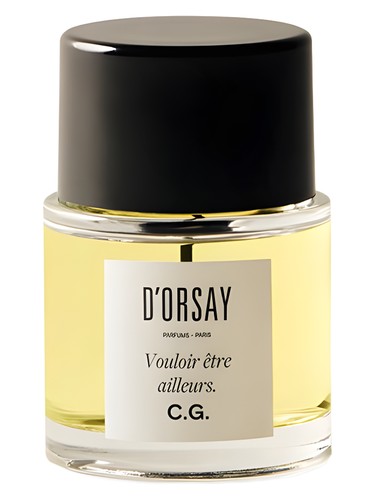
Vouloir Être Ailleurs translates to "wanting to be elsewhere"—a sentiment that feels both melancholic and hopeful, like pressing your face against cool glass while dreaming of distant gardens. The first spray delivers on this promise immediately. There's a crisp, almost citric greenness that unfolds with the clarity of lemon leaf and the medicinal-herbal brightness of angelica. This isn't the manicured green of cut grass or the sharp verdancy of galbanum. It's wilder, more spontaneous—the green of a park bench beneath a canopy of trees in early June, where dappled light filters through leaves still tender from spring.
Created by D'Orsay in 2020, this feminine fragrance captures something elusive: the intersection of restraint and abundance, of structure and wild growth. With a solid 4.22 out of 5 stars from 454 community votes, it's clear that this longing to be elsewhere resonates with those who've worn it.
The Scent Profile
The opening act belongs entirely to that verdant alliance of angelica and lemon leaf. Angelica brings an herbal complexity that skirts the edges of bitter—think celery stalks, parsley stems, something almost medicinal but in the way that fresh air feels medicinal after being indoors too long. The lemon leaf adds brightness without the sharpness of lemon zest itself; it's softer, greener, more diffuse. Together, they create an opening that reads as 100% green according to community accord ratings, and they wear that distinction honestly.
But the heart is where Vouloir Être Ailleurs reveals its true character. Lime (linden) blossom takes center stage—those delicate, honey-sweet flowers that bloom on Tilia trees and scent entire boulevards in early summer. This isn't a loud floral declaration. Instead, it's intimate and almost nostalgic, with a honeyed sweetness (68% sweet and honey accords) that never turns cloying. The linden blossom brings both the floral (96%) and distinctly yellow floral (92%) qualities that define the fragrance's personality. There's something vintage about this note, something that recalls afternoon tea services and pressed flowers in old books.
The base is where things get genuinely interesting. Acacia adds another facet to the floral story—lighter than the linden, more transparent. But it's the hay and beeswax that ground everything. Hay brings an earthy, dried-grass sweetness, while beeswax adds a waxy, slightly animalic warmth that registers in that 54% powdery accord. Together, they create a foundation that feels like a sunny meadow slowly drying in late afternoon heat—warm, comforting, slightly sleepy.
Character & Occasion
This is a perfume with strong opinions about when it wants to be worn. The data tells a clear story: spring claims 100% seasonality, with summer close behind at 80%. Fall and winter barely register (23% and 9% respectively), and for good reason. Vouloir Être Ailleurs needs warmth and light to fully bloom. It's a daytime fragrance through and through—78% day versus a mere 9% night.
Picture it on a warm May morning, worn with linen and an unhurried schedule. It's the scent of market visits and park strolls, of reading on a balcony while trees rustle overhead. The green freshness keeps it from feeling heavy in heat, while the honeyed linden and hay-beeswax base give it enough substance to last through lunch and into afternoon.
This is decidedly feminine in its construction, though anyone drawn to green florals with a vintage sensibility could wear it beautifully. It suits those who appreciate restraint, who find beauty in subtlety rather than projection. It's not for those seeking compliment-generation or dramatic sillage.
Community Verdict
A 4.22 rating from 454 votes suggests a fragrance that delivers on its promise—solid, reliable, but perhaps not universally transformative. This is the kind of score that indicates quality and satisfaction without suggesting groundbreaking innovation. The voter base is substantial enough to trust, and the rating sits comfortably in "very good" territory.
No fragrance is perfect for everyone, and Vouloir Être Ailleurs doesn't try to be. Those lower seasonal ratings for fall and winter likely come from wearers who found it too delicate for colder weather. But that's not weakness—it's specificity, and specificity has value.
How It Compares
The similar fragrances list reads like a syllabus in sophisticated green and floral compositions. Marc-Antoine Barrois's Tilia shares obvious DNA—the linden blossom connection—though each takes its own approach to that honeyed floral. Byredo's La Tulipe occupies similar territory in terms of delicate spring florals. Un Jardin Sur Le Nil by Hermès offers another perspective on green freshness, though with more emphasis on wet vegetation and mango.
More surprisingly, Chergui by Serge Lutens and L'Eau d'Hiver by Frederic Malle appear as comparisons—likely due to that hay and honeyed sweetness in the base. Where Vouloir Être Ailleurs differs is in its lighter touch, its emphasis on green rather than amber or incense.
The Bottom Line
Vouloir Être Ailleurs succeeds at what it sets out to do: capture the ephemeral beauty of a spring day beneath flowering linden trees. It's not trying to seduce or overwhelm; it's trying to transport—to make you want to be elsewhere, specifically in that sun-dappled, honey-scented elsewhere of early summer.
At 4.22 stars, it represents quality craftsmanship and a clear point of view. For those who collect spring and summer fragrances, who appreciate green florals with depth, or who remember the scent of linden trees from childhood, this deserves a test. It won't be the loudest fragrance in your collection, but on the right warm day, it might be the most perfect.
Consider this if you're drawn to any of its comparison fragrances, if you find yourself disappointed by overly sweet florals, or if you simply need an olfactory escape route—a way to be elsewhere without leaving home.
AI-generated editorial review