First Impressions
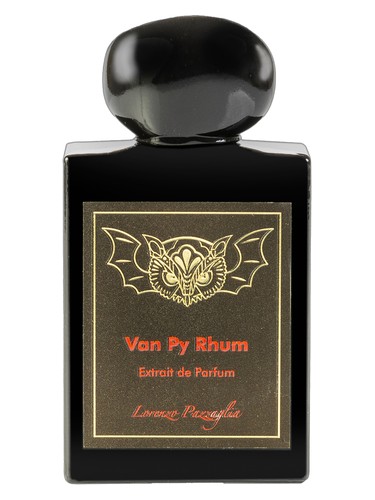
The first spray of Van Py Rhum is an unapologetic declaration of intent. This is vanilla without restraint, without apology, without the powder-room politeness that so often neuters the note in mainstream fragrances. Instead, what hits your skin is a boozy, richly textured wave that marries the sweetness of not one, not two, but four distinct vanilla varieties with the dark, amber warmth of aged rum. It''s immediately enveloping—the olfactory equivalent of sinking into a leather armchair in a dimly lit speakeasy, something decadent already in hand. There''s a creamy opulence here, rounded out by tonka bean''s almond-like whisper, that signals you''re in for something both indulgent and surprisingly sophisticated.
The Scent Profile
Lorenzo Pazzaglia''s composition opens with what can only be described as a vanilla lover''s fever dream. The top notes feature an impressive quartet of vanilla expressions: Bourbon, Madagascar, Tahitian, and a general vanilla accord, each bringing its own nuance to the opening act. Bourbon vanilla lends buttery richness, Madagascar contributes the classic creamy sweetness we all recognize, while Tahitian vanilla adds a slightly floral, almost cherry-like dimension. This vanilla orchestra is immediately spiked with rum and grounded by tonka bean, creating an opening that''s simultaneously sweet and spirited, comforting yet provocative.
As Van Py Rhum settles into its heart, the composition reveals unexpected depth. The vanilla persists—this is, after all, a fragrance with vanilla registering at 100% in its main accords—but now it''s joined by caramel''s buttery sweetness and the green, earthy complexity of patchouli. This is where the fragrance could have tumbled into cloying territory, but the patchouli (registering at 49% in the accord profile) acts as a crucial counterbalance, adding a slightly bitter, herbaceous quality that cuts through the sweetness. White flowers make a subtle appearance here too, adding a soft, almost creamy floral dimension that blends seamlessly rather than competing for attention.
The base is where Van Py Rhum reveals its darker ambitions. Black vanilla husk brings a dried, almost smoky quality to the vanilla theme—less ice cream, more aged vanilla pods in their natural, woody state. The rum returns with deeper resonance, while Indonesian patchouli leaf adds earthy persistence. Most intriguing is the appearance of agarwood (oud), which adds a resinous, slightly medicinal depth that elevates this from simple gourmand to something more complex and adult. The woody accord (48%) becomes increasingly apparent in the dry-down, creating a foundation that''s warm, slightly smoky, and thoroughly intoxicating.
Character & Occasion
Van Py Rhum is unambiguously a cold-weather fragrance. The community data speaks clearly: winter receives 100% suitability, with fall following closely at 90%. This makes perfect sense—this is a fragrance that thrives when temperatures drop and you want something that feels like a cashmere wrap for your skin. Spring registrations drop to 30%, and summer bottoms out at just 12%, confirming what your nose already tells you: this is too rich, too enveloping for warm weather.
The day versus night breakdown is equally telling. While 39% of wearers find it appropriate for daytime, a commanding 88% designate it for evening wear. This is a fragrance that comes alive after dark, perfect for dinner dates, cocktail bars, intimate gatherings, or simply making your evening ritual feel a bit more luxurious. Marketed as feminine, Van Py Rhum possesses the kind of rich, woody-gourmand profile that could easily be worn by anyone drawn to sweet, complex fragrances with backbone.
Community Verdict
With a rating of 4.29 out of 5 based on 1,464 votes, Van Py Rhum has clearly struck a chord with the fragrance community. This is a substantial number of reviews, and the consistently high rating suggests broad appeal despite the fragrance''s bold, unapologetic approach to sweetness. That it''s achieved this reception as a 2022 release from Lorenzo Pazzaglia—a brand less mainstream than the heavy-hitters—speaks to genuine quality and word-of-mouth enthusiasm. The data suggests this is a fragrance worth seeking out, not just another vanilla iteration lost in the crowd.
How It Compares
Van Py Rhum sits comfortably within a constellation of high-end, complex gourmands. Its closest relative appears to be Van Exstasyx, another Lorenzo Pazzaglia creation, suggesting a house signature in crafting sophisticated vanilla fragrances. The comparisons to Giardini Di Toscana''s Bianco Latte, Maison Margiela''s By the Fireplace, Kilian''s Angels'' Share, and Tom Ford''s Tobacco Vanille place it in distinguished company—these are benchmarks of the modern gourmand movement, fragrances that proved sweetness could be sophisticated.
Where Van Py Rhum distinguishes itself is in that quartet of vanillas and the interplay with rum and oud. It''s perhaps sweeter and more directly vanilla-focused than Tobacco Vanille, less smoky than By the Fireplace, and more overtly boozy than Bianco Latte, carving out its own identity within the category.
The Bottom Line
Van Py Rhum is a masterclass in taking a familiar note—vanilla—and exploring its full range rather than settling for the expected. It''s unabashedly sweet, yes, but that sweetness is layered, textured, and grounded by earthy patchouli and woody-resinous depth. The 4.29 rating from nearly 1,500 voters isn''t inflated enthusiasm; it reflects a well-crafted fragrance that delivers exactly what it promises and then some.
This is essential sampling for anyone who loves gourmand fragrances but wants something beyond the basic vanilla-caramel offerings that flood the market. It''s for those who understand that "sweet" doesn''t mean simple, and who appreciate when a perfumer commits fully to a vision rather than hedging with safe choices. If you''ve worn through your bottle of Angels'' Share or found Tobacco Vanille too austere, Van Py Rhum deserves your attention. Just save it for when the temperature drops and the lights go down—that''s when it truly shines.
AI-generated editorial review