First Impressions
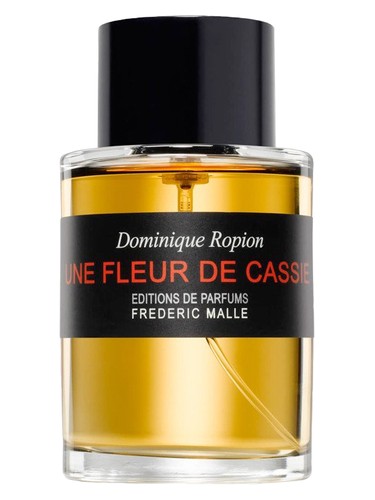
The first spray of Une Fleur de Cassie feels like opening a leather-bound book in a sun-drenched library—there''s warmth, there''s heritage, and there''s an unmistakable softness that envelops without overwhelming. This isn''t the cassie (mimosa) of bright breakfast tables or carefree Mediterranean escapes. Instead, Frederic Malle''s 2000 creation presents something more introspective: mimosa filtered through powdered silk, captured at that precise moment between fresh bloom and pressed memory. The initial impression is decisively powdery—a cloud of finely milled texture that reads as undeniably refined, almost old-world in its restraint.
The Scent Profile
Without specified note breakdowns, Une Fleur de Cassie reveals itself through its dominant character: an overwhelmingly powdery composition (scoring a perfect 100% in this accord) built around yellow floral heart material at 84% intensity. The cassie flower—botanically related to mimosa—provides that distinctive honeyed, slightly animalic quality that hovers between floral sweetness and something more complex, almost leathery.
The progression here isn''t about dramatic transformation but rather subtle revelation. The woody accord at 60% provides structure beneath the powder and pollen, likely offering that subtle warmth that keeps the composition from floating away into pure abstraction. At 51% floral and 40% white floral presence, there''s supporting cast depth—perhaps violet, perhaps iris—that reinforces the vintage cosmetic quality this fragrance wears so confidently.
What''s particularly interesting is the 35% green accord, which likely represents cassie''s natural stem and leaf character. This prevents the composition from becoming overly sweet or one-dimensional, adding a slight astringency that balances the honey-powder axis. The overall effect is of a fragrance that knows exactly what it wants to be: not a soliflore, not a complex oriental, but rather a study in textural elegance where powder and pollen dance in perpetual suspension.
Character & Occasion
With spring rated at 100%, Une Fleur de Cassie has found its spiritual home. This is the season it was born for—when mimosa trees actually bloom, when the air carries just enough warmth to lift its soft sillage without the heat distorting its delicate balance. Fall follows respectably at 70%, where its woody undertones and powdery warmth nestle beautifully against cashmere and the season''s mellow light.
The day versus night split tells the full story: 95% day, 48% night. This is definitively a daylight fragrance, one that thrives in natural light, in office settings, in art gallery openings, in lunch meetings where you want to project quiet competence rather than seductive intent. That''s not to say it fails at night—nearly half the votes suggest it can transition—but it''s unlikely to be your choice for dramatic evening events.
Summer at 47% and winter at 42% represent the margins of its versatility. In heat, that powder might feel heavy; in cold, it might lack the radiating warmth needed to project through layers.
This is decidedly feminine in presentation, with a strong rating of 3.93 from 1,126 votes suggesting it has found its devoted audience. It''s for those who appreciate subtlety over statement, who understand that "powdery" isn''t a criticism but a distinct aesthetic choice.
Community Verdict
Here''s where Une Fleur de Cassie presents something of an enigma: despite its respectable rating and substantial vote count, the fragrance generated minimal specific discussion in the surveyed community conversations. This absence of commentary—resulting in a mixed sentiment score of 0/10—doesn''t necessarily indicate dislike but rather suggests it may not inspire the passionate debate that more polarizing fragrances command.
This silence might actually be telling. Une Fleur de Cassie appears to be a "connoisseur''s choice"—appreciated by those who seek it out but not generating the viral enthusiasm that drives extensive forum discussion. It''s the type of fragrance that wears beautifully on those who understand its references but doesn''t announce itself loudly enough to demand conversation.
How It Compares
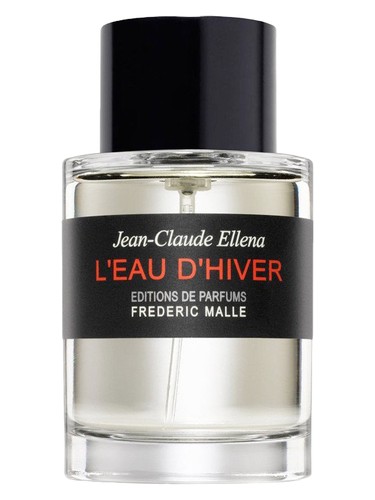
Within the Frederic Malle stable, Une Fleur de Cassie shares DNA with several siblings. Iris Poudre explores similar powdery territory through an iris lens rather than cassie. Lipstick Rose offers another vintage cosmetic angle, though with more obvious rose sweetness. L''Eau d''Hiver provides comparable softness and restraint, while Dans Tes Bras ventures into the same comforting, skin-close intimacy.
The comparison to Coco Eau de Parfum by Chanel is particularly apt—both traffic in that sophisticated, baroque powderiness that references mid-century elegance without becoming costume. Where Une Fleur de Cassie distinguishes itself is in its specific focus on cassie''s honeyed-woody character, making it less ambery than Coco, more yellow-gold than powdery-white.
The Bottom Line
Une Fleur de Cassie occupies a curious position: beloved by its 1,126 voters who''ve granted it a solid 3.93 rating, yet somehow flying under the radar of contemporary fragrance discourse. Perhaps this is exactly as it should be. Not every fragrance needs to be a conversation starter or a compliment generator. Some are meant to be personal talismans, quiet companions that reward those who lean in rather than broadcast to everyone in the room.
This is a fragrance for spring mornings when you want to smell put-together without trying too hard. It''s for those who own vintage compacts, who appreciate the aesthetic of cassie flowers pressed between book pages, who understand that powdery isn''t dated—it''s deliberate. At over two decades old, it remains relevant precisely because it never chased trends to begin with.
Should you try it? If the words "powdery yellow floral" make your heart skip rather than your nose wrinkle, absolutely. Just don''t expect fireworks. Expect something quieter, and perhaps more enduring.
AI-generated editorial review