First Impressions
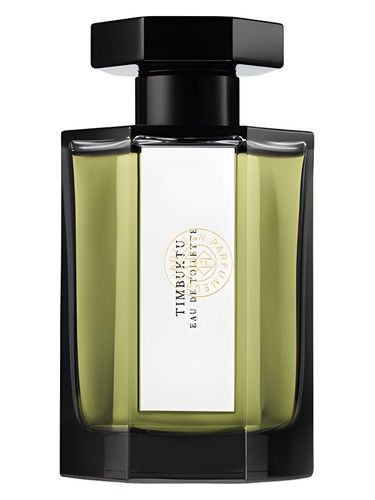
The first spray of Timbuktu transports you somewhere unexpected—not to a souk drowning in tourist-trap oud, but to the quieter edges of an ancient city where spice caravans once rested. There''s mango here, yes, but not the saccharine fruit bomb you might fear. Instead, it arrives dusty and sun-warmed, tempered immediately by the medicinal snap of pink pepper and cardamom''s green-grey shadows. This is L''Artisan Parfumeur at their most ambitious: a 2004 composition that dares to imagine a feminine fragrance built on the bones of desert trade routes rather than the predictable architecture of flowers and vanilla.
Within moments, the fruit recedes like a mirage, and what emerges is something far more compelling—a woody architecture so dominant it registers at 100% in its accord profile, supported by amber''s golden warmth at 92%. This isn''t a perfume that apologizes for its intensity or tries to soften itself with crowd-pleasing sweetness. It knows exactly what it is.
The Scent Profile
Timbuktu''s evolution is less a traditional pyramid than a slow reveal of layers, each more textured than the last. The opening trio of mango, pink pepper, and cardamom establishes an intriguing contradiction: tropical meets apothecary. The mango provides just enough juiciness to prevent the spices from feeling austere, while the pink pepper adds a crackling, almost effervescent quality that keeps the composition from settling into heaviness too quickly.
But the heart is where Timbuktu stakes its claim to uniqueness. Incense arrives not as Catholic church solemnity but as something more primitive—resinous smoke caught on desert wind. The papyrus note adds a peculiar dryness, almost papery (naturally), that amplifies the sense of ancient documents and faded maps. And then there''s karo karounde, also known as African incense wood, a note so specialized that its inclusion alone signals L''Artisan''s commitment to authenticity over marketability. This triumvirate creates an aromatic quality (57% in the accord breakdown) that feels genuinely transported from another geography.
The base is where Timbuktu finally settles into its skin, and here the perfume reveals its staying power. Vetiver provides earthy grounding (43% earthiness in the accords), while myrrh and benzoin weave balsamic sweetness (47%) through the composition like golden thread through rough linen. Patchouli—that most maligned of notes—appears not as headshop residue but as rich soil, connecting all the disparate elements into coherent, wearable terrain. The warm spicy accord, registering at 78%, never overwhelms but provides constant heat, like standing too close to sunbaked stone walls.
Character & Occasion
The community data reveals Timbuktu as primarily an autumn fragrance (94%), and one wearing confirms why: this is a scent of transitions, of lingering warmth giving way to cooler contemplation. But its strong spring showing (78%) and respectable summer performance (62%) suggest remarkable versatility. Only winter, at 43%, seems less ideal—perhaps because the fragrance already carries its own warmth and doesn''t need the contrast of cold weather to shine.
Curiously labeled feminine at launch, Timbuktu reads decidedly unisex to modern sensibilities. There''s nothing here that codes particularly gendered—no powdery florals, no aggressive masculinity. Instead, it occupies that sophisticated middle ground where the wearer''s chemistry matters more than marketing categories.
The day/night data is telling: 100% day, 45% night. This isn''t a date perfume or a club scent. Timbuktu is for museum visits, weekend antiquing, creative work sessions, long walks through transitional landscapes. It''s intellectual without being cold, adventurous without screaming for attention. Wear it when you want to feel transported but still present, exotic but grounded.
Community Verdict
With 4,137 votes tallying to a 4.07 out of 5 rating, Timbuktu has earned genuine respect from a substantial cross-section of wearers. This isn''t a niche darling known only to fifty devotees, nor is it a mass-market crowd-pleaser inflated by name recognition. That rating—solidly above 4.0 but not approaching perfection—suggests a fragrance that rewards those who seek it out while acknowledging it won''t be universally beloved.
The significant vote count indicates staying power. Nearly two decades after its 2004 release, people are still discovering and evaluating Timbuktu, still finding it relevant enough to warrant their opinion. In a market obsessed with quarterly releases and the next big launch, that kind of longevity speaks volumes.
How It Compares
The similar fragrances list reads like a who''s who of sophisticated woody compositions: Serge Lutens'' Fille en Aiguilles, Tauer''s L''Air du Desert Marocain, Portrait of a Lady, even Black Orchid. What Timbuktu shares with these is a refusal to play safe—each pursues a specific vision with commitment.
Where L''Air du Desert Marocain leans harder into desert florals and Fille en Aiguilles explores evergreen territory, Timbuktu occupies a distinct position: the spice route itself rather than any single destination. It''s warmer than Tauer''s masterpiece, less overtly floral than Portrait of a Lady, more wearable than Black Orchid''s gothic intensity. Among this distinguished company, Timbuktu distinguishes itself through restraint—it''s the most quietly confident, the least interested in making a statement.
The Bottom Line
Timbuktu deserves its 4.07 rating: high enough to signal genuine quality, honest enough to acknowledge it requires the right wearer. This isn''t a safe blind buy, but for those drawn to woody amber compositions with intellectual curiosity and actual character, it''s absolutely worth exploring.
The value proposition is solid. L''Artisan Parfumeur occupies a sweet spot—more accessible than pure niche pricing, more interesting than designer offerings. You''re paying for genuine creativity and quality ingredients without the luxury tax of certain ultra-premium brands.
Who should try it? Anyone bored by conventional feminines, anyone who found woody fragrances too masculine but wants that territory for themselves, anyone who reads "incense and vetiver" as an invitation rather than a warning. Timbuktu asks you to meet it halfway—to appreciate subtlety, to value the journey over instant gratification. For the right nose, that''s not a compromise. It''s exactly the point.
AI-generated editorial review