First Impressions
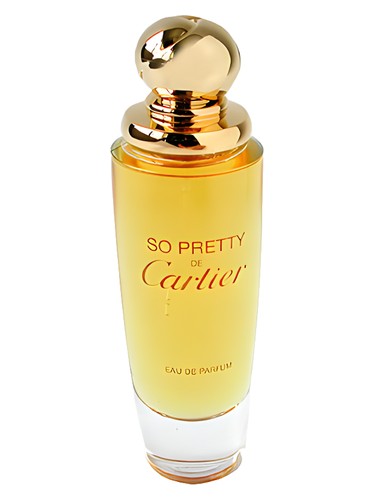
The first spray of Cartier''s So Pretty delivers an unexpected greeting—not the sugary, one-dimensional sweetness its name might suggest, but a sophisticated interplay of ripe fruit and bitter citrus. Blackberry and peach create an opening that feels almost contradictory: lush yet restrained, juicy yet refined. The neroli adds a touch of orange blossom''s green bitterness, while bergamot and mandarin provide a classical cologne framework. It''s a fruit bowl painted by Cézanne rather than photographed in high definition—impressionistic, artistic, grounded in reality but elevated beyond it.
What strikes immediately is the perfume''s refusal to commit to a single personality. Within minutes, that fruity opening begins its retreat, and you sense the powdery heart already pushing through, hinting at the substantial woody-earthy structure that will anchor everything. This is no fleeting whisper of a fragrance; it announces itself with confidence and settles in for the long conversation ahead.
The Scent Profile
The evolution of So Pretty unfolds like a well-plotted novel, each chapter revealing new dimensions while maintaining thematic coherence. Those opening fruits—blackberry''s tartness, peach''s velvet sweetness—fade with grace, never overstaying their welcome. They serve as an invitation rather than the main event.
The heart is where So Pretty reveals its true identity. This is a garden of white and pink flowers rendered in soft focus, filtered through a distinctly powdery lens. Rose takes center stage, but it''s the iris and orris root that define the character here. That unmistakable iris quality—cool, slightly rooty, aristocratically powdery—permeates everything. Jasmine and lily-of-the-valley add their voices to the choir, while orchid contributes an almost creamy texture. This isn''t a photorealistic floral bouquet; it''s florals remembered, florals filtered through vintage face powder and silk scarves stored in wooden drawers.
The base reveals So Pretty''s most intriguing aspect: its substantial, masculine-leaning foundation. Oakmoss brings that classic chypre earthiness, the scent of forest floor and damp stone. Sandalwood and cedar provide woody warmth, while vetiver adds its characteristic smoky, grass-root depth. Benzoin offers a touch of vanilla-tinged resin, and musk rounds everything with skin-like intimacy. With the main accord data showing woody at 100%, earthy at 78%, and powdery at 94%, this fragrance walks a fascinating tightrope between soft femininity and grounded strength.
Character & Occasion
So Pretty''s seasonal performance tells its own story. With fall scoring 86% and spring at 74%, this is clearly a transitional fragrance that thrives in moderate weather. Winter follows at 67%, while summer lags significantly at 37%—that substantial base and powdery heart likely feel too heavy when temperatures soar. This is a perfume for golden autumn afternoons, spring garden parties, and crisp winter days when you want warmth without overwhelming sweetness.
The day/night split (100% day, 69% night) positions So Pretty as primarily a daytime companion, though it certainly has the sophistication for evening wear. It''s polished enough for the office, elegant enough for lunch dates, substantial enough for dinner engagements. The woman who wears So Pretty appreciates classics with character—she''s not chasing trends, but she''s far from staid. This suits someone who pairs vintage blazers with contemporary denim, who reads both contemporary fiction and nineteenth-century novels, who understands that "pretty" doesn''t have to mean insubstantial.
Community Verdict
With a rating of 4.18 out of 5 from 983 votes, So Pretty has earned genuine respect from those who''ve encountered it. This isn''t a niche curiosity with fifty devoted fans, nor is it a mass-market blockbuster with inflated numbers. Nearly a thousand people have weighed in, and they''ve reached a clear consensus: this is a quality fragrance worth experiencing. That rating places it firmly in "very good" territory—not necessarily revolutionary, but reliably excellent. The voting pool suggests a fragrance that continues to find new admirers nearly three decades after its release, speaking to its timeless construction rather than dated trendiness.
How It Compares
The comparison list reads like a who''s who of sophisticated femininity: Chanel No 5 Parfum, Lancôme''s Trésor, Guerlain''s Samsara, Paloma Picasso, and Hermès'' 24 Faubourg. What these fragrances share is a certain unapologetic richness, a willingness to layer complexity upon complexity rather than pursuing minimalist clarity. They''re from an era when perfumes were composed like symphonies rather than iPhone jingles.
Where So Pretty distinguishes itself is in that fruit-forward opening and the emphasis on iris-orris powder. While Chanel No 5 leads with aldehydes and Samsara drowns you in sandalwood, So Pretty offers a more balanced journey from bright fruit through powdery florals to earthy woods. It''s perhaps less iconic than No 5, less overtly sensual than Samsara, but more approachable than either—a fragrance that rewards attention without demanding it.
The Bottom Line
Cartier''s So Pretty deserves more recognition than it receives. In an age of sweet fruit bombs and linear woody ambers, here''s a perfume that remembers how to build a proper structure: top, heart, and base working in concert, each phase distinct yet connected. That 4.18 rating isn''t just numbers—it represents genuine appreciation from people who''ve taken the time to understand what this fragrance offers.
The value proposition is strong, particularly for those seeking alternatives to the usual suspects in the classic feminine category. If you love the powdery sophistication of iris, the grounded character of oakmoss and vetiver, and the idea that "pretty" can have an earthy backbone, this deserves a place on your testing list. It''s particularly suited for those who find modern fruity florals too sweet and linear but want more approachability than full-throttle vintage powerhouses offer.
So Pretty is, paradoxically, not trying to be pretty in the conventional sense—and that''s precisely what makes it beautiful.
AI-generated editorial review