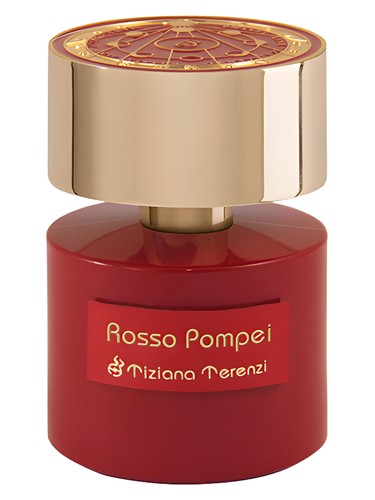
First Impressions
The first spray of Rosso Pompei erupts with the kind of luminous intensity that stops you mid-motion. This isn''t a polite whisper of citrus—it''s a full-throated declaration, channeling the Amalfi Coast at its most dazzling. Grapefruit and lemon pierce through with razor-sharp clarity, their acidity tempered by the unexpected juiciness of grapes. There''s something almost volcanic about this opening, appropriate given the Pompeii reference, as if the fragrance itself has been preserved under layers of time and energy, waiting to burst forth with Mediterranean brilliance.
What immediately distinguishes Rosso Pompei from typical citrus compositions is its architectural ambition. While marketed as feminine, this fragrance occupies a liminal space—bright and effervescent on the surface, yet anchored by a woody foundation that announces itself almost immediately. The citrus doesn''t float ethereally; it stands on solid ground.
The Scent Profile
The opening act is pure Campanian sunshine. That grapefruit-lemon duo delivers the kind of zesty brightness that could wake you from the deepest slumber, while the grape note adds an unexpected vinous quality—not sweet, but rather tart and slightly green, like biting into fruit still cool from morning dew. This triumvirate creates a citrus accord so dominant it registers at 100% in the composition''s character, yet it never feels one-dimensional.
As Rosso Pompei settles into its heart, the narrative grows more complex and considerably more opulent. Ambergris provides a subtle saline warmth, evoking sun-heated rocks by the Mediterranean Sea. The white floral bouquet—magnolia, jasmine, tuberose, and lily-of-the-valley—unfurls with surprising restraint. Rather than the indolic heaviness tuberose often brings, these florals feel diffused, like walking past a flower market rather than burying your nose in a bouquet. The jasmine adds creaminess, the magnolia lends lemony facets that bridge back to the opening, while lily-of-the-valley contributes a clean, slightly soapy elegance.
But here''s where Rosso Pompei plays its trump card: that woody foundation (registering at 97%) never retreats. Cedar, sandalwood, and patchouli form a framework that''s been present from the start, growing more prominent as the citrus gradually mellows. The cedar brings pencil-shaving dryness, the sandalwood offers creamy depth, and the patchouli—earthy and slightly bitter—grounds everything with sophisticated weight. There''s an amber accord working in the background too, at 40% intensity, adding warmth without tipping into sweetness. The animalic facet, subtle at 26%, likely comes from that ambergris, lending a skin-like intimacy that keeps the composition from floating away into abstraction.
Character & Occasion
The community data tells a clear story: Rosso Pompei is a warm-weather champion. Spring wearability sits at 100%, with summer close behind at 92%. This makes perfect sense—the citrus-woody character feels like bottled sunshine, ideal for days when you want vibrancy without heaviness. Yet the fact that fall registers at 85% speaks to the fragrance''s versatility. Those woody base notes provide enough substance to carry through cooler days, even if winter (at 53%) pushes this composition slightly beyond its comfort zone.
Day versus night tells an equally interesting story: 97% day, 83% night. This is fundamentally a daytime fragrance, but that substantial night score suggests it''s no shrinking violet. The woody-amber backbone gives it enough presence for evening wear, particularly in warmer months or casual settings.
Despite its feminine classification, Rosso Pompei reads decidedly unisex. The woody dominance and citrus brightness make it accessible to anyone drawn to fresh, sophisticated compositions with substance. It''s for those who find traditional feminine florals too sweet or conventional, and for those who want their citrus fragrances to have staying power beyond the first hour.
Community Verdict
With a rating of 3.88 out of 5 from 379 votes, Rosso Pompei occupies solid "very good" territory. This isn''t a polarizing love-it-or-hate-it creation, nor is it universally acclaimed as a masterpiece. Instead, it''s a well-crafted, thoroughly wearable fragrance that delivers on its promises without necessarily breaking new ground. That rating suggests broad appeal and consistent quality—hardly a disappointment, but perhaps not the transcendent experience some seek from the niche segment.
The vote count itself indicates a fragrance that''s gained traction without achieving blockbuster status, which often characterizes Tiziana Terenzi''s catalog: respected by those who discover it, but not necessarily on everyone''s radar.
How It Compares
The comparison to Hacivat by Nishane is particularly telling—both marry bright citrus with woody foundations, though Hacivat leans harder into pineapple and oakmoss territory. The Reflection Man reference points to shared woody-floral DNA, while the Ani connection likely stems from the amber warmth. Bois Impérial represents the woody sophistication camp, and the Baccarat Rouge 540 comparison, while perhaps unexpected, probably relates to that luminous quality and amber presence.
Where Rosso Pompei distinguishes itself is in its Mediterranean character—that specific combination of citrus brightness and sun-warmed wood that evokes coastal Italy rather than Persian gardens or French salons.
The Bottom Line
Rosso Pompei succeeds at what it sets out to do: capture Mediterranean luminosity in a composition that''s both immediately appealing and surprisingly substantial. The citrus opening is gorgeous, the woody development sophisticated, and the overall wearability high. That 3.88 rating reflects a fragrance that''s very good rather than exceptional—a distinction worth noting at niche pricing levels.
This is worth exploring if you''re drawn to citrus fragrances with backbone, if you want something bright but not fleeting, or if you appreciate woody compositions that don''t skew dark or heavy. It''s particularly appealing for those seeking alternatives to sweet, conventional feminines. Just know you''re getting quality and wearability rather than groundbreaking artistry—and sometimes, that''s exactly what you need.
AI-generated editorial review