First Impressions
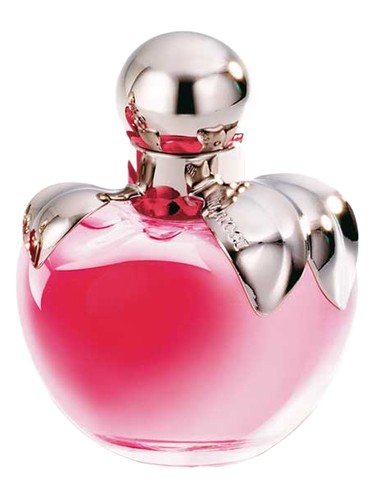
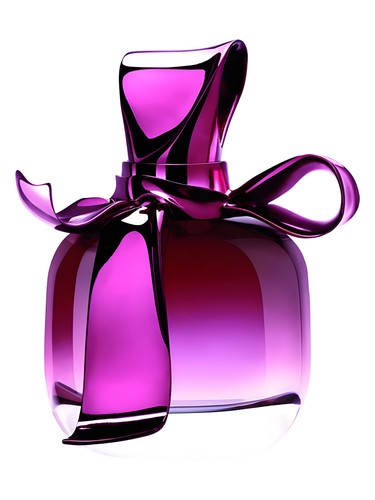
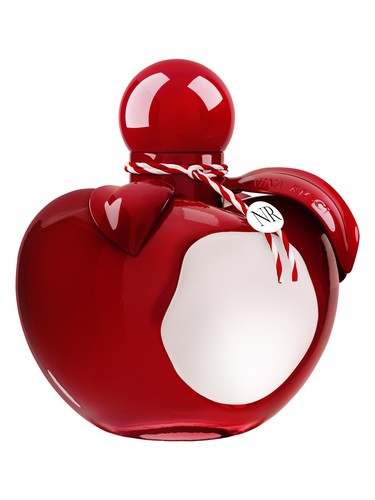
Nina Rouge announces itself with the bright, tart snap of raspberry—not the jammy, cooked-down kind, but the fresh, almost effervescent berries plucked straight from the market stall. There''s an immediate citrus brightness from citron that keeps this opening from veering into cloying territory, though make no mistake: sweetness is the star here. This is Nina Ricci''s iconic apple transformed into something warmer, more enveloping, like watching summer''s playful fruits slowly caramelize as autumn approaches. The first spray feels deliberately feminine, unabashedly sweet, and entirely comfortable in its own skin.
The Scent Profile
The opening act belongs to raspberry and citron, a pairing that manages to be both candy-bright and surprisingly sophisticated. The raspberry dominates with its characteristic tartness, while citron—sharper and more aromatic than standard lemon—adds a zesty backbone that prevents the composition from collapsing into pure confection. This phase is brief but memorable, like the first bite of a carefully constructed dessert.
As Nina Rouge settles into its heart, gardenia and ginger flower emerge to add unexpected complexity. The gardenia brings a creamy, slightly indolic white floral quality that grounds all that fruit, while ginger flower (not to be confused with the spice) contributes a fresh, subtly peppery facet. This floral interlude is relatively quiet—the white floral accord registers at just 35% in the overall composition—but it serves a crucial architectural purpose, building a bridge between the bright top and the indulgent base. The florals never steal the spotlight; they''re supporting actresses who know their role.
The true heart of Nina Rouge reveals itself in the drydown, where caramel and bourbon vanilla take center stage. This isn''t thin, synthetic vanilla; the bourbon designation suggests a richer, more complex vanilla with subtle boozy undertones. The caramel accord (registering at 75% in the overall profile) wraps around everything like a cashmere throw, sweet but not saccharine, warm but not heavy. The interplay between these two notes creates what can only be described as edible—this is firmly gourmand territory, and Nina Rouge isn''t apologizing for it. The base lingers with surprising tenacity, transforming the fragrance from a fruity flirtation into something more substantive.
Character & Occasion
Nina Rouge knows exactly when it wants to be worn: primarily during fall (87% seasonal appropriateness), with strong showings in spring (75%) and winter (63%). This is a transitional fragrance that thrives in cooler weather when its sweetness feels comforting rather than overwhelming. Summer wearers should proceed with caution—only 48% find it suitable for warmer months, and it''s easy to understand why. Heat will amplify that caramel-vanilla base into something potentially cloying.
The data reveals Nina Rouge as decidedly a daytime companion (100% day versus just 42% night). This makes perfect sense: despite its sweetness, there''s something inherently approachable and cheerful about this composition. It lacks the sultry darkness or sophisticated edge that typically defines evening fragrances. Instead, picture coffee dates, afternoon shopping trips, casual office environments where you want to smell delicious without demanding attention.
This is a fragrance for someone who embraces femininity without irony, who isn''t afraid of smelling sweet, and who perhaps has fond memories of the original Nina. It skews younger but isn''t exclusively so—the quality of ingredients elevates it beyond teenage territory, though it maintains a playful spirit that won''t suit those seeking gravitas or minimalism.
Community Verdict
With a rating of 3.87 out of 5 from 1,369 votes, Nina Rouge sits comfortably in "very good" territory. This isn''t a polarizing masterpiece that some adore and others detest; instead, it''s a well-executed crowd-pleaser that delivers exactly what it promises. The substantial vote count lends credibility to that rating—this isn''t a niche unknown but a widely sampled fragrance that has earned broad approval without quite achieving beloved status.
The near-4-star rating suggests consistent quality and wearability rather than groundbreaking originality. It''s the kind of fragrance that makes people smile when they catch a whiff, even if it won''t make anyone''s all-time top ten list.
How It Compares
Nina Rouge exists in conversation with several notable sweet fragrances. Its closest relatives include La Nuit Trésor by Lancôme and La Vie Est Belle by Lancôme, both of which play in similar gourmand-sweet territory but with more pronounced sophistication. Poison Girl by Dior shares the bitter-orange-meets-vanilla DNA but skews darker and more rebellious. Devotion by Dolce&Gabbana occupies similar sweet terrain with its candied lemon and vanilla pairing.
Most tellingly, it''s related to its predecessor, Nina by Nina Ricci—the apple-forward modern classic. Nina Rouge feels like an evolution designed for someone who loved Nina but wanted something less green, more indulgent, better suited to cooler weather. It''s less about youthful flirtation and more about comfortable confidence.
The Bottom Line
Nina Rouge delivers precisely what its accord breakdown promises: an unabashedly sweet, fruit-forward gourmand with enough structure to avoid being one-dimensional. At 3.87 stars, it''s not trying to revolutionize perfumery, and that''s perfectly fine. This is a reliable, pleasant, well-constructed fragrance that will make you smell like the best version of a fall afternoon.
It''s ideal for those who know they love sweet fragrances and aren''t interested in challenging their palate. If you''re drawn to raspberry, caramel, and vanilla, and you''re searching for a daytime scent for cooler months, Nina Rouge deserves a try. However, if you prefer dry, sophisticated, or unconventionally structured fragrances, this won''t convert you. Know yourself, know what you''re getting, and you''ll likely be quite happy with this rosy, caramel-wrapped iteration of Nina Ricci''s playful spirit.
AI-generated editorial review