First Impressions
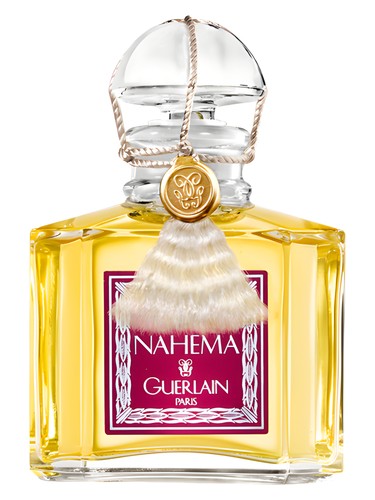
The first spray of Nahema feels like stepping into a conservatory where someone has left the windows open overnight. There''s an immediate collision of verdant greenness and rose petals so ripe they''re nearly overblown, touched with the waxy sweetness of peach and a fizz of aldehydes that lifts everything skyward. This isn''t the polite tea-rose of your grandmother''s vanity—this is the rose that grows wild over garden walls, the one that perfumes entire courtyards with its narcotic presence. Created in 1979 during Guerlain''s golden era, Nahema announces itself with a complexity that modern rose fragrances often smooth away in favor of accessibility. The green notes cut through any potential sweetness with almost astringent precision, while bergamot adds a citric brightness that keeps the opening from collapsing into syrupy territory.
The Scent Profile
Nahema''s architecture reveals itself in waves rather than rigid stages. That opening trio of rose, peach, and aldehydes creates an almost sparkling effect, like champagne poured over rose petals. The green notes aren''t merely decorative—they''re structural, providing a stem-and-leaf bitterness that grounds the composition in something resembling nature rather than fantasy. Bergamot weaves through, offering glimpses of hesperidic brightness that prevent the florals from becoming suffocating.
As the fragrance settles into its heart, Bulgarian rose takes center stage with the kind of opulence that only Guerlain seemed capable of orchestrating in this era. But it''s far from a solo performance. Hyacinth brings its peculiar green-aquatic character, while ylang-ylang adds a creamy, slightly banana-like richness. Lilac contributes a powdery, nostalgic dimension, and jasmine offers its indolic depth. Lily-of-the-valley, with its clean, almost soapy facets, keeps the bouquet from tipping into overwhelming heaviness. This heart accord achieves something remarkable—it''s unmistakably floral (registering at 100% in its dominant accord) yet never simple, never one-dimensional.
The base is where Nahema reveals its Guerlain DNA most clearly. Peru balsam brings a resinous warmth with hints of vanilla and cinnamon, while sandalwood adds its characteristic creamy woodiness. The inclusion of passionfruit in the base is unconventional—it registers as a tropical sweetness that somehow doesn''t clash with the more classical elements. Vanilla rounds everything with softness, while vetiver provides an earthy, slightly smoky counterpoint. The woody accord (63%) and the lingering fruitiness (50%) create a foundation that''s warm without being heavy, sweet without being cloying.
Character & Occasion
With perfect scores for fall wear and 80% for winter, Nahema clearly thrives in cooler weather when its rich florals can unfurl without wilting under heat. The fragrance achieves 69% suitability for spring, where its green aspects and rose dominance feel seasonally appropriate, but drops to just 36% for summer—understandable given its density and warmth. This isn''t a fragrance that plays well with humidity.
What''s fascinating is Nahema''s near-equal performance in day (92%) versus night (91%) contexts. This versatility speaks to its sophistication—it''s opulent enough for evening occasions yet maintains enough freshness and green character to feel appropriate in daylight hours. Picture it worn to an autumn wedding, a winter gallery opening, or simply as a personal indulgence on a grey morning when you need something beautiful to carry you through.
The 96% rose accord makes this decidedly feminine in its traditional presentation, though the green and woody aspects (83% and 63% respectively) provide enough contrast to avoid cartoonish femininity. This is for someone who wants to smell like flowers but has no interest in smelling sweet or innocent.
Community Verdict
The fragrance community remains somewhat elusive on Nahema—the mixed sentiment score of 6.5/10 suggests a polarizing composition, though frustratingly, the specific community discussions provided no detailed opinions about this particular Guerlain creation. What we do have is objective data: 1,721 voters have rated it 4.18 out of 5, which represents strong appreciation even if it doesn''t reach universal acclaim. This rating suggests a fragrance that rewards those who seek it out, even if it hasn''t maintained the widespread cultural footprint of some Guerlain siblings. The absence of vocal community discussion might indicate that Nahema has become something of a hidden gem—overshadowed by louder releases but cherished by those who discover it.
How It Compares
Nahema sits in distinguished company among its similar fragrances. Chamade, another Guerlain creation, shares that classical French elegance and complex floral structure. Dior''s Dune offers a different kind of sophistication—more abstract and oceanic where Nahema is lushly literal. The comparison to Chanel No. 5 Parfum speaks to Nahema''s aldehydic sparkle and old-school construction values, while Samsara Eau de Parfum shares the sandalwood richness and unapologetic femininity. Coco Eau de Parfum parallels Nahema''s baroque sensibility and refusal to play it safe.
Where Nahema distinguishes itself is in its rose-forward identity balanced with that distinctive green sharpness. It''s more overtly floral than Dune, warmer than No. 5, and perhaps more wearable than Samsara''s sandalwood intensity.
The Bottom Line
At 4.18 out of 5 from over 1,700 voters, Nahema has earned its place in the Guerlain pantheon, even if it operates somewhat under the radar. This is a fragrance for those who appreciate roses not as a single note but as a complete experience—petals, yes, but also stems, leaves, and the damp earth beneath. It rewards patience and cooler weather, revealing different facets depending on your skin chemistry and the season.
Is it for everyone? The 36% summer rating and mixed community sentiment suggest not. But for those drawn to complex, classical florals with backbone, Nahema offers something increasingly rare: a rose fragrance with no interest in being liked by everyone, content instead to be loved deeply by the right people.
AI-generated editorial review