First Impressions
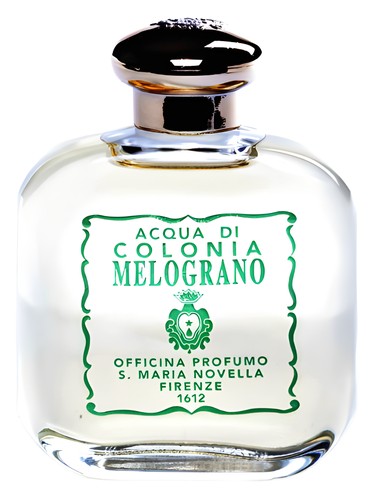
The first spray of Melograno is an elegant deception. You expect fruit—the name promises pomegranate, after all—but what arrives is something far more sophisticated and unexpected. A bright burst of bergamot and bitter orange cuts through the air, laced with a mysterious spice that hints at the complexity to come. This isn''t the sugary, ruby-red pomegranate of modern gourmands. This is 1965 speaking, when Santa Maria Novella crafted femininity through restraint rather than excess, through earth and wood rather than sweetness. Within moments, you sense this fragrance has other intentions entirely: it wants to plant you firmly in a forest floor dappled with morning light, not in an orchard of ripe fruit.
The Scent Profile
The opening citrus accord—bergamot dancing with bitter orange—provides a crisp, almost tart introduction that quickly makes way for the composition''s true character. Those spices in the top notes add a peppery warmth, a suggestion of exoticism that prepares you for the transition ahead. But don''t get comfortable. Within fifteen minutes, the citrus begins its retreat, and you''ll notice Melograno isn''t interested in playing by conventional rules.
The heart reveals where this fragrance earned its name, though pomegranate here acts more as a supporting player than the star. It''s present as a subtle tartness, a slight berry-like quality that weaves between ylang-ylang''s creamy floralcy and rose''s powdery elegance. Yet even here, you sense the weight of what''s coming. The florals never bloom too loudly; they''re measured, almost subdued, as if they know they''re merely a bridge to the fragrance''s true soul.
And that soul lives in the base. Oakmoss dominates with its green, almost bitter earthiness—a hallmark of classic chypre constructions that modern reformulations often struggle to capture. Labdanum adds a leathery, amber-like warmth, while patchouli brings its characteristic earthiness, damp and rich like turned soil after rain. Musk rounds everything out with a skin-like intimacy. This base is where Melograno reveals its thesis: it''s a woody, mossy meditation that happens to carry a whisper of fruit and flower, not the other way around.
The dominance of the woody accord at 100%, backed by a substantial 79% mossy character and 68% earthiness, tells the real story. This is a fragrance that wears green and brown, not pink and red.
Character & Occasion
Melograno shines brightest during transitional seasons, and the community consensus confirms this instinct. It''s practically designed for fall, where it scores a remarkable 92% suitability rating, with spring following closely at 85%. These are the seasons of change, of earth and growth and decay happening simultaneously—precisely the atmosphere this fragrance evokes. Summer wears it well enough at 62%, though the mossy depth might feel heavy on the hottest days. Winter, at 61%, finds Melograno perhaps a touch too green when you''re craving warmth.
The day-to-night breakdown is telling: 100% day suitability versus 53% night suggests this is fundamentally a daylight fragrance. It''s for walking through botanical gardens, attending afternoon meetings, browsing bookshops on overcast Saturdays. The earthy sophistication reads as confident rather than seductive, intellectual rather than sensual. This isn''t to say it fails at night—rather, it doesn''t transform into something different when the sun sets. It remains steadfastly itself: grounded, green, and quietly commanding.
Who is this for? Despite its feminine classification, Melograno wears with androgynous grace. It suits those who appreciate fragrances that challenge rather than comfort, who want to smell like they''ve been somewhere interesting rather than simply smell interesting.
Community Verdict
With a solid 4.07 out of 5 rating across 1,080 votes, Melograno has earned genuine respect. This isn''t a fragrance that polarizes—there are no one-star rants or five-star obsessions dominating the conversation. Instead, it''s garnered steady appreciation from those who discover it, suggesting a fragrance that rewards patience and understanding rather than offering immediate gratification. That rating, hovering just above "very good" territory, reflects a composition that does what it intends to do exceptionally well, even if what it intends isn''t for everyone.
How It Compares
The list of similar fragrances reads like a who''s-who of sophisticated, earth-forward compositions. Dior''s Dune shares that dry, mossy character, while Aromatics Elixir by Clinique occupies similar chypre territory with its herbal intensity. More surprising are comparisons to Tom Ford''s Black Orchid and Lalique''s Encre Noire—both darker, more dramatic, but sharing Melograno''s commitment to earthy depth over conventional prettiness. Perhaps most intriguing is the connection to Tauer''s L''Air du Desert Marocain, suggesting Melograno''s spiced, ambery undertones create an unexpected bridge to that fragrance''s desert mysticism.
Where Melograno distinguishes itself is in its vintage restraint. It achieves complexity without shouting, depth without darkness. It''s the fragrance for those who find Black Orchid too heavy, Aromatics Elixir too sharp, but who still want that earthy sophistication.
The Bottom Line
Melograno isn''t trying to win you over with crowd-pleasing fruit or comforting vanilla. It''s a fragrance that asks you to appreciate craftsmanship from an era when perfumery prioritized composition over mass appeal. That 4.07 rating represents a faithful audience rather than a broad one—and that''s exactly as it should be.
The value proposition depends entirely on what you seek. For someone wanting to understand classic chypre structures or explore Santa Maria Novella''s historic range, this is essential wearing. For those building a collection of distinctive daytime fragrances that work across seasons, Melograno offers versatility wrapped in sophistication.
Should you try it? If you''ve ever felt frustrated by modern fruity-florals, if you find yourself gravitating toward the moss and wood sections of fragrance counters, if you appreciate perfumes that smell like places rather than concepts—absolutely. Just remember: the pomegranate is a suggestion, not a promise. What you''re really getting is earth, woods, and the quiet confidence of a fragrance that''s remained relevant for nearly sixty years.
AI-generated editorial review