First Impressions
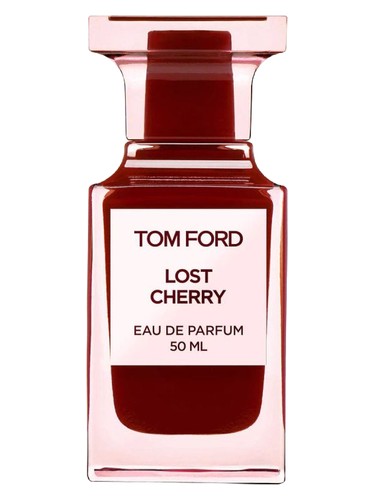
The first spray of Lost Cherry is nothing short of intoxicating. A wave of boozy black cherry crashes over you, tinged with the sweet-bitter edge of almond and the syrupy richness of cherry liqueur. It''s heady, unabashedly indulgent, and immediately recognizable—like biting into a liqueur-soaked chocolate while standing in a perfumery during the holidays. The opening is bright and almost fizzy, with that distinctive maraschino cherry quality that borders on gourmand territory without toppling completely into dessert. This is Tom Ford at his most playful yet sophisticated, creating an olfactory experience that announces itself boldly before settling into something more intimate.
The Scent Profile
Lost Cherry builds its identity on a foundation of cherry that registers at 100% in its accord profile, and it doesn''t apologize for this singular focus. The opening trilogy of bitter almond, black cherry, and cherry liqueur creates a complex introduction where sweetness (89% accord strength) meets nuttiness (66%), resulting in something far more sophisticated than a simple fruit fragrance.
As the initial brightness softens, the heart reveals its complexity. Sour cherry adds a tart counterpoint to the sweetness, while plum deepens the fruity character (61% fruity accord). Then come the florals: Turkish rose and jasmine sambac weave through the composition, adding a subtle sophistication that prevents the fragrance from becoming one-dimensional. These florals don''t dominate—they''re the elegant underpinning that gives Lost Cherry its polish.
The base is where Tom Ford''s mastery truly shows. Vanilla and tonka bean deliver the expected warmth (49% vanilla accord), but they''re joined by an impressive array of spices and woods. Cinnamon and cloves add warmth without overwhelming, Peru balsam brings resinous depth, while sandalwood, cedar, patchouli, and vetiver provide a surprisingly robust woody foundation. This base transforms Lost Cherry from a simple cherry scent into something with genuine sophistication and structure.
Character & Occasion
Lost Cherry is unequivocally a cold-weather fragrance. The data speaks clearly: fall scores 100%, winter 97%, while summer limps in at just 34%. This is a scent that thrives when wrapped in cashmere and wool, when the air is crisp enough to carry its sweet, rich profile without overwhelming. Spring (53%) offers borderline viability, but this cherry truly blossoms when temperatures drop.
The day/night split reveals another dimension of its character: while 64% find it acceptable for daytime wear, it reaches its full potential after dark (94%). This makes perfect sense—Lost Cherry carries an inherent sultriness, a hint of indulgence that feels more at home in evening lighting than fluorescent office spaces. It''s a fragrance for date nights, intimate dinners, holiday parties where you want to leave an impression without saying a word.
While marketed as feminine, Lost Cherry has developed a devoted following across gender boundaries. Its boozy, complex character appeals to anyone drawn to gourmand fragrances with substance. This is for those who aren''t afraid of sweetness but demand sophistication alongside it.
Community Verdict
Here''s where things get complicated. Based on 66 community opinions, Lost Cherry earns a mixed sentiment score of 6.5/10—and the reasons why tell a revealing story. The fragrance itself receives near-universal praise: users describe it as beautiful, balanced, and versatile. Many call it iconic, even a masterpiece in terms of scent quality. The cherry profile is lauded for its bright opening that softens gracefully, and its layering potential makes it a favorite for fragrance enthusiasts who like to experiment.
But then there''s the elephant in the room: performance. The community consensus is unambiguous and damning—Lost Cherry suffers from poor longevity, with most users reporting it fades within 1-6 hours. For a Tom Ford private blend commanding premium pricing, this is difficult to swallow. The phrase "extremely expensive for the performance offered" appears repeatedly in community feedback.
This has led to a practical recommendation that appears consistently: try samples first, consider the travel size, or explore the numerous dupes available. Fragrances like Lovely Cherie and Not Another Cherry reportedly offer similar profiles with better lasting power at a fraction of the cost. The community isn''t saying Lost Cherry smells bad—they''re saying it doesn''t justify its price tag given how quickly it disappears.
How It Compares
Lost Cherry sits in distinguished company, sharing DNA with Hypnotic Poison by Dior, Good Girl by Carolina Herrera, and Baccarat Rouge 540 Extrait de Parfum by Maison Francis Kurkdjian. It''s closest sibling might be Bitter Peach, another Tom Ford creation that explores fruit through a sophisticated lens, while Angels'' Share by By Kilian offers a similar boozy, indulgent quality. Within this category of luxurious fruit-forward fragrances, Lost Cherry distinguishes itself through its specific cherry focus and complex base, though the similar fragrances often best it in longevity.
The Bottom Line
Lost Cherry earned a solid 4.08/5 rating from 16,541 voters, which reflects its undeniable quality as a composition. This is genuinely beautiful perfumery—the scent itself deserves the accolades. But that community sentiment score of 6.5/10 tells the real story: there''s a significant gap between admiring a fragrance and recommending someone pay full price for it.
Should you try Lost Cherry? Absolutely. It''s an experience worth having, a scent that demonstrates what modern fruit fragrances can achieve when crafted with skill and imagination. Should you blind-buy a full bottle? The community suggests otherwise. Start with a sample or travel size. Wear it, love it, then make an informed decision about whether its brief but beautiful presence justifies the investment—or whether one of the many alternatives might serve you better. Sometimes the most honest review acknowledges that a fragrance can be both wonderful and not worth it at the same time.
AI-generated editorial review