First Impressions
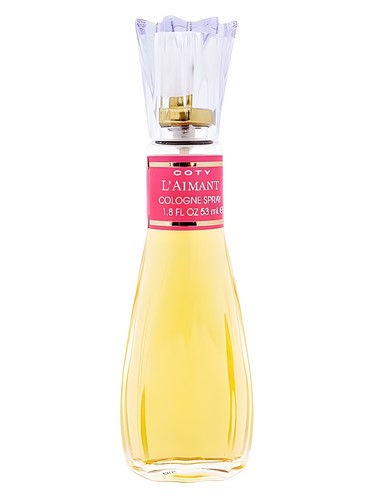
There''s something immediately recognizable about L''Aimant''s opening — a sharp, glittering burst of aldehydes that announces its vintage pedigree before the first breath is fully drawn. These aldehydes, sparkling atop neroli and bergamot with a whisper of peach, feel like they belong to another era entirely. It''s the olfactive equivalent of discovering a perfectly preserved flapper dress in your grandmother''s trunk: beautiful, undeniably authentic, yet somehow foreign to contemporary sensibilities. The name means "the magnet" in French, and while that pull may have weakened over the decades of reformulation, there''s still something undeniably magnetic about this opening salvo — even if it takes time to appreciate what it''s trying to say.
The Scent Profile
L''Aimant reveals itself as an aldehydic floral with substantial woody foundations, a structure that reflects its 1927 birth date with remarkable fidelity. Those opening aldehydes, scored at 87% in the fragrance''s accord profile, create the fizzy, soapy-clean impression that defined luxury between the wars. They''re joined by citrus brightness from bergamot and neroli, while peach adds a soft, fuzzy roundness that prevents the top from becoming too austere.
The heart unfolds into a classic floral bouquet that could have been lifted from any number of pre-war masterpieces: ylang-ylang brings its creamy, banana-like richness; rose and jasmine form the traditional backbone; geranium adds a slightly green, rosy facet; and orchid contributes a subtle powder. This is rose scored at 68% — noticeable but not dominating, woven into a tapestry rather than standing solo. The powdery accord (73%) becomes increasingly apparent here, that vintage talc-like quality that modern wearers either find comforting or dated, depending on their relationship with perfumery''s past.
But it''s the base that truly defines L''Aimant''s character, explaining why woody registers at a full 100% in the accord analysis. Sandalwood and Virginia cedar provide the structure, while vetiver adds an earthy, slightly bitter counterpoint. Musk softens everything with that skin-like warmth characteristic of vintage compositions, and vanilla with tonka bean inject sweetness (71% in the accord profile) and that powdery, coumarin-rich warmth that was the signature of countless Jazz Age scents. This foundation is substantial, old-fashioned in the best sense, and surprisingly aromatic (70%) — a complexity that reveals L''Aimant as more than just another aldehydic floral.
Character & Occasion
The data tells a clear story about L''Aimant''s ideal habitat: this is overwhelmingly a daytime fragrance (100% day versus 50% night), and it finds its strongest expression in the transitional seasons. Fall dominates at 81%, followed closely by spring at 70%, suggesting that L''Aimant needs neither the deep cold of winter nor the oppressive heat of summer to shine. At 58% for winter and just 50% for summer, it''s clear this magnet works best when the temperature is moderate and the occasion calls for something refined rather than bold.
This is a fragrance for those who appreciate the language of vintage perfumery — not necessarily older wearers, but those with older souls when it comes to scent. It speaks to collectors, to students of fragrance history, to anyone who finds comfort in the powdery-woody signatures that defined elegance before perfumery turned aquatic, gourmand, or brutally minimalist.
Community Verdict
The conversation around L''Aimant reveals a fragrance caught between two identities, reflected in a mixed sentiment score of 5.5 out of 10. The vintage formulation garners considerable respect: those who''ve experienced authentic older bottles praise its warmth and quality, recognizing it as part of perfumery''s essential heritage. The challenge lies in accessing those vintage versions — they''re both difficult to source and prohibitively expensive when found.
The modern formulation, predictably, tells a more complicated story. At least one wearer initially disliked it before developing appreciation through understanding its historical context — a telling admission that suggests L''Aimant requires education as much as application. Community members note limited discussion around current performance and longevity, suggesting either underwhelming performance or simply a lack of widespread interest in the reformulated version.
The overall rating of 4.05 out of 5 from 1,045 votes presents an interesting contradiction to the mixed Reddit sentiment. This gap likely reflects selection bias: those purchasing and rating L''Aimant are probably already inclined toward vintage-style fragrances, while casual discussion reveals more honest disappointment with how it performs against memory or expectation.
How It Compares
L''Aimant exists in rarified company, listed alongside Arpège by Lanvin, Chanel No. 5 Parfum, Ysatis by Givenchy, Vanderbilt, and Dune by Dior. These comparisons place it firmly in the aldehydic-floral tradition that dominated the first half of the twentieth century. Against Chanel No. 5, L''Aimant reveals itself as warmer, woodier, less purely aldehydic. Next to Arpège, it shows more sweetness in the base. Compared to these legends, L''Aimant occupies an interesting middle ground: accessible in price (at least in its modern form), but arguably compromised in execution.
The Bottom Line
L''Aimant represents a familiar dilemma in contemporary perfumery: a genuine classic whose modern incarnation can''t quite live up to its heritage. The 4.05 rating from over a thousand voters suggests it still has admirers, but the mixed community sentiment reveals the truth — this is a fragrance best appreciated by those already fluent in vintage perfume''s particular dialect.
For collectors seeking authentic vintage bottles, the hunt may prove worthwhile, offering a glimpse into pre-war luxury at a fraction of what you''d pay for vintage Chanel. For those considering the modern version, approach with adjusted expectations and perhaps a history book. L''Aimant may have lost some of its magnetic force through the years of reformulation, but there''s still enough pull here to attract those willing to meet it on its own terms — preferably on a crisp fall morning, when nostalgia smells less like regression and more like wisdom.
AI-generated editorial review