First Impressions
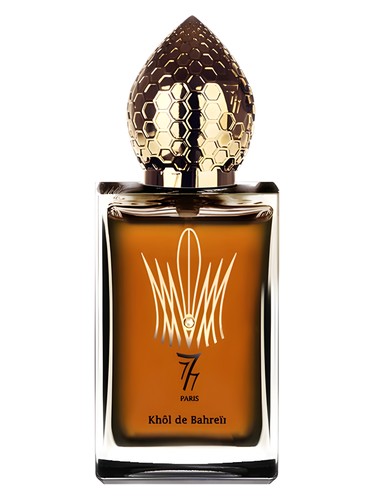
The first spray of Khôl de Bahreïn transports you somewhere between a Bahraini souk at dusk and a Parisian powder room—an unlikely marriage that shouldn't work, yet does so brilliantly. This 2013 creation from Stéphane Humbert Lucas opens with an unexpected softness: resinous warmth tempered by violet's cool, almost metallic floralcy, all dusted with something unmistakably sweet. It's not the candy-shop sweetness of modern gourmands, but rather the honeyed depth of ancient resins catching lamplight. Within moments, you understand this is no ordinary amber fragrance—it wears its richness like silk rather than velvet, intimate rather than announced.
The Scent Profile
The opening act defies easy categorization. Those resins arrive first, creating an immediately enveloping warmth, but the violet cuts through with its characteristic powdery-green coolness. Sweet notes round the edges, preventing the composition from feeling austere or overly serious. It's a brief introduction, a clearing of the throat before the real conversation begins.
The heart reveals Khôl de Bahreïn's true ambitions. Iris emerges as the silent protagonist—not the carrot-earthy iris of some niche offerings, but a cosmetic, almost retro interpretation that recalls vintage face powders and lipstick cases. Sandalwood provides creamy support, its woody smoothness creating a platform for the iris to perform. Then there's ambergris, that marine-animalic mystery that adds subtle salinity and depth, preventing the powder from becoming too prim or dated. This middle phase is where the fragrance truly lives, where it establishes its identity as something between historical homage and contemporary art.
The base settles into a skin-close embrace of Peru balsam and musk. The balsam brings vanilla-tinged resinousness with hints of cinnamon and subtle smokiness, while musk provides that indefinable "your skin but better" quality that makes you want to keep smelling your wrist. This foundation is less about projection and more about persistence—it's where the fragrance becomes part of you rather than something you're wearing.
Character & Occasion
This is unquestionably a cold-weather companion. The data speaks clearly: fall wearers embrace it completely, while winter isn't far behind at 83%. Spring shows modest potential at just under half approval, but summer? A mere quarter of wearers find it suitable for warm months, and for good reason. This is a fragrance that wants layers—both of clothing and of air density. It thrives when there's a chill to push against, when its warmth feels like comfort rather than excess.
Interestingly, while marketed as feminine, Khôl de Bahreïn possesses an androgynous dignity. The powdery iris and violet could skew traditionally feminine, but the amber and balsamic depth grounds it in something more universal. It's for anyone who appreciates complexity over simplicity, who wants their fragrance to evolve rather than announce.
The day-to-night balance (76% day, 83% night) suggests remarkable versatility within its seasonal sweet spot. Wear it to the office in November and it feels polished and professional. Wear it to dinner in December and it transforms into something more mysterious, more intimate. The moderate sillage means you won't overwhelm a conference room, but you'll leave a memorable impression in closer quarters.
Community Verdict
With 908 votes landing at 4.06 out of 5, Khôl de Bahreïn has earned genuine respect. This isn't a polarizing fragrance with extreme lovers and haters—it's a solid performer that delivers on its promises. That rating places it firmly in "very good" territory, suggesting consistent quality and broad appeal among those who've experienced it. The substantial vote count indicates this isn't some obscure curiosity but a legitimate player in the niche market, one that's been thoroughly tested and appreciated by a significant community.
How It Compares
The comparison to Serge Lutens' Ambre Sultan makes perfect sense—both explore amber through an artistic rather than commercial lens. However, where Ambre Sultan leans heavily into herbal, almost medicinal territory, Khôl de Bahreïn takes a softer, more powdered approach. The Shalimar reference speaks to that classic powder-amber heritage, though Khôl de Bahreïn feels more modern in its restraint. Chergui shares the iris-tobacco warmth, while the Maison Francis Kurkdjian comparisons (Baccarat Rouge 540 and Grand Soir) point to its contemporary niche positioning and quality level, though Khôl de Bahreïn feels less immediately opulent and more contemplative than either MFK offering.
What sets it apart is that violet-iris combination in an amber framework—it's simultaneously warmer than a straight iris fragrance and more refined than a typical amber.
The Bottom Line
Khôl de Bahreïn represents Stéphane Humbert Lucas at his most successful—creating something that honors fragrance history while maintaining a distinct point of view. At 4.06 stars, it won't change your life, but it will very likely earn a place in your cool-weather rotation if you appreciate sophisticated amber compositions with personality.
This is essential testing for anyone who loves Serge Lutens' amber explorations, vintage Guerlain powder, or simply wants an alternative to the ubiquitous oud-amber combinations dominating niche perfumery. It's not for those seeking projection or compliment-fishing, nor for warm-weather wearers. But if you want something that whispers rather than shouts, that feels like a secret rather than a statement, Khôl de Bahreïn deserves your attention. The real question isn't whether it's good—the community has answered that—but whether its particular brand of veiled opulence speaks to you.
AI-generated editorial review