First Impressions
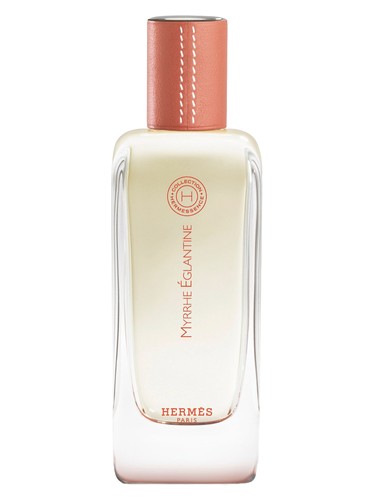
The first spray of Myrrhe Eglantine reveals Hermès at its most deceptively simple. This is a rose fragrance, yes—but not the rose you might expect from a house known for leather and restraint. Here, the eglantine (wild rose or sweetbriar) meets myrrh in an opening that feels both ancient and refreshingly modern. There''s an immediate warmth that wraps around the floral brightness, a golden, resinous quality that suggests this rose grows not in a manicured garden but somewhere more mysterious—perhaps near an incense-filled temple or along a sun-warmed Mediterranean cliff.
The Hermessence line has always championed elegant minimalism, and Myrrhe Eglantine stays true to this philosophy while exploring surprisingly rich territory. What strikes you immediately is the balance: this doesn''t announce itself as a heavy oriental or a soliflore rose. Instead, it occupies a fascinating middle ground where the floral and the balsamic exist in perfect conversation.
The Scent Profile
While the specific note breakdown remains part of Hermès'' closely guarded formulation secrets, the fragrance''s structure reveals itself clearly through wear. The dominant rose accord—registering at full intensity in the scent''s character—isn''t sharp or dewy. This is rose viewed through an amber lens, its natural sweetness enhanced by the warm, honeyed tones that amber brings to the composition.
The myrrh referenced in the fragrance''s name makes its presence known not as a dark, churchy incense but as a sophisticated balsamic undertone. At 22% on the balsamic accord scale, it provides just enough resinous depth to anchor the rose without overwhelming it. This is where the fragrance''s genius lies: the myrrh doesn''t compete with the rose; it illuminates it from beneath, like candlelight through colored glass.
As the fragrance settles, the amber accord—present at 57%—emerges as the true supporting player. It wraps the rose in a warm, slightly spicy embrace, with subtle warm spicy notes (25%) adding a gentle prickle of interest. There''s a whisper of sweetness (19%) that never veers into candy territory, instead reading as the natural sugar content of rose petals concentrated by the sun.
The floral accord sits at 30%, which tells you something important: this is fundamentally a rose-amber duet rather than a full floral bouquet. The eglantine remains the solo voice, its green-tinged, slightly wilder character distinguishing it from more cultivated rose fragrances.
Character & Occasion
Here''s where Myrrhe Eglantine truly shines in its versatility. The community data reveals a fragrance that transitions beautifully across seasons, with spring leading the charge at 100% suitability, followed closely by fall at 92%. This makes perfect sense—spring brings out the rose''s natural habitat, while fall embraces that amber-myrrh warmth. Even summer registers at a respectable 62%, suggesting the fragrance never becomes cloying in heat, while winter''s 44% rating indicates it might feel too delicate for the coldest months when heavier orientals dominate.
The day versus night breakdown is particularly telling: 98% day versus 38% night. This is emphatically a daylight rose, sophisticated enough for the office, intimate enough for weekend wear, and refined enough for occasions that demand presence without projection. The feminine classification speaks to its marketing, though this is certainly a fragrance that transcends traditional gender boundaries—anyone drawn to elegant rose compositions will find much to love here.
Picture this on a spring morning meeting, during an autumn gallery opening, or as your signature scent for those days when you want to feel polished but not perfumed. It''s the rare fragrance that works equally well with a silk blouse or a cashmere sweater.
Community Verdict
With a solid 4.03 out of 5 stars from 468 votes, Myrrhe Eglantine has clearly resonated with those who''ve experienced it. This rating places it firmly in "excellent" territory—high enough to signal genuine quality and broad appeal, while the specific score suggests a fragrance with a distinct point of view that won''t be for everyone.
The vote count itself is meaningful. Nearly 500 people have taken the time to rate this fragrance, indicating it''s garnered serious attention despite being a niche offering within Hermès'' already selective Hermessence collection. This isn''t a passing curiosity; it''s a fragrance that inspires opinions and, evidently, loyalty.
How It Compares
The comparison to Portrait of a Lady by Frederic Malle immediately makes sense—both feature rose wrapped in warm, ambery depths. However, Myrrhe Eglantine takes a lighter, more balsamic approach compared to Portrait''s patchouli-incense intensity. Similarly, the reference to Ambre Sultan by Serge Lutens points to shared amber DNA, though Hermès keeps things considerably more floral and less animalic.
Within the Hermès family, its kinship to Rose Ikebana is clear, though that fragrance leans greener and more aqueous. The mentions of Chergui and Grand Soir suggest Myrrhe Eglantine occupies space in the refined amber-oriental category, distinguished by its prominent rose character and remarkable wearability.
The Bottom Line
Myrrhe Eglantine succeeds at something genuinely difficult: making a rose-amber fragrance feel fresh. At a 4.03 rating, it''s clearly struck a chord with those seeking sophisticated florals that avoid both austerity and excess. The Hermessence collection generally offers excellent value for niche-quality perfumery, and this entry deserves its place in the lineup.
This is for someone who finds most rose fragrances either too green or too jammy, who wants amber warmth without oriental heaviness, and who appreciates fragrances that shift gracefully from season to season. If you''ve ever wished Portrait of a Lady came in a daylight version, or if Ambre Sultan feels too intense for regular wear, Myrrhe Eglantine might be exactly what you''ve been seeking.
AI-generated editorial review