First Impressions
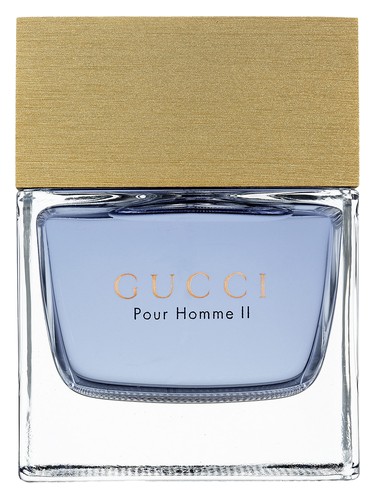
The first spray of Gucci Pour Homme II delivers something unexpected: a crisp, almost metallic burst of violet leaf that immediately sets it apart from conventional masculine fragrances. This isn''t the sweet violet of powdery florals—it''s the crushed stem, green and slightly bitter, married to bright bergamot that adds citrus light without veering into typical freshness. There''s an ozonic quality here, an airy coolness that hovers above the composition like morning mist over a Japanese garden. Within moments, you understand why this 2007 release earned a devoted following and a 4.37 out of 5 rating from over 5,000 voters. This is refinement bottled.
The Scent Profile
The opening act of violet leaf and bergamot is deceptively simple. That green, slightly aquatic quality dominates the early minutes—the violet leaf delivers both the ozonic freshness (rating 83% in the aquatic-adjacent ozonic accord) and the deep green character (82%) that gives the fragrance its distinctive personality. It''s clean without being soapy, fresh without screaming "cologne."
As the top notes settle, Gucci Pour Homme II reveals its true genius: black tea. The heart introduces a refined, slightly astringent tea note that feels both contemplative and sophisticated. This isn''t sweet chai—it''s closer to a delicate oolong or earl grey, dry and meditative. The tea is warmed by cinnamon and pimento, creating that dominant warm spicy character (100% accord rating) and distinct cinnamon presence (70%). The spice here isn''t aggressive or gourmand; it''s measured, adding just enough heat to keep the composition from feeling too cool or distant.
The base is where masculinity asserts itself more traditionally, yet still with restraint. Tobacco leaf (53% accord) provides earthy depth without veering into lounge-bar territory, while myrrh adds resinous warmth and a subtle incense quality. Musk keeps everything intimate and skin-close, while the olive tree note—an unusual choice—contributes a subtle Mediterranean woodiness that feels both fresh and rooted. This is a fragrance that never shouts, content to whisper its complexities to those who lean in close.
Character & Occasion
The data tells a clear story: Gucci Pour Homme II is a spring champion (96%), excelling in that transitional season where green freshness and warming spice both feel appropriate. It performs admirably in fall (72%) and summer (63%), though winter (31%) isn''t its natural habitat—that tea and violet combination needs some warmth in the air to truly sing.
This is overwhelmingly a daytime fragrance (100%), though its warm spicy base allows it to extend into evening wear (52% night suitability). The scent profile and moderate sillage make it ideal for the office, professional meetings, or any setting where you want to smell refined without announcing your presence across the room. It''s a fragrance for intimate settings, the kind worn for dates where conversation happens across a table rather than shouted across a club.
Who is this for? The man who appreciates subtlety over statement, who values uniqueness without eccentricity. It suits those drawn to tea-forward compositions, anyone seeking an alternative to the ubiquitous fresh or overtly masculine fragrances that dominate the market. Age-wise, it skews mature—not because young men can''t wear it, but because its restraint and sophistication suggest someone comfortable with quiet confidence.
Community Verdict
The Reddit fragrance community speaks with near-unanimous appreciation, awarding Gucci Pour Homme II a sentiment score of 8.2 out of 10 across 73 opinions. The praise centers on its elegant, unique scent profile—that refined marriage of tea and violet leaf that simply doesn''t exist elsewhere in quite this form. Users describe it as "timeless," a "forever fragrance" that transcends trends and seasons.
The versatility earns consistent praise: suitable for most occasions, wearable year-round for those in temperate climates, with excellent performance in its intended intimate-wear context. The composition feels distinctive and memorable despite—or perhaps because of—its restraint.
However, the community is equally clear about its Achilles'' heel: longevity. The typical 2-3 hour wear time disappoints users who love the scent but find themselves reapplying by lunch. Projection is similarly weak; this stays close to the skin, which some appreciate but others find limiting given the quality of the composition.
The elephant in the room? Gucci Pour Homme II was discontinued in 2013. Resale prices have ballooned to $150-300 or more, and the secondary market is rife with authentication concerns. This practical reality tempers the love affair—many admirers reluctantly acknowledge they can''t justify the inflated prices or the risk of counterfeits.
How It Compares
In the landscape of refined masculine fragrances, Gucci Pour Homme II shares DNA with several benchmarks while maintaining its own identity. Spicebomb by Viktor & Rolf brings similar warm spice but with far more projection and a gourmand edge. Burberry London for Men offers comparable sophistication with its cinnamon and tobacco, though it''s sweeter and less green. YSL''s L''Homme shares the fresh-yet-warm approachability, while The One for Men by Dolce & Gabbana travels similar spiced territory with more amber sweetness. Dior''s Fahrenheit offers an interesting comparison point—another unique, slightly metallic masculine with cult status.
What sets Gucci Pour Homme II apart is that tea-violet axis. It''s greener than most of these comparisons, less conventionally masculine, more meditative. It occupies a narrow but valuable space: sophisticated freshness with genuine warmth.
The Bottom Line
A 4.37 rating from over 5,000 voters doesn''t lie—Gucci Pour Homme II is genuinely special. It represents a road not taken in masculine perfumery, a moment when Gucci chose restraint and refinement over mass appeal and performance metrics.
Should you chase it on the secondary market? That depends on your priorities and budget. If you''ve smelled it, loved it, and can afford the inflated prices without wincing, it remains a beautiful fragrance that nothing else quite replicates. But be prepared for the longevity issues and ensure you''re buying from reputable sellers to avoid counterfeits.
For those who''ve never tried it, seek out a sample before committing to collector''s pricing. The uniqueness is real, but so are the limitations. This is a fragrance that demands realistic expectations: you''re buying elegance and distinction, not performance and projection. You''re buying a conversation piece, a subtle signature, a little green luxury that most people will never smell beyond three feet.
For collectors of discontinued classics or tea-fragrance devotees, it''s worth the hunt. For everyone else, explore the similar fragrances that remain in production—they may not capture this exact alchemy, but they''re easier to love without the heartbreak of empty bottles and inflated price tags.
AI-generated editorial review