First Impressions
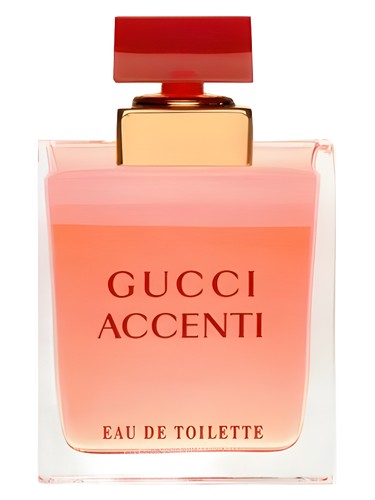
The first spray of Gucci Accenti is like biting into a tangerine while standing in a field of wild herbs—a curious juxtaposition that immediately announces this isn''t your typical mid-90s fruity floral. The artemisia cuts through the sweetness with its slightly bitter, green bite, while black currant adds a jammy richness that prevents the tangerine from reading as simple citrus. This opening feels like a deliberate contrast, a push-and-pull between the accessible and the unexpected. Released in 1995, just as Tom Ford was beginning his transformative tenure at Gucci, Accenti captures a transitional moment: one foot still in the classical perfumery of the early 90s, the other stepping toward something more daring.
The name itself—"Accenti," or "accents" in Italian—proves prophetic. This is a fragrance of emphatic moments, of bold strokes that somehow coalesce into a wearable whole.
The Scent Profile
After that intriguing opening settles, Accenti reveals its true nature as an opulent fruity-oriental. The heart unfurls with classic white florals—rose, jasmine, and lily-of-the-valley—but these aren''t delicate whispers. They''re lush, almost heady, with a spicy clove note threading through like a red silk ribbon. The clove is crucial here; it keeps the florals from drifting into soapy territory and adds warmth that bridges to the base.
And what a base it is. This is where Accenti earns its 100% fruity accord rating and reveals why it scored 81% on sweetness. Peach and raspberry mingle with tonka bean and vanilla, creating a dessert-like quality that could easily tip into cloying territory. But the perfumers showed restraint (or at least ambition) by grounding this confection with sandalwood, patchouli, and vetiver. The result is a fragrance that reads as unabashedly sweet and fruity on the surface, yet possesses enough woody backbone—59% woody accord—to maintain structure.
The progression is linear in the best 90s fashion: you get all of it, all the time, just in shifting emphasis. The fruits never fully retreat; the vanilla and tonka bean assert themselves early and stay late. This is maximalism with a wink, sweetness with just enough edge to keep you interested.
Character & Occasion
The data tells a clear story: Accenti is a fall and winter creature. It scores 100% for fall suitability and 69% for winter, which makes perfect sense given that fruit-vanilla-patchouli combination. This is the fragrance equivalent of a velvet blazer—rich, textured, unapologetically opulent. In spring it drops to 33% suitability, and summer at 23% seems almost laughable. Save this for cooler weather when its sweetness can unfold without overwhelming.
Interestingly, the day/night split is nearly even: 70% day versus 75% night. Accenti walks that unusual line of being both approachable enough for daytime wear yet sufficiently rich for evening. The fruity-sweet character keeps it from feeling too serious or formal, while the woody-oriental base prevents it from reading as purely casual. It''s versatile in that specific mid-90s way, when perfumes weren''t yet segmented into such rigid usage occasions.
Who is this for? Based on the composition and era, Accenti speaks to someone who appreciates vintage femininity without primness—the woman who wore dark lipstick with minimal makeup, who mixed designer pieces with vintage finds before it became a hashtag.
Community Verdict
Here''s where the picture gets hazier. With a sentiment score of 6.5 out of 10, the Reddit fragrance community offers decidedly mixed feelings, though perhaps "indifferent" is more accurate than "mixed." The pros are largely historical: it''s recognized as a classic from the 90s-2000s era with historical significance, noted for being suitable for sharing across genders in families, and valued as part of well-regarded classic collections.
The cons are more telling: there''s limited specific discussion about the scent itself, minimal detailed reviews from current wearers, and it appears discontinued or rarely discussed in modern communities. Based on 63 opinions, Accenti exists more as a memory than a living conversation. The community suggests it''s best for vintage collectors, family heirloom sharing, and nostalgia-driven wear.
This lack of engagement says something important: Accenti hasn''t found its champion in the vintage revival movement the way some discontinued fragrances have. It remains a footnote rather than a rediscovery.
How It Compares
The similar fragrances list reads like a who''s who of 90s prestige perfumery: Dolce Vita by Dior, Casmir by Chopard, Trésor by Lancôme, Poison by Dior, Dior Addict by Dior. These are all big, unapologetic fragrances from an era when "subtle" wasn''t yet a compliment. Where Accenti distinguishes itself is in that high fruity accord—it leans more gourmand-adjacent than its cousins, with more emphasis on peach and raspberry than the ambery-spicy orientals like Poison or the pure floral sweetness of Trésor.
In this company, Accenti is perhaps the sweetest and most overtly fruity, which may explain both its appeal and its eventual fade from prominence as tastes shifted toward either clean minimalism or niche complexity.
The Bottom Line
With a solid 4.1 out of 5 stars from 795 votes, Gucci Accenti clearly satisfied its wearers—but its discontinued status and minimal community discussion suggest it hasn''t translated to contemporary relevance. This is a competent, even lovely example of mid-90s fruity-oriental perfumery, executed with quality materials and a clear vision.
Should you seek it out? If you''re building a collection that documents Gucci''s fragrance history or if you''re drawn to that specific era''s aesthetic of sweet opulence, absolutely. Accenti offers a snapshot of a moment when luxury houses were experimenting with fruit and gourmand notes before those categories became oversaturated. For daily wear in 2024, you''d need to genuinely love bold, sweet, fruity fragrances and feel comfortable wearing something decidedly vintage in character.
The real value lies in understanding what Accenti represents: a bridge between eras, a house finding its footing, a moment when sweet could still feel sophisticated. Sometimes the most interesting fragrances aren''t the legendary ones—they''re the ones that tried something, succeeded modestly, and quietly stepped aside.
AI-generated editorial review