First Impressions
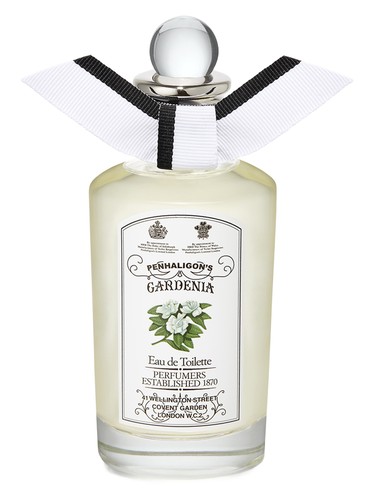
The first spray of Penhaligon''s Gardenia transports you directly to a walled English garden at dawn, when everything glistens with possibility. This isn''t the gardenia of hot summer nights or heavy corsages wilting under ballroom lights. Instead, it opens with an unexpected burst of green—crisp, vegetal, alive—as if you''ve brushed past dewy leaves to reach the blooms themselves. The bergamot provides a citric brightness, while violet and hyacinth add a cool, almost aqueous quality. Most surprising is the rhubarb, lending a tart, slightly metallic edge that keeps the opening from veering into conventional prettiness. This is a gardenia that knows it''s growing in soil, not floating in some abstract floral fantasy.
The magnolia in the opening creates an interesting tension with the gardenia to come—both are creamy white florals, but magnolia brings a more lemony, champagne-like effervescence. Together with those assertive green notes, they announce that this 1976 creation has no intention of playing demure.
The Scent Profile
As Gardenia settles into its heart, the composition reveals its true architecture: a cathedral of white florals that manages to feel both abundant and airy. The gardenia itself emerges as the central pillar, rich and creamy without becoming cloying. Penhaligon''s has rendered it with remarkable accuracy—there''s that characteristic coconut-like sweetness balanced by a slightly rubbery, green undertone that marks genuine gardenia rather than its more sanitized interpretations.
But gardenia rarely stands alone here. Tuberose adds its distinctive narcotic warmth, creating a compelling dialogue between the two flowers. Lily-of-the-valley provides a gentle, almost soapy cleanliness, while jasmine and ylang-ylang deepen the indolic character—that animalic quality (rated at 20% in the accord profile) that gives white florals their complexity and, frankly, their sexiness. Orange blossom contributes a honeyed freshness, and rose rounds out the bouquet with its timeless elegance.
The spice notes of cinnamon and cloves appear as whispers rather than shouts, adding warmth without announcing themselves as distinct players. They''re the supporting cast that makes the florals glow from within.
The base emerges gradually, never overwhelming the floral heart but providing essential grounding. Sandalwood offers its familiar creamy woodiness, while benzoin adds a subtle resinous sweetness. Vanilla appears in homeopathic doses—enough to soften the edges but not enough to transform this into a gourmand. Musk provides that final skin-like intimacy, allowing the florals to bloom close to the body rather than projecting aggressively.
Character & Occasion
The data tells a clear story: this is a spring fragrance par excellence (99% seasonal rating), and for good reason. Gardenia captures that peculiar magic of spring gardens when everything is simultaneously fresh and lush, new growth and full bloom. Summer claims 65% suitability, which makes sense for cooler summer days or air-conditioned environments, though in heat, those white florals might become overwhelming.
The day/night split is equally revealing—100% day versus just 19% night. This is not a seduction weapon or a mysterious evening shroud. Instead, it''s radiant, open, almost innocent in its beauty. Picture it for garden parties, spring weddings, leisurely weekend brunches, or professional settings where you want to project approachable elegance rather than power or mystique.
Who should wear Gardenia? The fragrance skews traditionally feminine, composed during an era when gender divisions in perfumery were more rigid. Yet its green opening and substantial white floral heart could certainly appeal to anyone drawn to vintage floral compositions. It suits someone who appreciates classical perfumery, who isn''t chasing trends but rather seeking timeless quality. This isn''t a fragrance for minimalists or those who prefer their scents whisper-quiet.
Community Verdict
With a solid 4.07 out of 5 rating across 557 votes, Gardenia has earned its place as a beloved classic. That''s a genuinely impressive score, particularly for a fragrance approaching five decades old. In an era dominated by synthetic ambers and fruit-loop gourmands, the fact that this green-tinged white floral still resonates speaks to its quality and timelessness.
The substantial vote count suggests this isn''t a forgotten footnote in Penhaligon''s catalog but rather a continuously discovered treasure. That rating sits comfortably in "very good" territory—not perfect for everyone, but deeply satisfying for those whose tastes align with its aesthetic.
How It Compares
Gardenia''s companions in the white floral realm include some legendary names. Fracas by Robert Piguet takes tuberose to operatic heights—louder and more unapologetically carnal. L''Artisan Parfumeur''s La Chasse aux Papillons shares that green-floral spring garden sensibility but skews lighter and more ethereal. Penhaligon''s own Ellenisia explores similar territory with different emphases.
More surprisingly, the data links it to Pure Poison by Dior and Alien by Mugler—both modern powerhouses. What they share is that white floral intensity and a certain fearlessness, though Gardenia achieves it through classical composition rather than modern aromachemicals.
Within its category, Gardenia distinguishes itself through balance. It''s substantial without being heavy, complex without being chaotic, vintage without smelling dated. That green opening remains its signature move, preventing it from blending into the crowd of white floral compositions.
The Bottom Line
Penhaligon''s Gardenia deserves its 4.07 rating and the ongoing affection it receives. This is perfumery from an era when houses took their time, when compositions were allowed to breathe and develop, when "white floral" meant something specific and substantial.
Should you try it? Absolutely, if you appreciate vintage floral compositions, if you''re seeking something appropriate for professional or daytime settings that still has character and depth, or if you''re simply curious about how white florals were composed before the modern era. At nearly fifty years old, it remains remarkably wearable—perhaps because gardens, ultimately, never go out of style.
Consider requesting a sample before committing to a full bottle, particularly if you''re sensitive to tuberose or classic white florals. But for those who love this genre, Gardenia offers masterclass-level execution with enough green brightness to feel fresh for contemporary wear. It''s a reminder that sometimes the classics endure because they simply got it right the first time.
AI-generated editorial review