First Impressions
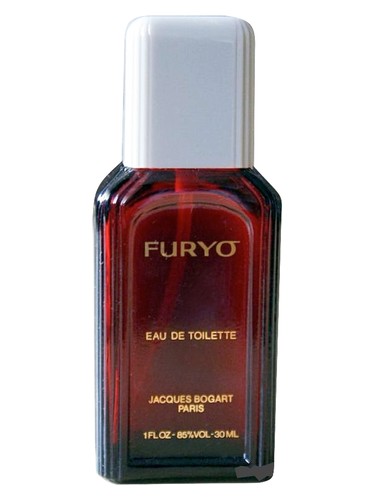
The first spray of Furyo is nothing short of confrontational. This is not a fragrance that introduces itself with a polite handshake—it kicks down the door wearing leather boots and trailing cigar smoke. The opening blast delivers an almost shocking wave of musk and castoreum, anchored by tobacco''s earthy sweetness and lavender''s herbaceous bite. There''s an immediate animalic intensity here that feels deliberately provocative, a middle finger to the clean, aquatic direction that men''s fragrances would soon take in the following decade. Jacques Bogart released Furyo in 1988, catching the tail end of perfumery''s most audacious masculine era, and everything about this composition screams unapologetic masculinity.
The fig leaf and bergamot provide just enough green brightness to prevent complete olfactory overwhelm, while coriander and juniper berries add a spicy, gin-like quality that cuts through the density. But make no mistake—this opening is dominated by animalic warmth, registering at 62% in its accord profile, second only to the overwhelming musk that defines this fragrance at 100%.
The Scent Profile
As Furyo settles into its heart, the composition doubles down on its animalic tendencies rather than softening. The heart notes feature civet alongside more castoreum—a bold choice that layers animal on animal in a way that modern perfumery rarely dares. This isn''t the sanitized, lab-synthesized approximation of animalics; this is the real deal, redolent of skin, fur, and something primal that lives beneath conscious thought.
Tobacco weaves throughout both the opening and heart, providing continuity and a dry, slightly sweet counterpoint to the more challenging animal notes. Patchouli arrives in the heart phase with its characteristic earthy darkness, while vetiver contributes a smoky, rooty quality that reinforces the fragrance''s woody accord (43%). The combination creates a scent that feels less like a carefully orchestrated perfume and more like the olfactory portrait of a particular type of man—confident, possibly dangerous, certainly magnetic.
The base simplifies somewhat, though "simple" is relative when discussing a fragrance this intense. Musk and amber form the foundation, with that powdery accord (45%) finally emerging to soften some of the sharper edges. The amber provides warmth without excessive sweetness, glowing beneath the persistent musk like embers under ash. This is where Furyo becomes slightly more approachable, though it never loses that distinctive animalic signature that makes it unmistakable.
Character & Occasion
Furyo is emphatically a cold-weather fragrance. The community data confirms what the composition suggests: this performs at 100% for winter and 99% for fall, dropping precipitously to 50% in spring and a mere 26% in summer. This isn''t surprising—Furyo''s density and warmth would be suffocating in heat, but in cold air, it creates an enveloping aura of masculine confidence.
Interestingly, while it leans heavily toward evening wear at 89%, Furyo also performs reasonably well during the day at 63%. This suggests a versatility that the intensity might not initially promise. Perhaps the aromatic elements (36%) and that thread of lavender provide enough freshness for daytime appropriateness, at least in cooler months. This is the scent for the man who refuses to tone himself down for office politics, who makes no apologies for taking up space.
The dominant woody and aromatic notes, combined with that animalic base, create something that feels distinctly masculine in the traditional sense. This isn''t androgynous, and it isn''t trying to be. Furyo belongs to an era when gender lines in perfumery were drawn in thick marker, and it wears that heritage proudly.
Community Verdict
With a rating of 4.31 out of 5 from 615 votes, Furyo has clearly found its admirers. This is particularly impressive for a fragrance that''s now over three decades old from a house that doesn''t command the prestige of the French luxury brands. That rating suggests a passionate core following rather than universal appeal—and that makes perfect sense. Furyo isn''t for everyone, nor does it pretend to be.
The relatively robust voting base indicates this isn''t some forgotten relic; people are still discovering, wearing, and evaluating Furyo decades after its release. For a masculine from 1988 to maintain this level of relevance speaks to something enduring in its composition.
How It Compares
The similar fragrances listed—Kouros, Gentleman (1974), Aramis, Antaeus, Fahrenheit—read like a hall of fame of bold masculine perfumery. These are the heavyweights, the fragrances that defined what it meant to smell like a man before fresh, clean, and safe became the default setting.
Furyo holds its own in this company, perhaps leaning even further into animalic territory than some of its peers. Where Fahrenheit went futuristic and Antaeus embraced leather, Furyo chose raw animal magnetism as its calling card. It''s closest in spirit to Kouros with its unapologetic use of civet and castoreum, though Furyo feels slightly warmer and less aggressively soapy.
The Bottom Line
Furyo occupies a specific niche: fragrances for those who find modern masculines too timid, too focused-grouped into bland inoffensiveness. Its 4.31 rating reflects genuine appreciation from those who understand what it''s trying to achieve. This isn''t a crowd-pleaser, and that''s precisely its strength.
The value proposition is compelling—Jacques Bogart fragrances typically retail far below luxury brand prices, making Furyo an accessible entry point into classic animalic perfumery. For someone curious about how men''s fragrances smelled during their most audacious era, this offers an authentic experience without the prestige markup.
Who should try Furyo? Anyone mourning the death of bold masculines. Anyone who finds themselves reaching for vintage bottles because nothing modern satisfies. Anyone willing to smell like themselves rather than like market research. Just remember: spray cautiously, wear confidently, and perhaps save it for after the sun sets on a cold November evening.
AI-generated editorial review