First Impressions
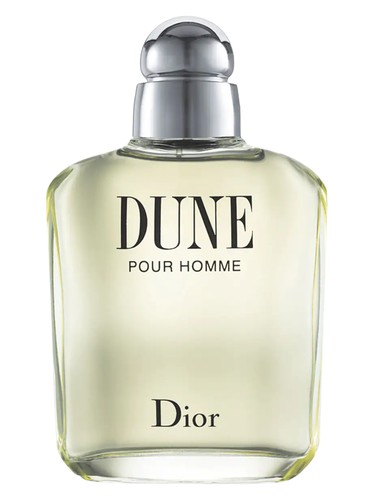
The first spray of Dune Pour Homme delivers an unexpected verdancy—not the sharp, citric green of typical masculine openers, but something softer, almost botanical. Fig leaf and cassis create an impression that''s simultaneously fruity and herbaceous, while sage and basil add an aromatic complexity that feels more apothecary than aggressive. This is Dior in 1997 stepping away from the testosterone-heavy fragrances that dominated the decade, offering instead a contemplative alternative. The opening whispers rather than shouts, establishing immediately that this isn''t a fragrance designed to dominate a room but to complement the person wearing it.
The Scent Profile
The fig leaf that dominates the opening is joined by cassis in a pairing that reads as green-fruity without veering into sweetness. The sage and basil provide an aromatic backbone that keeps things grounded—these herbs lend an almost culinary quality, evoking Mediterranean gardens rather than barbershop fougères. This top phase, registering at 93% green according to its accord profile, is where Dune Pour Homme makes its most distinctive statement.
As the fragrance settles into its heart, fig wood bark emerges as the structural element, woody yet still carrying that figgy greenness from the opening. Rose appears, but it''s handled with restraint—never soapy or feminine, it adds a subtle floral softness that rounds out the aromatic herbs. Mignonette, a lesser-known note in masculine perfumery, contributes a delicate sweetness with slightly honeyed undertones. The heart represents a transition zone where the green intensity begins yielding to the 100% woody accord that defines this fragrance''s character.
The base is where Dune Pour Homme reveals its 1990s heritage most clearly. Sandalwood and cedar form a classic woody foundation, while tonka bean and vanilla introduce the sweetness that became increasingly prevalent in men''s fragrances of the era. Yet even here, restraint prevails—the sweetness registers at just 53%, kept in check by the woods. This final phase is warm and comforting, with enough complexity to maintain interest but not so much that it demands attention. The longevity proves solid, with the woody-sweet base lingering for hours in a pleasant skin scent.
Character & Occasion
Dune Pour Homme is overwhelmingly a warm-weather fragrance, scoring 90% for summer and 89% for spring. This makes perfect sense given its green-woody profile and fresh character (57% fresh accord). The fig-forward composition feels most at home in temperatures where its botanical qualities can breathe, evoking coastal walks and sun-warmed vegetation rather than the denser, spicier compositions that winter demands. Its fall viability drops to 46%, and winter barely registers at 18%—this is definitively a fragrance that thrives when the weather warms.
The day/night breakdown is equally telling: 100% day, just 33% night. This isn''t a date-night seducer or an evening power player. Instead, it''s the olfactory equivalent of natural linen—appropriate, comfortable, unobtrusive. It excels in professional settings where you want to smell good without broadcasting your presence. It''s equally suited to casual weekend wear, farmers'' market visits, or any situation where smelling pleasant matters more than making a statement.
The fragrance skews toward those who appreciate subtlety over spectacle. It''s for the person who views fragrance as a finishing touch rather than the main event, who values versatility and wearability over uniqueness and projection.
Community Verdict
The fragrance community on Reddit offers a measured assessment, landing at a sentiment score of 6.5/10—decidedly mixed. Based on 33 opinions, a clear picture emerges: Dune Pour Homme is respected but not passionate adored.
The pros center on its practical virtues. Users consistently praise its versatility across seasons and occasions, noting it as a reliable choice that won''t offend in professional settings. The warm, comforting dry down earns specific appreciation, and performance is generally considered good with respectable longevity. It''s the fragrance equivalent of a well-made Oxford shirt—dependable, appropriate, always acceptable.
The cons are equally consistent: Dune Pour Homme can be overshadowed by sweeter or heavier fragrances in larger collections. It lacks the standout character that makes certain fragrances memorable. For those seeking distinctive or bold compositions, this Dior offering disappoints. Several community members note that while they appreciate having it, they rarely reach for it when more exciting options are available.
The community consensus positions it as ideal for office wear, professional settings, all-season versatility, and everyday casual contexts. It''s explicitly recommended for those seeking safe, inoffensive scents—a description that''s simultaneously praise and limitation.
How It Compares
The similar fragrances list offers interesting context: Encre Noire by Lalique, Cool Water by Davidoff, Egoiste Platinum by Chanel, Le Male by Jean Paul Gaultier, and Opium Pour Homme by Yves Saint Laurent. What''s notable is how Dune Pour Homme occupies a middle ground among these—less dark than Encre Noire, less aquatic than Cool Water, less sweet than Le Male. It shares with Egoiste Platinum that sense of refined restraint, though with a greener, more botanical character.
In its category of woody-green masculines, Dune Pour Homme represents a particular 1990s approach: natural-feeling, moderately sweet, broadly wearable. It lacks the revolutionary impact of some peers but also avoids their potential pitfalls—over-sweetness, excessive projection, or dated synthetic qualities.
The Bottom Line
With a rating of 4.2 out of 5 from 2,480 votes, Dune Pour Homme enjoys solid approval without inspiring fervent devotion. That rating accurately reflects its nature: this is a very good fragrance that stops short of greatness, a composition that prioritizes wearability over wow factor.
For someone building their first fragrance wardrobe or seeking a reliable warm-weather office scent, Dune Pour Homme delivers genuine value. It won''t disappoint, won''t offend, and won''t fail you in professional contexts. For collectors seeking distinctive character or bold statements, look elsewhere—this isn''t designed to satisfy that need.
Twenty-seven years after its launch, Dune Pour Homme remains relevant precisely because it never chased trends aggressively. It''s aged into a quietly confident classic, the olfactory equivalent of knowing you don''t need to be the loudest person in the conversation to be worth listening to.
AI-generated editorial review