First Impressions
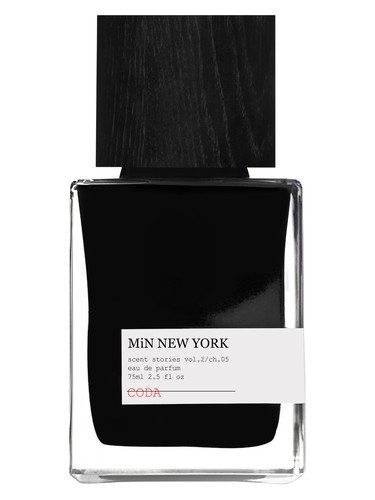
The first spray of CODA feels like stepping into a cedar grove after rain—but not the romantic, soft-focus version. This is the real thing: sharp eucalyptus cutting through cool cypress, a jolt of mint electrifying the air. There''s an immediate clarity here, almost medicinal in its precision, yet wholly natural. MiN NEW YORK''s 2015 creation doesn''t ease you in with pleasantries. Instead, it announces itself with the confidence of a fragrance that knows exactly what it wants to be: unapologetically woody, bracingly aromatic, and refreshingly free from the sweet seduction tactics that dominate much of contemporary perfumery.
This is a fragrance that commands attention not through volume but through character. The opening moments establish CODA as something contemplative—a scent that asks you to slow down and pay attention to the nuances unfolding on your skin.
The Scent Profile
CODA''s composition reads like a carefully notated musical piece, moving from bright overture to resonant conclusion with deliberate pacing. The opening trio of cypress, mint, and eucalyptus creates an effect that''s simultaneously cooling and warming—the camphoraceous quality (registering at 21% in its accord profile) adding a subtle medicinal edge that some might find challenging, but others will recognize as authentically forested.
This isn''t the cypress of Mediterranean fantasies; it''s darker, more resinous, grounded by that eucalyptus backbone that prevents any tendency toward sweetness.
As the initial brightness settles, the heart reveals unexpected warmth. Nutmeg and Ceylon cinnamon appear not as gourmand players but as supporting actors in a woody drama. The tea note adds a peculiar dryness, almost tannin-like, while cedarwood anchors the composition with its pencil-shaving familiarity. This middle phase showcases the fragrance''s 64% fresh spicy accord working in tandem with its dominant woody character—spice as texture rather than flavor, adding dimension without dominating.
The base is where CODA truly justifies its name—this is the final statement, the closing chord that lingers. Amberwood, labdanum, and patchouli create a foundation that''s resinous and slightly sweet, but never cloying. The patchouli here feels clean rather than hippie-ish, the labdanum adding that characteristic leathery-amber richness without tipping into heaviness. This 29% amber accord provides just enough warmth to balance the aromatic coolness that preceded it, while maintaining the fragrance''s essential forest-floor character.
Character & Occasion
Here''s where CODA reveals its versatility paradox: the community data shows it performs almost equally well day (81%) and night (82%), yet this isn''t a shapeshifting chameleon. Rather, it''s a fragrance with enough depth for evening wear and enough freshness for daytime appropriation.
Seasonally, CODA shines brightest in fall (100%) and winter (85%), which makes perfect sense given its woody-aromatic architecture. But don''t overlook its surprisingly strong spring showing (78%) and respectable summer viability (65%). That eucalyptus-mint opening provides enough cooling effect to work in warmer months, especially in air-conditioned environments or evening wear.
Labeled as feminine, CODA challenges that designation with every woody, spicy molecule. This is a fragrance that would feel equally at home on anyone who appreciates cerebral, nature-inspired compositions. It''s for the person who wants their fragrance to suggest competence and contemplation rather than seduction. Think art gallery openings, autumn walks through botanical gardens, late-night work sessions in wood-paneled libraries.
Community Verdict
With a 4.11 out of 5 rating from 435 votes, CODA has earned genuine respect from those who''ve experienced it. This isn''t a polarizing love-it-or-hate-it fragrance, nor is it playing it safe in the middle—that rating suggests a well-executed vision that delivers on its promises. The solid vote count indicates this isn''t just a niche curiosity but a fragrance that''s found its audience and impressed them consistently.
The rating also suggests honesty: this isn''t reaching for universal appeal, and the number indicates it''s winning over the people it was meant for while not alienating those it wasn''t.
How It Compares
CODA occupies fascinating territory alongside its listed companions. It shares DNA with Lalique''s Encre Noire in its uncompromising woodiness, but adds aromatic complexity that Encre Noire eschews. The connection to Tauer''s L''Air du Desert Marocain makes sense through shared spice-and-resin territory, though CODA skews greener and less overtly exotic.
Tom Ford''s Oud Wood comparison speaks to that same high-quality woody construction, though CODA achieves similar sophistication through different means—cypress and cedar rather than oud and rosewood. The Frederic Malle Promise reference points to shared minimalist elegance and quality of materials, while Essential Parfums'' Bois Impérial suggests a kinship in modern, wearable woodiness.
In this company, CODA distinguishes itself through its aromatic freshness and that distinctive camphoraceous opening—it''s perhaps the most overtly "green" of this woody quintet.
The Bottom Line
CODA succeeds because it refuses to compromise its vision for broader appeal. MiN NEW YORK created a fragrance that smells expensive without shouting about it, complex without becoming exhausting, and accessible without being ordinary. At 4.11 stars, it''s clearly resonating with those who try it.
This is essential wearing for anyone who finds themselves drawn to woody fragrances but tired of the same oud-amber-sandalwood combinations. It''s for the person who appreciates that nature isn''t always soft and pretty—sometimes it''s sharp, medicinal, bracingly real. The fragrance rewards patience and multiple wearings; this isn''t love at first sniff for everyone, but it builds into genuine appreciation.
If you''ve enjoyed any of its similar fragrances or find yourself gravitating toward the aromatic-woody category, CODA deserves a place on your sampling list. It''s proof that feminine-marketed fragrances can be just as architecturally bold as their masculine counterparts, and that sometimes the most memorable scents are those that smell like nothing else you''re wearing.
AI-generated editorial review