First Impressions
Spray Chypre Mousse and you''re not just wearing perfume—you''re stepping into a pre-WWI vision of the forest primeval. The opening is a shock of green so vivid it borders on hallucinogenic: fennel''s anise-sharp brightness collides with mint''s menthol rush, while clary sage adds an herbal, almost medicinal edge. This isn''t the manicured garden variety of green. This is wild, trampled undergrowth, the scent of breaking stems beneath your boots as you push deeper into the woods. Within moments, that earthy accord—registering at a full 100% in its dominance—begins its inexorable rise from below, a dark promise of what''s to come.
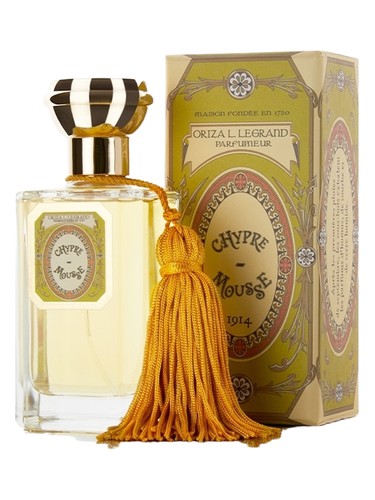
Created in 1914 by the storied Parisian house Oriza L. Legrand, Chypre Mousse arrived at a pivotal moment in perfumery history, just as the chypre category was crystallizing into one of the great fragrance families. But where other chypres reached for sophistication and drawing-room elegance, this one had mud on its boots from the start.
The Scent Profile
The transition from those piercing green top notes into the heart is less an evolution than a descent. The oakmoss that anchors traditional chypres appears here in the middle act, but it brings friends—fern, clover, violet leaf, and galbanum create a tableau of verdant complexity. There''s angelica''s peculiar celery-like greenness and the resinous snap of mastic, but what truly distinguishes this phase is how all these elements seem to be photographed through a filter of dampness, of organic decay in the most beautiful sense.
The violet leaf adds a cucumber-cool facet that keeps things from becoming too heavy too quickly, while the galbanum provides that characteristic green bitterness that devotees of this note either worship or flee from. This is the moment where you understand the 74% green accord rating—it''s pervasive, insistent, unapologetic.
Then comes the base, and here Chypre Mousse reveals its true audacity. Soil tincture—yes, actual earth—mingles with boletus edulis, the prized porcini mushroom rendered as an olfactory note. Chestnut adds a subtle sweetness, almost roasted in character, while vetiver provides its woody, slightly smoky rootedness. Pine needles prick through with resinous sharpness, supported by labdanum''s amber warmth and just a whisper of leather. This is where that 71% aromatic accord meets the 49% woody character, creating something that feels less composed than discovered, as if the perfumer simply found a way to bottle a corner of the forest floor.
The oakmoss returns in the base, now deepened and darkened by its companions, creating an impression that''s simultaneously ancient and alive. Hours into wear, what remains is a skin-close murmur of moss, earth, and wood—the olfactory equivalent of a forest remembered rather than visited.
Character & Occasion
This is fall''s perfume, scoring 100% for the season when leaves carpet the ground and the air carries that particular weight of things returning to earth. Spring claims it too, at 77%—those first walks through awakening woods when winter''s decay feeds new growth. Winter follows at 59%, and you can imagine this worn with heavy tweeds against the cold. Summer, at 30%, is where Chypre Mousse admits defeat; this is simply too much perfume for heat.
The day/night split tells its own story: 87% day versus 46% night. This isn''t a seduction perfume or an evening gown companion. This is a daylight fragrance, best worn for woodland walks, museum visits, or those days when you want to carry a bit of the outdoors with you into urban environments. It''s intellectual rather than sensual, contemplative rather than provocative.
As for who should wear it? The feminine designation feels more historical than prescriptive. Anyone drawn to green fragrances, earthy compositions, or unconventional beauty will find something here, regardless of gender.
Community Verdict
With 844 votes landing at 3.85 out of 5, Chypre Mousse occupies interesting territory. This isn''t a crowd-pleaser breaking the 4.0 barrier, but neither is it polarizing enough to dip below 3.5. That near-4.0 rating from a substantial voting base suggests a fragrance that rewards those who seek it out, even if it doesn''t convert everyone who encounters it. This is niche in the truest sense—specific, uncompromising, and cherished by those who understand what it''s attempting.
How It Compares
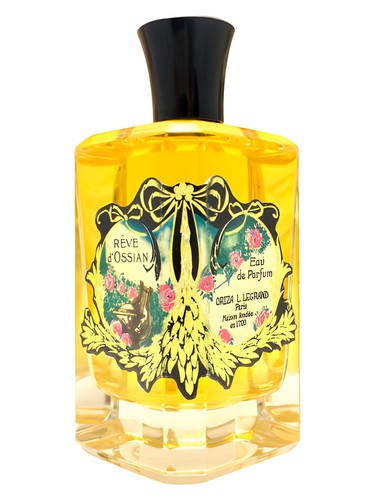
The suggested similarities provide useful context. Relique D''Amour from the same house shares that historical sensibility and uncompromising character. Tauer''s L''Air du Desert Marocain and Lalique''s Encre Noire operate in similarly elemental territory—desert and dark cypress, respectively—but lack Chypre Mousse''s particular forest-floor specificity. Serge Lutens'' Fille en Aiguilles plays with pine but sweetens the proposition considerably. Terre d''Hermès perhaps comes closest in its evocation of earth and mineral, though it reads more masculine and modern.
Where Chypre Mousse stands apart is in its commitment to the concept of moss and earth without amelioration. This isn''t earth observed from a distance; it''s earth intimate and immediate.
The Bottom Line
Chypre Mousse isn''t for everyone, and it knows it. This is a fragrance for those who find beauty in decomposition, who understand that petrichor and humus are as worthy of celebration as rose and jasmine. Its 3.85 rating reflects not mediocrity but specificity—those who love it, truly love it, while others respectfully acknowledge it''s not for them.
The lack of concentration data makes longevity difficult to predict, though the depth of base notes suggests respectable staying power. Given Oriza L. Legrand''s positioning as a heritage house with museum-worthy formulations, expect appropriate pricing—this is an investment piece, not an everyday casual wear.
Who should seek this out? Lovers of Encre Noire who want more complexity. Terre d''Hermès devotees ready to go deeper into the earth. Anyone who''s ever wished they could bottle that moment when you brush against damp moss on an old stone wall. Chypre Mousse is a century-old reminder that perfume can be poetry, even when it smells like dirt.
AI-generated editorial review