First Impressions
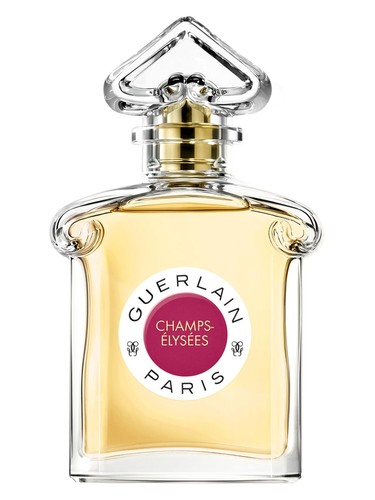
The first spray of Champs-Élysées Eau de Parfum feels like stepping onto a sunlit Parisian sidewalk in late April, where mimosa trees bloom in golden profusion and rose petals scatter across café terraces. This 2021 interpretation by Guerlain opens with an immediate brightness—mimosa leaves and rose petals creating a verdant, almost dewy impression that''s both fresh and unmistakably floral. There''s a greenness here that prevents the composition from tipping into nostalgic territory, though the DNA of classic French perfumery runs clearly through its veins. This is sophisticated femininity rendered in yellow and pink hues, a scent that announces itself with confidence but never shouts.
The Scent Profile
The architecture of Champs-Élysées reveals itself as a decidedly floral composition, with the data confirming what the nose knows: this is 100% a floral experience, dominated by yellow florals at 57% and supported by woody, green, and powdery facets that each claim roughly 42-43% of the fragrance''s character.
Those opening notes of mimosa leaves and rose petals establish the boulevard''s address immediately. The mimosa leaf brings a particular texture—slightly fuzzy, green, and vegetal—that distinguishes it from the fluffier mimosa flower to come. The rose petals contribute a fresh, slightly watery quality rather than full-blown rose richness, creating an introduction that feels more like a spring garden than a formal bouquet.
As the heart develops, the mimosa flower takes center stage, revealing why yellow floral registers so strongly in this composition. Mimosa has that distinctive honeyed, slightly powdery quality that can read both vintage and contemporary depending on its treatment. Here, it''s joined by buddleia—the butterfly bush, with its own sweet, honey-like character—and cassis, which injects a tart, almost jammy fruitiness that prevents the florals from becoming too solemn. This cassis note is subtle, more of a brightness amplifier than a distinct fruity statement, but it adds dimension and prevents the heart from settling into one-note sweetness.
The base is where Champs-Élysées reveals its contemporary sensibility while nodding to tradition. Hibiscus seed brings an unusual, slightly musky quality that adds depth without weight. Almond tree contributes a soft, nutty sweetness—not the sharp marzipan of bitter almond, but something gentler and more diffuse. Woody notes provide structure and longevity, while vanilla adds a whisper of creaminess that rounds the edges without pushing the fragrance into gourmand territory. The powder accord becomes more apparent here, creating that soft-focus finish that characterizes so many beloved French florals.
Character & Occasion
The community data tells a clear story: Champs-Élysées is a spring fragrance first and foremost, with 100% seasonal alignment, followed closely by summer at 66% and fall at 63%. Winter trails significantly at 33%, which makes perfect sense—this is a perfume that thrives in warmth and light, when its yellow florals can radiate without being dampened by cold air or heavy clothing.
The day-to-night breakdown is equally telling: 86% for daytime wear versus just 28% for evening. This is your intelligent choice for office days, weekend brunches, garden parties, and any occasion where you want to project polished femininity without drama. It''s the perfume equivalent of a well-cut silk blouse in a cheerful color—appropriate, flattering, and infinitely wearable.
This formulation speaks most clearly to women who appreciate traditional floral perfumery but want something that feels relevant to contemporary life. It''s not your grandmother''s fragrance, but it might remind you fondly of her elegance.
Community Verdict
With a rating of 3.92 out of 5 based on 472 votes, Champs-Élysées sits comfortably in "very good" territory without quite reaching "masterpiece" status. This rating suggests a well-executed fragrance that delivers on its promises—a reliably beautiful floral that perhaps doesn''t break new ground but accomplishes its goals with grace. The healthy vote count indicates genuine interest and wearing experience from a solid community of evaluators, lending credibility to that near-4-star assessment.
How It Compares
The listed similar fragrances reveal excellent company: Poeme by Lancôme, Chloé Eau de Parfum, and notably, two iterations of Chanel No 5, plus Dior''s J''adore. This places Champs-Élysées firmly in the lineage of iconic French florals—perfumes that prioritize elegance, femininity, and timelessness over trend-chasing.
Where Champs-Élysées distinguishes itself is in that yellow floral emphasis. While J''adore leans more toward white florals and Chloé wraps its roses in peony freshness, this Guerlain creation stakes its claim on mimosa''s golden warmth. It''s perhaps less abstract than No 5, more approachable than Poeme, and softer than the crystalline J''adore—a middle path that will appeal to those seeking beauty without intimidation.
The Bottom Line
Champs-Élysées Eau de Parfum represents Guerlain doing what Guerlain does exceptionally well: creating florals that honor tradition while remaining wearable for modern life. That 3.92 rating reflects a fragrance that consistently pleases without necessarily inspiring obsession—and there''s real value in that reliability.
Is this groundbreaking perfumery? No. But is it a beautiful, well-crafted floral that will make you feel polished and feminine on a spring morning? Absolutely. For women building a versatile fragrance wardrobe who need a dependable daytime floral that works across three seasons, this deserves serious consideration. Those who love mimosa should explore this immediately; those who find yellow florals cloying might want to sample first. At eau de parfum concentration, you''re getting legitimate staying power in a formula that justifies the Guerlain pedigree without demanding collectors'' prices.
If your fragrance philosophy includes having one lovely, uncomplicated floral for those days when you simply want to smell beautiful, Champs-Élysées makes a compelling case for filling that role.
AI-generated editorial review