First Impressions
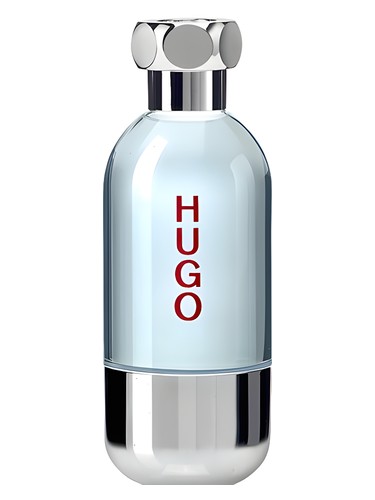
The first spray of Boss Element announces itself with the kind of crystalline clarity that makes you think of diving into cold water on a scorching afternoon. This is freshness distilled to its essence—no apologies, no complications. Water notes cascade alongside bright citruses in an opening that feels almost transparent, like looking through perfectly clear glass. It''s the olfactory equivalent of a crisp white shirt, still cool from the closet, worn with complete confidence on a summer morning.
Hugo Boss launched this fragrance in 2009, during that golden era when aquatic masculines dominated the landscape, and Boss Element understood the assignment perfectly. It doesn''t try to reinvent the wheel; instead, it executes a familiar formula with precision and restraint. Within seconds of contact with skin, you understand this isn''t a fragrance that demands attention—it earns it through sheer wearability.
The Scent Profile
The opening act belongs entirely to those water notes and citruses, a combination that registers as 100% fresh and 81% citrus according to its dominant accords. There''s something almost mineral about this introduction, as if the citrus has been filtered through limestone springs. It''s bright without being sharp, refreshing without that aggressive lemon-pledge effect that plagues lesser aquatics. The water notes provide a soft, almost humid backdrop that prevents the citruses from becoming too tart or one-dimensional.
As Boss Element settles into its heart, ginger and coriander emerge with a subtle spiciness that reads as 59% fresh spicy in the overall composition. This is where the fragrance gains its personality. The ginger brings a subtle warmth and effervescence—think ginger ale rather than raw ginger root—while coriander adds a green, slightly aromatic quality that prevents the scent from becoming too sweet or synthetic. These spices don''t announce themselves dramatically; they simply add texture and movement to what could otherwise be a flat, linear aquatic.
The base is where Boss Element shows its maturity. Virginia cedar and musk anchor the composition with a woody (41%) and quietly aromatic foundation. The cedar isn''t heavy or pencil-shaving sharp; it''s soft and refined, providing just enough structure to give the fragrance staying power. The musk is clean and skin-like, the kind that disappears into your natural scent rather than competing with it. This base ensures Boss Element doesn''t evaporate within the hour like some aquatics, though don''t expect the longevity of a powerhouse oriental.
Character & Occasion
The community consensus is unambiguous: this is a summer fragrance first and foremost, with 90% of wearers identifying it as their warm-weather companion. Spring follows at a respectable 65%, while fall (20%) and winter (14%) barely register. These aren''t suggestions—they''re directives. Boss Element was born for heat, humidity, and sunshine.
The day/night data tells an equally clear story: 100% daytime, with only 19% finding it appropriate for evening wear. This is your 9-to-5 armor, your weekend casual signature, your "running errands but still want to smell good" solution. It''s the fragrance equivalent of a perfectly faded pair of jeans—effortlessly appropriate for almost any daytime situation.
The aquatic (74%) nature of Boss Element makes it ideal for active lifestyles. Office environments, outdoor activities, casual meetings, gym-to-brunch transitions—this fragrance handles them all without becoming cloying or overwhelming. It''s respectful of shared spaces, making it office-safe while still being present enough that you''ll catch occasional whiffs of it on yourself throughout the day.
Community Verdict
With a rating of 3.84 out of 5 stars from 796 votes, Boss Element sits comfortably in the "very good, not quite excellent" category. This is a respectable score that reflects the fragrance''s competence rather than groundbreaking innovation. Nearly 800 people have weighed in, and the consensus suggests a reliable performer that delivers exactly what it promises. It''s not polarizing—there are no love-it-or-hate-it extremes here. Instead, it''s a fragrance that most find pleasant, wearable, and appropriate.
The rating suggests this isn''t a hidden gem waiting to be discovered, nor is it an overhyped disappointment. It''s a solid, dependable option in the fresh aquatic category—the kind of fragrance that won''t earn you compliments from strangers but won''t clear rooms either.
How It Compares
Boss Element exists in distinguished company. Its similarity to heavy-hitters like Acqua di Gio by Giorgio Armani and L''Eau d''Issey Pour Homme by Issey Miyake places it firmly in the aquatic masculine hall of fame. Versace Man Eau Fraiche and Versace Pour Homme round out its peer group, while L''Homme by Yves Saint Laurent offers a slightly more sophisticated alternative.
Where does Boss Element stand among these titans? It''s cleaner and more minimalist than Acqua di Gio, less ozonic than L''Eau d''Issey, and more straightforward than the Versace offerings. It carves out its niche through restraint rather than boldness—this is the quiet professional in a room full of charismatic extroverts.
The Bottom Line
Boss Element won''t revolutionize your fragrance wardrobe, but it might become your most-reached-for bottle between May and September. Its 3.84 rating reflects honest competence: this is a fragrance that does one thing very well and doesn''t pretend to be anything else. For those seeking a reliable, fresh, utterly appropriate daytime summer scent, Boss Element delivers without drama.
The value proposition depends on availability and pricing in your market, but as a discontinued fragrance from 2009, you might find it at attractive prices in the grey market. If you''ve worn and loved any of its similar fragrances, Boss Element deserves consideration as a rotation piece—different enough to provide variety, similar enough to guarantee you''ll actually wear it.
Who should try it? Anyone who lives where summer is serious business, anyone who needs a foolproof office scent, anyone who appreciates the aquatic genre but wants something slightly less ubiquitous than the usual suspects. Boss Element is proof that sometimes, executing the basics exceptionally well is more valuable than chasing uniqueness.
AI-generated editorial review