First Impressions
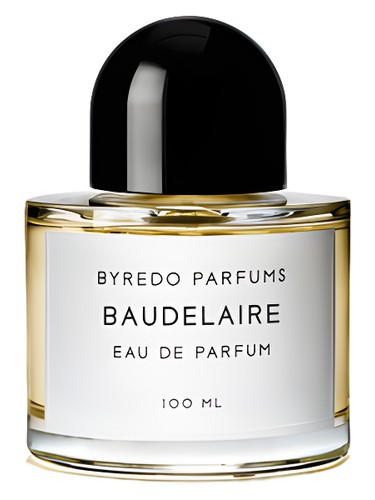
The first spray of Baudelaire announces itself with an assertive pepper snap, tempered by the resinous bite of juniper berries and a whisper of caraway''s herbal edge. This isn''t the bright, gin-soaked juniper of summer cocktails—it''s darker, more meditative, like crushing berries underfoot in a shadowed forest. The opening feels deliberate, almost austere, refusing to court easy affection. Within moments, smoke begins to curl through the composition, hinting at the incense-laden heart waiting beneath. It''s a fragrance that commands attention without raising its voice, much like the tortured French poet whose name it bears.
The Scent Profile
Baudelaire''s architecture reveals itself in distinct chapters, though the transitions feel more like dissolves than hard cuts. Those opening moments—dominated by the fresh spicy accord that registers at 100%—establish the fragrance''s intellectual credentials. Juniper berries provide an evergreen sharpness, while black pepper adds heat without aggression. The caraway note, less prominent but crucial, introduces an almost medicinal quality that keeps the opening from becoming too conventional.
As the top notes recede, the heart emerges with surprising complexity. Leather and incense form the core, creating a smoky, contemplative atmosphere that accounts for the 56% smoky accord and substantial 64% leather presence. But here''s where Baudelaire reveals its sophistication: threading through this darkness is hyacinth, a floral note that could easily feel discordant. Instead, it adds a green, slightly aqueous quality that prevents the composition from collapsing into heaviness. This unexpected juxtaposition—sacred incense smoke meeting spring blooms—gives the fragrance its distinctive character.
The base is where Baudelaire settles into its woody and amber personality (79% and 74% respectively). Patchouli provides earthy depth without the hippie-headshop associations, rendered here in its more refined, slightly camphoraceous form. Papyrus adds a dry, almost papery texture—fitting for a fragrance named after a literary figure—while amber rounds everything out with subtle warmth. The result is a foundation that feels substantial without being cloying, grounding the composition''s more ethereal elements.
Character & Occasion
The data tells a clear story: Baudelaire is a cold-weather companion, registering 100% for fall and 76% for winter. This makes perfect sense—the fragrance''s smoky, spiced character feels tailor-made for crisp air and shorter days. Spring sees moderate compatibility at 62%, likely on those cooler, overcast days when winter hasn''t quite released its grip. Summer, at just 25%, is clearly not this fragrance''s natural habitat; the leather and incense would feel oppressive in heat.
Interestingly, Baudelaire shows versatility in its day/night split: 80% day versus 66% night. This isn''t a clubbing fragrance or a seduction scent in the conventional sense. Instead, it''s contemplative, intellectual—suitable for gallery openings, afternoon lectures, coffee shop writing sessions, or evening dinners where conversation matters more than spectacle. The 65% aromatic accord keeps it from becoming too formal, while the fresh spicy dominance ensures it never feels stuffy.
This is decidedly masculine in its traditional presentation, though its complexity would suit anyone drawn to darker, more introspective compositions. The ideal wearer is someone comfortable with fragrance as self-expression rather than social lubricant—someone who reads poetry, appreciates imperfection, and doesn''t need universal approval.
Community Verdict
The Reddit fragrance community''s relationship with Baudelaire is revealing in its restraint. With a sentiment score of 6.5/10 classified as "mixed," this isn''t a fragrance that inspires passionate devotion or widespread acclaim. Based on 52 community opinions, the picture that emerges is of a respected but not beloved scent.
The pros are telling: high quality and thoughtful composition get acknowledged, as does versatility for collection building. The fragrance "stands out distinctly from similar fragrances"—a compliment that suggests individuality without necessarily implying superiority. However, the cons are equally instructive. Limited community discussion is perhaps the most significant observation; Baudelaire simply doesn''t generate conversation. There''s no detailed performance or longevity data emerging from community discussions, and most damningly, it''s described as "an acquired taste rather than universally loved."
The community identifies its ideal audience clearly: niche fragrance collectors, those seeking sophisticated complexity, and people wanting casual wardrobe additions. The summary is blunt: Baudelaire "appeals to a specific audience of fragrance enthusiasts rather than achieving broad community consensus." It''s a fragrance more admired than adored, more interesting than irresistible.
How It Compares
Baudelaire''s lineage connects it to some heavy-hitters in the spicy, smoky, complex masculine category. Memoir Man and Interlude Man by Amouage represent the more opulent, Middle Eastern-influenced end of this spectrum—richer, denser, more overtly luxurious. Tauer''s L''Air du Desert Marocain shares the incense-forward, contemplative quality but leans more austere. Serge Lutens'' Fille en Aiguilles brings similar evergreen and resinous qualities but in a more overtly sweet framework. Fahrenheit by Dior, the commercial outlier in this group, shares the leather and unusual contrasts but with greater mainstream accessibility.
Among these companions, Baudelaire occupies a middle ground—more approachable than the Amouages, less challenging than the Tauer, more serious than Fahrenheit, and drier than the Lutens. It''s competent without being exceptional, distinctive without being revolutionary.
The Bottom Line
A rating of 4.02 out of 5 from 734 votes suggests solid approval without enthusiasm—a "very good" rather than "exceptional" verdict. This seems fair. Baudelaire is a well-crafted fragrance that delivers on its conceptual promise: a dark, literary meditation on masculinity that favors complexity over crowd-pleasing.
Should you buy it? That depends on what you value. If you''re building a collection and want something that fills the "intellectual, fall-appropriate, spicy-woody-leather" slot without the extreme density of niche powerhouses, Baudelaire serves admirably. If you''re a Byredo fan drawn to the brand''s aesthetic minimalism and conceptual approach, this represents the house working in a more serious register.
However, if you need exceptional longevity (the community silence on performance raises questions), want something that generates compliments, or prefer fragrances with passionate fan bases, look elsewhere. Baudelaire is the quiet student in the back of the class—intelligent, interesting, but never raising their hand. Whether that''s a virtue or a limitation depends entirely on what you''re seeking from your fragrance wardrobe.
AI-generated editorial review