First Impressions
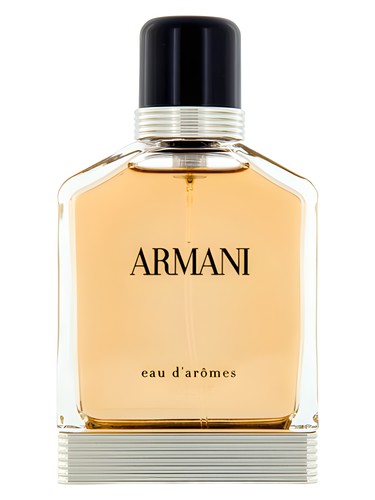
The first spray of Armani Eau d''Aromes announces itself with the kind of confidence that doesn''t need to shout. There''s an immediate burst of citrus—mandarin orange and bergamot dancing together in that opening moment—but this isn''t your typical fresh cologne that fades into memory before you''ve left the bathroom. Within seconds, something more complex begins to emerge: a whisper of spice, an earthy undertone that suggests this fragrance has stories to tell beyond its bright introduction. It''s the olfactory equivalent of meeting someone in linen at a sunlit café who, upon closer conversation, reveals unexpected depth and worldliness.
What strikes you most is the balance. The citrus is unmistakably present—the data confirms it as the dominant accord at full strength—yet it''s tempered by an aromatic quality that gives the opening a sophisticated edge. This is citrus with intention, citrus with somewhere to go.
The Scent Profile
The journey from top to base in Eau d''Aromes is less a dramatic transformation than a gradual revelation, like watching dawn transition into full morning light. Those opening notes of mandarin orange and bergamot establish the fragrance''s bright foundation, but they''re not alone for long. The heart reveals itself almost seamlessly, introducing ginger and patchouli into the composition.
Here''s where things get interesting. The ginger brings a fresh spiciness that energizes without overwhelming—it''s that 56% fresh spicy accord making itself known. Meanwhile, the patchouli refuses to play its usual heavy, hippie-shop role. Instead, it provides an earthy backbone, grounding the composition with subtle sophistication. This is patchouli in its most refined form, contributing to that 38% earthy accord while supporting rather than dominating.
As the fragrance settles into its base, vetiver takes center stage alongside sage and cardamom. The vetiver contributes woody depth (the 51% woody accord at work), while sage adds an herbal aromatic quality that keeps things fresh even as they become more substantial. Cardamom—that final warm spicy element accounting for the 40% warm spicy accord—adds just enough intrigue to keep your nose returning for another assessment.
The overall effect is a composition that reads as citrus-forward but refuses to be pigeonholed. It''s aromatic without being cologne-simple, earthy without being heavy, spicy without being aggressive. The 86% aromatic accord weaves through the entire experience, tying these disparate elements into a cohesive whole.
Character & Occasion
If ever a fragrance knew its season, it''s Eau d''Aromes. The data speaks clearly: spring and summer both clock in at 94% suitability, with fall maintaining a respectable 78%. Winter, at just 32%, is where this fragrance takes a respectful bow and steps aside. This is a warm-weather composition through and through, designed for days when you want to feel polished but not suffocated by your scent.
The day/night breakdown is equally telling. At 100% day-appropriate but only 48% suited for evening wear, this is your companion for daylight hours—business meetings, weekend brunches, outdoor events where you want to project approachability and competence in equal measure. It''s not that you can''t wear it at night, but you''ll be fighting against its natural inclination toward brightness and freshness.
This is a masculine fragrance that skews sophisticated rather than aggressive. It''s for the man who''s moved beyond the need to announce his presence with heavy, challenging scents. Whether you''re in your thirties navigating professional advancement or your fifties having already arrived, Eau d''Aromes offers age-appropriate elegance without feeling stuffy or dated.
Community Verdict
With a solid 4.05 out of 5 rating based on 716 votes, Eau d''Aromes has earned genuine appreciation from those who''ve experienced it. This isn''t a niche fragrance with cult devotion from dozens of fans, nor is it a mass-market blockbuster with thousands of reviews. Instead, it occupies a sweet spot: accessible enough to find and try, distinctive enough to warrant recommendation.
The rating suggests a fragrance that delivers on its promises without revolutionary ambition. It''s very good at what it does, and what it does is provide reliable, sophisticated freshness. The relatively robust vote count indicates this isn''t a hidden secret, but neither has it achieved the ubiquity that might diminish its appeal to those seeking something slightly more distinctive.
How It Compares
Eau d''Aromes finds itself in distinguished company. Its similarity to Terre d''Hermès speaks to that shared earthy-citrus sophistication, though Hermès leans more heavily into its mineral, vetiver character. L''Eau d''Issey Pour Homme shares the aquatic-fresh sensibility, while YSL''s L''Homme offers a gentler, more intimate interpretation of masculine elegance.
The comparison to Bleu de Chanel and Versace Pour Homme places Eau d''Aromes firmly in the modern masculine canon—fragrances that prioritize versatility and wearability over challenging complexity. Where it distinguishes itself is in that particular balance of citrus brightness and earthy depth. It''s less office-safe than Bleu de Chanel, more grounded than Versace Pour Homme, and more approachable than Terre d''Hermès.
The Bottom Line
Armani Eau d''Aromes represents what happens when a luxury house creates a fragrance for actual wear rather than conceptual experimentation. It''s not trying to revolutionize masculine perfumery or make bold artistic statements. Instead, it offers refined, versatile elegance for warm-weather months.
That 4.05 rating tells you everything you need to know: this is a very good fragrance that stops just short of greatness. It won''t be everyone''s signature scent, but it deserves a place in the rotation of anyone who appreciates citrus-aromatic compositions with enough depth to stay interesting throughout the day.
If you''re drawn to fresh fragrances but tired of aquatics that disappear within hours, or if you love citrus but want something more substantial than cologne, Eau d''Aromes deserves your attention. It''s particularly worth exploring if you already appreciate any of its similar fragrances but want a slightly different take on that sophisticated-fresh category. Just remember: save it for spring through fall, and let it shine in the daylight where it truly belongs.
AI-generated editorial review