First Impressions
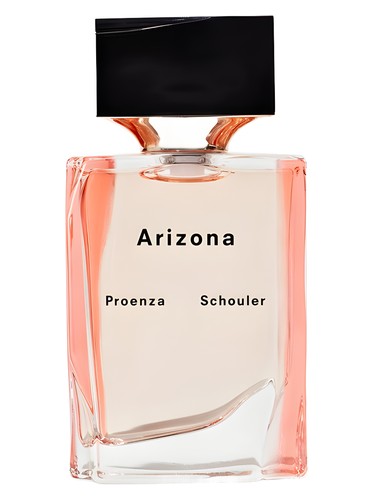
The first spray of Arizona by Proenza Schouler arrives like morning light across a Southwestern canyon—bright citrus bursting against an unexpected softness. Fashion designers Jack McCollough and Lazaro Hernandez launched this scent in 2018, attempting to bottle the essence of their adopted American landscape. What emerges immediately is a study in contrasts: the crisp tang of mandarin, orange, and bergamot collides with something decidedly powdery, almost retro in its composition. This isn''t the sun-baked desert you might expect from the name. Instead, it''s the Arizona of pressed flowers in a leather-bound journal, of vintage postcards found in a Santa Fe antique shop, of sophistication worn against raw terrain.
The Scent Profile
Arizona opens with a triumvirate of citrus—mandarin orange, sweet orange, and bergamot—that provides immediate brightness and accessibility. This is the scent''s most straightforward moment, a sunny introduction that suggests freshness and optimism. But even here, there''s a softness lurking beneath, hinting at the powder bomb to come.
The heart is where Arizona reveals its true personality, and where opinions begin to diverge. Cactus flower, that promised nod to the fragrance''s namesake, appears alongside solar notes that should evoke desert heat. Yet these elements intertwine with strawberry, orange blossom, jasmine, and rose in a way that feels more cosmopolitan than wild. The result is an intriguing white floral bouquet that hovers somewhere between fresh and abstract. The solar notes attempt warmth, but the composition pulls persistently toward something cooler, more refined, almost aloof.
The base settles into orris, cashmeran, musk, and vanilla—a quartet that explains Arizona''s dominant powdery character, which registers at 100% in accord analysis. The orris root brings its characteristic dusty, lipstick-like quality, enhanced by the woody-musky synthetic warmth of cashmeran. Musk adds skin-like intimacy while vanilla provides just enough sweetness to keep things from feeling too austere. This foundation is what lingers longest, what defines the fragrance''s personality, and what proves most divisive among wearers.
Character & Occasion
Arizona defies easy categorization in terms of timing. The data shows equal potential for all seasons, suggesting a versatility that''s either admirably flexible or frustratingly undefined, depending on your perspective. The powdery-citrus combination certainly wears lighter than a heavy oriental, making it plausible year-round for those who connect with its particular wavelength.
This is fundamentally a daytime fragrance, despite neutral day/night ratings. The office environment emerges as its natural habitat—professional, present but not imposing, sophisticated without demanding attention. Community feedback consistently highlights its workplace appropriateness, where its musky (76%) and powdery character creates an aura of polished competence. The 71% sweet accord keeps it from feeling too severe, while the 89% citrus prevents it from becoming cloying.
The fragrance skews feminine in marketing and composition, but its powdery-musky core treads close to territory shared by many modern unisex scents. Those who appreciate iris-forward fragrances (63% iris accord) and aren''t put off by synthetic musks will find the most to love here.
Community Verdict
The r/fragrance community delivers a measured 6.5/10 sentiment score—decidedly mixed territory that reflects Arizona''s polarizing nature. Based on 42 opinions, a clear picture emerges: this is a fragrance that impresses some while leaving others cold.
Enthusiasts praise its unique scent profile, noting that it doesn''t smell like everything else on department store shelves. The sophisticated impression it creates garners consistent appreciation, particularly for professional settings. Performance shows interesting quirks—while longevity on skin disappoints many users, the fragrance apparently thrives on fabrics, leading to recommendations for clothing application. Its layering potential also receives positive mentions, suggesting Arizona plays well with others even when it doesn''t fully satisfy solo.
The criticism proves equally consistent. Limited longevity represents the primary complaint, with skin chemistry seemingly eating through the composition faster than wearers would prefer. More fundamentally, many detect synthetic and waxy qualities that read as cheap or unfinished rather than intentionally modern. The divisive character means this isn''t a crowd-pleaser—what reads as sophisticated powder to one nose registers as detergent or old cosmetics to another.
How It Compares
The similar fragrances list reads like a greatest-hits of modern feminine perfumery: Narciso Rodriguez For Her, Libre by YSL, Coco Mademoiselle, Nomade by Chloé, Flowerbomb by Viktor&Rolf. These comparisons position Arizona firmly in the contemporary powdery-musk category, particularly the Narciso Rodriguez connection, which similarly explores that iris-musk territory. However, where those established fragrances have refined their formulas through years of market feedback and reformulations, Arizona remains a first effort from a fashion house better known for handbags than haute perfumery. It shows both the ambition and the inexperience of that pedigree.
The Bottom Line
Arizona''s 3.74/5 rating from 658 votes tells an honest story: this is a decent fragrance with a devoted minority and a skeptical majority. It succeeds at being distinctive, at carving out its own space rather than copying established winners. The powder-forward composition with citrus brightness and desert-inspired notes (however abstracted) offers something genuinely different.
But distinction alone doesn''t equal desirability. The performance issues, synthetic qualities, and divisive character mean Arizona works best as a specific-situation fragrance or a layering component rather than a signature scent. Those drawn to iris perfumes, powder addicts, and anyone curious about fashion-house fragrances should sample it. The workplace-appropriate profile and fabric performance make it worth considering for professional contexts.
At its core, Arizona asks wearers to embrace contradiction—desert flowers rendered as cosmetic powder, Southwestern landscapes filtered through Manhattan sophistication. Some will find that tension compelling. Others will simply find it confusing. Know which camp you''re likely to fall into before committing to a full bottle.
AI-generated editorial review