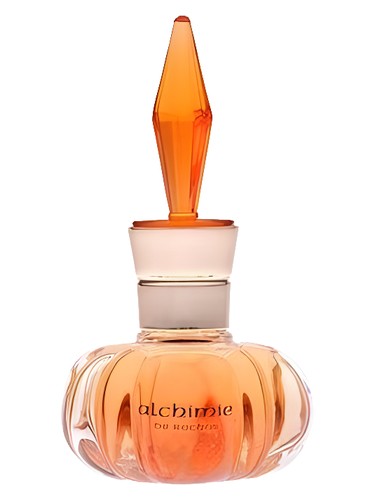
First Impressions
The first spray of Alchimie feels like biting into a peach dusted with powdered sugar at a baroque garden party. This is not the innocent, dewy fruit of summer picnics—this is fruit as decadence, as indulgence, as art. Released in 1998 during the height of gourmand innovation, Rochas Alchimie opens with an opulent cascade of peach, plum, and black currant, sweetened and softened by an unexpected whisper of lilac. There''s cucumber tucked in there too, providing just enough green crispness to keep the opening from tipping into cloying territory. The citrus quartet of mandarin, grapefruit, and bergamot dances around the edges, but make no mistake: this fragrance is about luscious, unapologetic fruit from the very first moment.
The name "Alchimie"—French for alchemy—proves prescient. This isn''t simply a fruity floral; it''s the transformation of simple ingredients into something more precious, more substantial. Within minutes, you sense that this fruit won''t remain innocent for long.
The Scent Profile
The evolution of Alchimie reads like a three-act play, each movement more richly textured than the last. Those abundant top notes—eleven distinct ingredients creating a fruit basket with herbal and citrus undertones—settle within twenty minutes into something more contemplative. The cassia adds a whisper of warm spice, foreshadowing the amber embrace to come.
As the heart reveals itself, white florals emerge like figures stepping from behind a velvet curtain. Jasmine and rose provide classical elegance, while lily-of-the-valley adds a green, almost soapy cleanliness. But the real stars here are the more unusual players: black locust and wisteria lend a honeyed, slightly indolic quality, while coconut and heliotrope blur the boundary between floral and gourmand. This isn''t a sharp, photorealistic floral heart—it''s soft-focused, powdery, and deliberately sweet. The heliotrope in particular bridges the transition to the base, its almond-like warmth preparing your senses for what comes next.
The base is where Alchimie earns its cult status. Caramel and vanilla arrive not as frosting-thick sweetness but as golden, resinous warmth. Tonka bean amplifies the coumarin-rich creaminess, while amber and sandalwood provide structure and depth. There''s licorice here too—an unexpected touch that adds a slightly anisic, spicy-sweet complexity. Musk rounds everything out with soft sensuality. This base lasts for hours, evolving from gourmand intensity to skin-like sweetness, the fruity opening now completely transformed into ambered, vanillic gold.
Character & Occasion
The community has spoken clearly on this point: Alchimie is a cold-weather companion. With fall scoring 100% and winter at 94%, this is a fragrance that thrives when the temperature drops and you need something substantial, enveloping, and comforting against your skin. Spring sees a moderate 41% approval, while summer lags at just 29%—and for good reason. This is a rich, full-bodied composition that would wilt in humidity and overpower in heat.
The day versus night data reveals something interesting: while it performs admirably during daylight hours (85%), Alchimie truly comes alive after dark (96%). This makes sense. The sweetness and vanilla intensity read sophisticated and deliberate in evening settings—dinner dates, theater outings, autumn nights out. During the day, especially in professional settings, you''d want to apply with restraint.
This is a fragrance for someone who isn''t afraid of presence, who remembers the 90s era when perfume was meant to be noticed, not whispered. It suits those who love the fruity-floral-gourmand trifecta but want something more structured than pure sugar bombs. It''s for the woman who owns her femininity without apology—vintage in spirit but wearable today for those with the confidence to carry it.
Community Verdict
With a rating of 4.32 out of 5 stars based on 1,739 votes, Alchimie sits firmly in "beloved" territory. This isn''t a niche curiosity with fifty devoted fans; this is a fragrance that has maintained a substantial following more than two decades after its release. That rating reflects genuine appreciation—high enough to signal quality and appeal, realistic enough to acknowledge this isn''t for everyone.
The fragrance may not be widely available in retail channels today, but the community clearly considers it worth seeking out. Those votes represent real people who''ve worn it, loved it, and taken the time to recommend it to others.
How It Compares
Alchimie exists in distinguished company. Its closest relatives include Lancôme''s Trésor, YSL''s Cinéma, and Dior''s Poison—all powerhouses of the late 80s and 90s era when femininity meant volume and complexity. Like Angel by Mugler, Alchimie embraces gourmand elements without restraint. Like Dior Addict, it balances fruit and vanilla with floral sophistication.
Where Alchimie distinguishes itself is in that particular combination of juicy stone fruits (peach, plum) with licorice and caramel in the base. While Trésor leans more into apricot and rose, and Poison goes greener and spicier, Alchimie stakes out territory as perhaps the fruitiest of this elite group. It''s less overtly sensual than Poison, more playful than Cinéma, more approachable than Angel''s patchouli intensity.
The Bottom Line
Rochas Alchimie deserves its 4.32-star rating. This is a fragrance that captures a specific moment in perfumery history—when sweet didn''t mean simple, and fruity florals could have real depth and staying power. It''s not minimalist, not office-safe in abundance, and certainly not for those who prefer transparent, skin-like scents.
But for what it is—a full-bodied, unapologetically feminine gourmand with surprising complexity—it excels. The longevity is excellent, the sillage substantial, and the evolution genuinely interesting. If you can find it (availability varies as it''s been discontinued and revived over the years), expect to pay moderate vintage prices for sealed bottles.
Who should try it? Anyone who mourns the era of big, beautiful department store feminines. Anyone who loves Angel but wants more fruit and less patchouli. Anyone building a collection of 90s classics. And anyone who believes that sometimes, transformation—true alchemy—requires a little excess, a lot of warmth, and the courage to be anything but subtle.
AI-generated editorial review