First Impressions
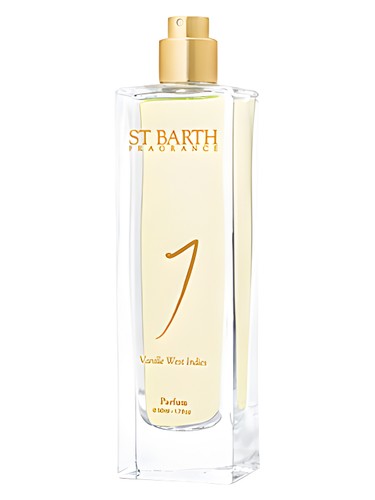
The first spritz of Vanille West Indies transports you directly to a Caribbean beach at golden hour—but not to the sand or the sea. Instead, you find yourself in a sun-warmed confectionery where artisan caramels cool on marble slabs and Madagascar vanilla pods rest in ceramic jars. This is vanilla as the star performer, unapologetically sweet and impossibly comforting. Ligne St Barth, the skincare-focused French West Indies brand, crafted this 2007 release as a love letter to gourmand lovers, and nearly two decades later, it remains remarkably relevant. The opening doesn't play coy with florals or dance around with citruses—it announces itself as pure, uncut vanilla indulgence from the very first moment.
The Scent Profile
With Vanille West Indies, we encounter a fragrance that defies traditional pyramid structure, presenting instead as a cohesive vanilla experience that evolves subtly rather than dramatically. The lack of specified individual notes speaks to this perfume's philosophy: this is about the total sensory experience of vanilla in its most complete expression.
The dominant vanilla accord—rated at a perfect 100%—reveals itself as creamy, rich, and multifaceted rather than one-dimensional. This isn't the thin, synthetic vanilla of budget candles; it's the real deal, complex and enveloping. Almost immediately, the caramel accord (76%) emerges to add a burnt-sugar depth that prevents the composition from veering into overly simplistic territory. These two accords dance together throughout the wearing, creating a gourmand foundation that somehow manages to feel both decadent and wearable.
The sweetness (65%) is substantial but not cloying, suggesting careful calibration by the perfumer. As the fragrance settles, a powdery quality (41%) softens the edges, lending an almost cosmetic smoothness that recalls vintage face powders and intimate beauty rituals. This powderiness prevents the vanilla-caramel duo from becoming sticky or overwhelming.
More surprisingly, a subtle floral undertone (25%) weaves through the composition, likely suggesting the creamy white flowers that often accompany sophisticated vanilla fragrances—perhaps ylang-ylang or heliotrope lending their buttery textures. The balsamic accord (23%) grounds everything with a slightly resinous warmth that gives the fragrance its lasting power and prevents it from floating away as mere sweetness.
Throughout wear, Vanille West Indies maintains remarkable consistency. This is a linear fragrance in the best sense—you know exactly what you're getting, and what you're getting is steadfastly beautiful from first spray to final skin scent.
Character & Occasion
Vanille West Indies sits in that rare category of fragrances rated for all seasons, and the community data confirms this versatility. The vanilla-caramel core feels cozy enough for autumn and winter evenings, yet the powder and subtle floral elements keep it from becoming too heavy for spring and summer wear. On warm days, it evokes tropical warmth and resort luxury; in cold weather, it becomes your olfactory cashmere blanket.
Interestingly, the day/night data shows no strong preference either way, suggesting this fragrance transcends typical wearing occasions. That said, its gourmand sweetness and 4.46 rating among a substantial community (557 votes) hints at an evening-leaning character—this feels like the scent of golden light, whether that's sunset on the beach or candlelight at dinner.
This is decidedly marketed as a feminine fragrance, though the straightforward vanilla-caramel profile could easily be appreciated by anyone drawn to gourmands. It suits those who've moved beyond tentative experimentation with vanilla and are ready to commit fully to the note. This is for the person who orders dessert first, who believes comfort and sophistication need not be mutually exclusive.
Community Verdict
A 4.46-out-of-5 rating from 557 voters represents genuine enthusiasm, placing Vanille West Indies in the upper echelon of community-beloved fragrances. That level of consensus—achieved over years since its 2007 release—suggests this isn't a flash-in-the-pan viral sensation but rather a reliable performer that consistently delivers on its promise.
The substantial voter base also indicates this fragrance has found its audience despite Ligne St Barth's relatively limited distribution compared to major fragrance houses. People seek this one out specifically, and once they find it, they commit. That kind of loyalty in the fragrance community speaks volumes.
How It Compares
Vanille West Indies exists in distinguished company. Its similarity to Indult's Tihota—often considered the gold standard of pure vanilla fragrances—is telling. Where Tihota commands premium pricing for its pristine vanilla focus, Vanille West Indies offers a more accessible entry point with added caramel complexity.
The comparison to Xerjoff's Lira brings the caramel-vanilla connection into focus, though Lira skews more citrus-forward in its opening. Giardini Di Toscana's Bianco Latte shares the creamy, comfort-food quality, while Van Cleef & Arpels' Orchidée Vanille suggests the subtle floral underpinning present in both fragrances. Jovoy Paris's Fire At Will represents the more daring edge of the vanilla category, making Vanille West Indies feel comparatively approachable.
Within this constellation of vanillas, Ligne St Barth's offering distinguishes itself through its caramel emphasis and powdery softness—less austere than Tihota, less citrus-bright than Lira, and more straightforwardly gourmand than Orchidée Vanille.
The Bottom Line
Vanille West Indies proves that sometimes the most direct path is the most effective. This isn't a fragrance trying to reinvent vanilla or apologize for its sweetness—it celebrates both unabashedly. The 4.46 rating reflects what happens when a perfume knows exactly what it is and executes that vision with quality ingredients and careful balance.
For those building a vanilla collection, this deserves serious consideration alongside the usual suspects. For gourmand newcomers, it offers an generous, wearable introduction to the category without challenging you with unexpected twists. The all-season versatility makes it a practical choice, though value assessment remains difficult without concentration or pricing data.
Should you try it? If the words "vanilla" and "caramel" make your heart beat faster, absolutely. If you're seeking complexity and evolution, you might find this too linear. But for what it aims to be—a beautiful, comforting vanilla experience in liquid form—Vanille West Indies succeeds brilliantly, and 557 voters can't be wrong.
AI-generated editorial review