First Impressions
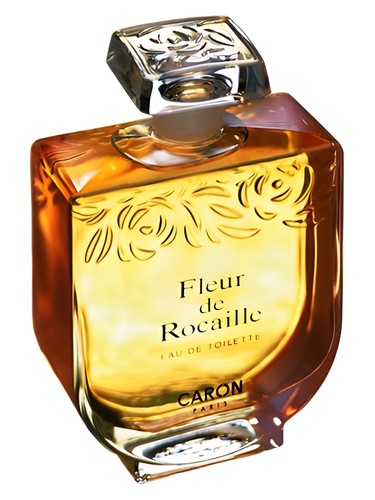
The first spray of Fleur de Rocaille feels like stepping into a conservatory where time has folded in on itself. Gardenia blooms float on a cushion of vintage aldehydes, their creamy petals kissed by the unexpected coolness of violet. This isn''t the gardenia of tropical vacations or sultry evenings—it''s refined, almost aristocratic, with that particular sparkle that aldehydes bring to white florals. The opening announces itself clearly: this is a flower garden conceived in the grand French tradition, but softened, made approachable for an era that was learning to love florals again after the powerhouse decade that preceded it.
That 1993 launch date matters. Caron was reaching back to its own heritage while creating something that could stand alongside the era''s emerging florals. The result is a fragrance that feels both nostalgic and surprisingly fresh, bridging generations with remarkable grace.
The Scent Profile
The gardenia-aldehyde-violet trio that opens Fleur de Rocaille is like watching dawn break over a formal garden. The aldehydes lift and aerate, creating that champagne-fizz quality that prevents the gardenia from becoming too heavy, too immediately indolic. The violet adds a green-powdery nuance that keeps everything elegant rather than tropical. This top note phase is brief but crucial—it sets the tone for everything that follows.
As the fragrance settles, you encounter what can only be described as a florist''s entire spring inventory. Mimosa brings its honey-powder sweetness. Jasmine and ylang-ylang add creamy, slightly animalic depth. Lilac contributes its fresh, green-purple character while lily-of-the-valley injects clean brightness. Rose and carnation weave through with their spicy-soft textures, and iris casts its subtle gray-violet veil over everything. It''s an extraordinary bouquet, yet somehow Caron keeps it from becoming chaotic. The 98% floral accord rating tells the story numerically, but what it doesn''t capture is the balance—how each bloom seems to know its place in the composition.
The base brings necessary structure to this abundant garden. Sandalwood provides creamy warmth, while amber adds resinous sweetness. Musk softens and rounds the edges, oakmoss contributes that essential chypre-adjacent depth (though this is decidedly not a chypre), and cedar adds woody backbone. This foundation explains the 46% woody accord and ensures that Fleur de Rocaille doesn''t simply evaporate into pure powder. The 72% powdery rating is significant but not overwhelming—this is soft-focus powder, not the face-powder assault of some vintage compositions.
Character & Occasion
Fleur de Rocaille knows its strengths. The data reveals this as primarily a spring fragrance (87%), and that makes perfect intuitive sense—this is the scent of gardens waking up, of blooms unfurling in temperate warmth. Fall follows closely at 71%, where the sandalwood and amber base feels particularly appropriate against cooling air. Summer manages 53%, possible in air-conditioned environments or cooler evenings, while winter trails at 44%—perhaps too delicate when bundled in heavy coats.
The day-to-night split is decisive: 100% day, with only 51% finding it suitable for evening wear. This is your garden party fragrance, your lunch date perfume, your sophisticated office scent for creative environments. It''s not trying to seduce across a dimly lit bar or make an entrance at a gala. Instead, it whispers rather than shouts, suggesting refinement and taste rather than demanding attention.
This is a fragrance for those who appreciate classical florals but find vintage concentrations overwhelming. It suits someone who wants to smell beautiful rather than powerful, elegant rather than sexy. Age-wise, it transcends—a twenty-something could wear it as an introduction to white florals, while someone older might appreciate its nod to perfumery''s golden age without the associated vintage heft.
Community Verdict
With 865 votes landing at 3.91 out of 5, Fleur de Rocaille occupies interesting territory. This isn''t a polarizing fragrance generating extreme reactions—it''s solidly appreciated without quite reaching cult status. That rating suggests a fragrance that delivers on its promises: it''s well-crafted, wearable, and beautiful, even if it doesn''t revolutionize anyone''s perfume perspective. For a reformulated vintage from a heritage house, this is actually reassuring. It means Caron maintained quality and character while adapting to modern sensibilities.
The substantial vote count indicates genuine interest and wear-testing, not just casual sampling. People are spending time with this fragrance, and the majority find it worthy of recommendation, even if not quite reaching their personal "holy grail" status.
How It Compares
The similar fragrance list reads like a who''s-who of quality white florals: Amarige''s exuberant bouquet, Poème''s tender floral poetry, the aldehydic sophistication of Chanel No. 5 Parfum, L''Air du Temps''s dove-soft elegance, and Samsara''s sandalwood embrace. Fleur de Rocaille holds its own in this distinguished company, perhaps sitting closest to L''Air du Temps in terms of approachability and Poème in its romantic sensibility.
What distinguishes it is the gardenia focus softened by that violet-aldehyde opening—a slightly cooler, more garden-fresh take than some of its headier cousins. It''s less formal than Chanel No. 5, less overtly romantic than Poème, less Oriental than Samsara, yet it borrows grace notes from each.
The Bottom Line
Fleur de Rocaille represents Caron doing what Caron does best: creating florals with backbone and breeding. At 3.91 stars, it''s a fragrance that rewards those who seek it out without necessarily converting skeptics of the white floral category. If you love any of its similar fragrances, this deserves a place in your sampling queue.
It''s particularly valuable for those building a wardrobe of daytime florals or anyone seeking spring and fall signatures that feel polished without being stuffy. The relatively modest rating likely reflects its unfashionable genre more than any compositional flaws—in an era of gourmands and niche experimentation, classical white florals simply don''t generate the same excitement they once did.
But for those who understand that timelessness has its own quiet power, Fleur de Rocaille offers something increasingly rare: a beautifully executed floral that smells like flowers, not fruit or candy or conceptual art. Sometimes that''s exactly what you need.
AI-generated editorial review