First Impressions
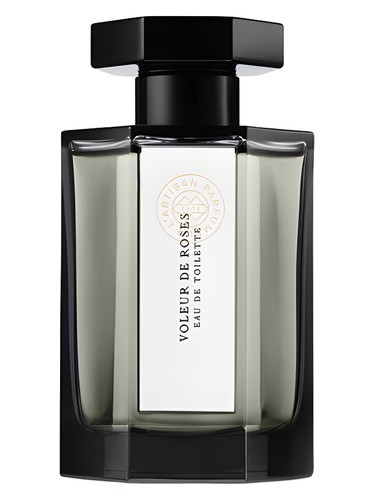
The name translates to "rose thief," and the first spray reveals exactly what kind of heist this is. Voleur de Roses announces itself not with the demure sweetness of a traditional rose soliflore, but with something darker, more subversive. The opening is a curious juxtaposition: tart plum mingling with herbaceous geranium and a whisper of bergamot citrus. But make no mistake—within moments, the patchouli surges forward like velvet turned inside out, earthy and unapologetic. This isn't a fragrance that tiptoes into a room; it walks in wearing vintage suede and doesn't apologize for the dirt under its fingernails.
Created in 1993, Voleur de Roses emerged during an era when L'Artisan Parfumeur was busy redefining what niche perfumery could be. Over thirty years later, it remains a fascinating study in contrast—feminine yet grounded, romantic yet rebellious.
The Scent Profile
The opening act is deceptively bright. Plum lends a wine-dark fruitiness that reads more sophisticated than sweet, while geranium adds a slightly metallic, green edge that keeps the composition from veering into jam territory. Bergamot flickers briefly, a citrus spark that illuminates but doesn't linger. These top notes establish the fragrance's intention: this rose will be stolen, not gifted.
As the heart unfolds, the titular rose emerges—but not alone. Here's where Voleur de Roses reveals its true character. The rose is Turkish and deep, with that slightly spicy, honeyed quality that distinguishes fine rose absolutes from their lighter cousins. But it's thoroughly entangled with patchouli, the dominant accord that scores a perfect 100% in the fragrance's profile. This isn't the head-shop patchouli of cliché, but a refined, slightly sweet earthiness that wraps around the rose like shadow around light. The two notes don't just coexist; they seem to conspire together, creating something neither could achieve alone.
The base is where warmth fully blooms. Amber and benzoin provide a resinous sweetness that balances the patchouli's earthiness, while sandalwood adds creamy woodiness and musk grounds everything with skin-close intimacy. The woody accord registers at 64%, creating a foundation that's substantial without being heavy. The warm spicy notes (55%) thread throughout, likely emanating from the interplay between the rose, patchouli, and amber. This is a fragrance that settles into the skin rather than sitting atop it, evolving over hours into something increasingly personal and harder to define.
Character & Occasion
Voleur de Roses is unequivocally an autumn fragrance, scoring a perfect 100% for fall wearability. The combination of earthy patchouli, deep rose, and amber warmth mirrors the season itself—that transitional moment when gardens fade but their memory lingers. Winter comes in at a respectable 52%, and the fragrance certainly has the weight and warmth to carry through colder months. Spring (44%) works for those who appreciate a darker floral that contrasts with the season's usual lightness, while summer (25%) is truly for the bold only—this is a substantial scent that heat will amplify considerably.
The day-to-night versatility is remarkable: 75% day to 73% night. This speaks to the fragrance's chameleonic nature. In daylight, the rose and fruity elements read as sophisticated and approachable. As evening falls, the patchouli, amber, and musk deepen into something more mysterious and sensual. It's equally at home in a gallery opening or a late dinner, adapting to context while maintaining its distinctive character.
This is marketed as a feminine fragrance, but the earthy, woody dominant accords (40% earthy) make it an excellent candidate for those who appreciate gender-fluid scents. Anyone who loves rose but fears sweetness, or adores patchouli but wants sophistication, should explore this thoroughly.
Community Verdict
With a rating of 3.99 out of 5 from 1,433 votes, Voleur de Roses sits just shy of four stars—a solid endorsement that suggests broad appreciation with room for personal preference. This isn't a crowd-pleaser in the mainstream sense, nor is it trying to be. The rating reflects what the fragrance offers: a well-crafted, distinctive composition that rewards those who seek something beyond the conventional.
The substantial vote count indicates this isn't an obscure curiosity but a fragrance that's found its audience over three decades. That longevity itself is telling. Perfumes don't survive thirty years on novelty alone.
How It Compares
The similar fragrances list reads like a who's who of opulent, uncompromising rose compositions. Portrait of a Lady by Frederic Malle and Noir de Noir by Tom Ford both share Voleur de Roses' commitment to rose wrapped in darker elements, though both lean heavier and costlier. La Fille de Berlin by Serge Lutens explores similar rose-patchouli territory with even more intensity. The inclusion of Tom Ford's Black Orchid and Mugler's Angel speaks to the shared gothic sensibility—fragrances that embrace rather than avoid their dramatic side.
Where Voleur de Roses distinguishes itself is in restraint. It's opulent without being overwhelming, distinctive without screaming for attention. While its cousins have grown bolder and sweeter with reformulations and modern tastes, this L'Artisan creation maintains an almost vintage composure.
The Bottom Line
Voleur de Roses deserves its near-four-star rating and its three-decade legacy. This is a fragrance for those who want their roses stolen rather than handed over—complicated, earthy, and unapologetically itself. The patchouli dominance won't suit everyone, but for those who appreciate that dark, earthy richness as a frame for florals, this is masterful work.
It's best suited for cooler months, for those comfortable with projection and presence, and for anyone tired of roses that smell like apology. Whether you're a patchouli devotee looking for refinement or a rose lover seeking depth, Voleur de Roses offers a compelling argument for why some classics endure while trends fade.
Critique éditoriale générée par IA