Premières Impressions
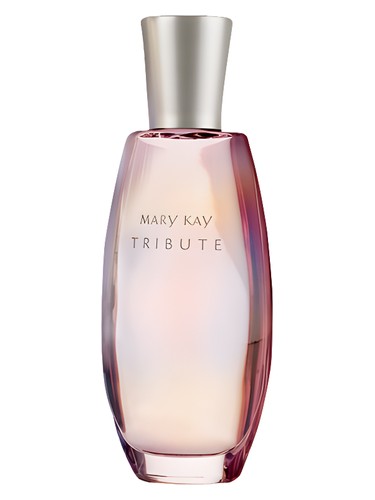
Le premier vaporisateur de Tribute for Women, c''est comme ouvrir une capsule temporelle de 1990—et découvrir que son contenu a vieilli remarquablement bien. Une note de pêche douce s''annonce immédiatement, pas tout à fait le fruit juteux et dégoulinant des fragrances contemporaines, mais quelque chose de plus raffiné et retenu. C''est une pêche qui murmure plutôt qu''elle ne crie, une introduction distinguée à ce qui se révèle rapidement être un tour de force floral blanc. En quelques instants, ce fruit se retire comme une hôtesse polie s''écartant pour laisser ses invités plus glamoureux prendre la vedette.
Ce qui vous frappe le plus dans ces premières secondes, c''est l''élégance poudrée qui semble émaner du flacon lui-même. Ce n''est pas une fragrance qui essaie d''être jeune ou tendance ; elle sait exactement ce qu''elle est—une célébration à pleine voix de la féminité classique, exécutée avec une sophistication surprenante pour une marque de vente directe souvent négligée par les connaisseurs en parfumerie.
Le Profil Olfactif
Le voyage du sommet à la base dans Tribute for Women est moins une transformation dramatique qu''un dévoilement graduel de couches. Cette pêche initiale se dissout doucement, cédant la place à ce qui ne peut être décrit que comme une symphonie florale blanche dirigée par l''iris et la tubéreuse. L''iris apporte une qualité fraîche, presque de rouge à lèvres—terreuse et légèrement métallique de la manière la plus élégante possible. Elle crée de la structure, empêchant ce qui aurait pu être un bouquet accablant de devenir écoeurant.
La tubéreuse entre avec une confiance caractéristique, crémeuse et opulente sans basculer dans le territoire ouvertement sensuel que la tubéreuse pure peut occuper. Elle est entourée de joueurs de soutien : le narcisse ajoutant une touche d''introspection verte, l''œillet contribuant sa chaleur épicée et vintage, la freesia offrant de la transparence, le muguet fournissant une légèreté aldéhydique fraîche, et le jasmin arrondissant le tout avec une profondeur indolique. C''est un cœur encombré, mais remarquablement, rien ne semble boueux ou confus. Chaque note semble comprendre son rôle dans la composition.
La base est l''endroit où Tribute montre son âge de la meilleure façon possible. Un musc doux ancre tout—pas le musc synthétique acéré des fragrances modernes, mais quelque chose de véritablement poudreux et ressemblant à la peau. Il se fond avec les florales blanches persistantes pour créer cet accord caractéristique qui domine le caractère de la fragrance : floral blanc rencontrant la poudre en harmonie parfaite, avec l''iris ne vous laissant jamais oublier sa présence.
Caractère et Occasion
C''est ici que Tribute for Women révèle sa polyvalence—et peut-être sa crise d''identité, selon votre perspective. Les données suggèrent qu''elle fonctionne également bien à travers toutes les saisons, et il y a du vrai à cela. La poudre et l''iris la rendent suffisamment fraîche pour l''été, tandis que la richesse de la tubéreuse et du musc lui donnent une chaleur suffisante pour l''hiver. C''est un caméléon, s''adaptant à la température et au contexte avec une facilité surprenante.
L''absence de préférence forte pour le jour ou la nuit parle de son caractère équilibré. Ce n''est pas une fragrance de salle de réunion, ni une séductrice du soir. Au lieu de cela, elle occupe ce terrain intéressant du milieu : assez élégante pour les occasions spéciales, assez accessible pour un port quotidien. C''est l''équivalent olfactif d''une robe parfaitement taillée qui fonctionne à la fois pour un déjeuner entre amis et un dîner dans un bon restaurant.
Pour qui est-ce ? Les femmes qui apprécient les florales blanches classiques sans vouloir sentir qu''elles ont pillé la coiffeuse de leur grand-mère. Celles qui trouvent les florales fruitées modernes trop sucrées mais veulent quelque chose de plus doux qu''une chypre complète. Quiconque croit qu''une marque de vente directe peut occasionnellement rivaliser avec les maisons de prestige—et veut une preuve.
Verdict de la Communauté
Avec une note de 3,97 sur 5 de la part de 486 votes, Tribute for Women s''est gagné un suivi respectable. Ce n''est pas un classique culte avec un petit nombre de fans passionnés, ni une proposition polarisante qu''on aime ou qu''on déteste. Au lieu de cela, elle a gagné une appréciation constante d''une solide communauté de porteurs qui reconnaissent la qualité quand ils la sentent, indépendamment de l''étiquette sur le flacon.
Cette note raconte une histoire : c''est une fragrance qui tient ses promesses sans nécessairement dépasser les attentes. Elle est bien faite, agréable, et suffisamment distinctive pour avoir du caractère, mais peut-être pas assez révolutionnaire pour inspirer la dévotion fervent qui pousse les fragrances au-dessus de 4,5. Pour une fragrance de plus de trente ans d''une marque de vente directe, cependant, ce genre d''approbation constante vaut la peine d''être noté.
Comment Elle se Compare
La comparaison avec J''adore, Poème, Chance Eau Tendre, Trésor et Organza place Tribute dans une compagnie distinguée—ce sont la royauté florale blanche de la parfumerie. Elle partage l''engagement de J''adore envers l''opulence florale et la sophistication centrée sur l''iris de Poème, bien qu''elle manque de la radiance moderne de la première et de la poésie mélancolique de la seconde. La comparaison avec Trésor est particulièrement appropriée ; les deux embrassent la poudre et les florales teintées de fruit de la même époque, parlant le même langage olfactif.
Là où Tribute diffère, c''est dans sa directivité. Tandis que ces fragrances de prestige enveloppent souvent leurs florales dans des bases boisées complexes ou des molécules synthétiques sophistiquées, Tribute garde les choses plus simples. Elle n''essaie pas d''être de l''art—elle essaie de vous faire sentir belle, et elle réussit sur ces termes.
Le Résultat Final
Tribute for Women est un rappel que la bonne parfumerie peut émerger de lieux inattendus. Bien qu''elle n''ait peut-être pas le prestige de ses homologues des grands magasins, elle offre une expérience florale blanche légitime qui tient bon plus de trois décennies après son lancement. La combinaison poudre-iris-tubéreuse est expertement équilibrée, et l''ouverture pêche fournit juste assez de contraste pour garder les choses intéressantes.
Devriez-vous la chercher ? Si vous êtes attiré par les florales blanches classiques, particulièrement celles avec un iris proéminent et une finition poudrée, absolument. Au prix de Mary Kay, elle représente une véritable valeur—vous obtenez une qualité de fragrance qui rivalise légitimement avec des flacons coûtant trois fois plus cher. La note confirme ce que votre nez vous dira : c''est du travail compétent et beau. Elle ne changera pas votre vie, mais elle pourrait bien devenir un joueur fiable dans votre rotation, la fragrance que vous attrapez quand vous voulez vous sentir soignée sans faire de déclaration. Parfois, c''est exactement ce dont vous avez besoin.
Critique éditoriale générée par IA