Premières Impressions
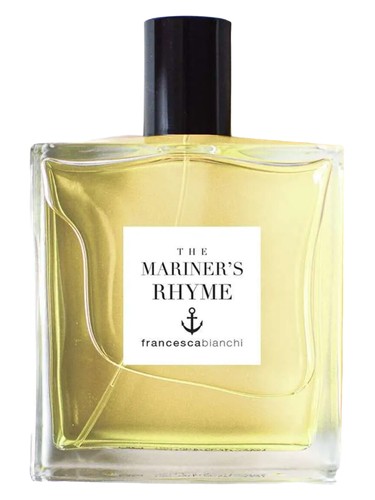
Le premier vaporisateur de The Mariner''s Rhyme ressemble à se tenir au bord d''une falaise où la terre rencontre la mer—ce moment précis où vous captez à la fois le parfum minéral de la roche réchauffée par le soleil et l''air pur et ionisé qui s''écoule de l''eau. C''est Francesca Bianchi s''éloignant décidément de ses compositions typiques sensuelles et intimes de la peau vers un territoire qui se sent expansif et élémentaire. L''ouverture explose avec des agrumes aromatiques—pamplemousse et bergamote tranchant à travers la lavande et le craquement résineux de l''élemi—mais il y a quelque chose en dessous qui signale immédiatement que ce ne sera pas un parfum frais typique. C''est ozoné, oui, dominant à 100% du profil d''accord, mais ancré par une qualité terreuse (91%) qui le maintient attaché au sol plutôt que de flotter dans l''abstraction aquatique générique.
Le Profil Olfactif
The Mariner''s Rhyme se déploie comme une étude des contrastes, vous tirant entre le ciel et la terre à chaque évolution. Ces notes d''ouverture—l''élemi fournissant sa morsure citronnée-poivrée, la luminosité de la bergamote, les aromatiques fougère-like de la lavande, et l''amertume zestée du pamplemousse—créent un sentiment immédiat de mouvement et d''air. Mais Bianchi n''est pas satisfaite de laisser cela rester un simple aromate agrumé. En quelques minutes, le cœur révèle sa complexité.
Les notes ozones avancent maintenant, non pas comme la « brise océane » générique des aquatiques des grands magasins, mais comme quelque chose de plus précis—comme l''air chargé après une tempête, ou le parfum de pierres mouillées. L''iris émerge avec sa qualité caractéristique racineuse, presque métallique (86% de la structure d''accord), ajoutant une dimension fraîche, poudreuse-terreuse qui se sent entièrement inattendue dans ce contexte. La fleur d''oranger s''entrelace, offrant juste assez de douceur florale pour adoucir les bords plus durs de la composition sans compromettre son caractère essentiel.
La base est l''endroit où The Mariner''s Rhyme se distingue vraiment. La mousse de chêne fournit cette fondation mousseuse classique (66% de présence d''accord), ancrant l''aérien avec la terre humide et le sol de la forêt. L''encens ajoute la fumée d''encens résineuse, tandis que le patchouli contribue sa profondeur riche et terreuse. L''ambre arrondit tout avec de la chaleur, bien que ce ne soit pas un parfum chaud au sens traditionnel—c''est plus comme la lumière du soleil sur l''eau fraîche, tempéré plutôt que chauffé. L''interplay entre le sommet ozoné et cette base décidément terreuse et aromatique crée une tension qui définit la personnalité du parfum.
Caractère et Occasion
C''est sans équivoque un parfum de jour, marquant 97% pour le port de jour par rapport à seulement 50% pour le soir—et ce suivi a tout son sens. The Mariner''s Rhyme prospère à la lumière naturelle, en plein air, dans des contextes où sa dualité aquatique-terreuse peut respirer. C''est construit pour l''été (100%) et le printemps (86%), quand vous voulez quelque chose qui se sent frais et rafraîchissant mais suffisamment substantiel pour maintenir une présence. Intéressamment, il conserve 61% d''adéquation pour l''automne, probablement grâce à cette base terreuse et aux aromatiques qui font le pont entre le temps plus chaud et les transitions plus froides.
L''hiver, à 21%, n''est clairement pas la saison de ce parfum—il n''y a pas assez de richesse ou d''isolation ici pour le confort par temps froid. C''est un parfum pour les promenades côtières, les réceptions de jardin, les escapades de fin de semaine où le code vestimentaire est le lin et l''itinéraire implique à la fois l''eau et la promenade. Malgré la commercialisation comme féminin, la composition aromatique-agrumée-terreuse se lit assez unisexe, en particulier compte tenu de la tendance de Bianchi à brouiller les lignes de genre en parfumerie.
Verdict de la Communauté
C''est ici que les choses deviennent troubles : The Mariner''s Rhyme a reçu un score de sentiment neutre (0/10) dans les discussions communautaires, mais le contexte révèle pourquoi—il n''a simplement pas été discuté dans le fil Reddit analysé. La conversation s''est concentrée entièrement sur les parfums pour les esthétiques alt/goth/punk, mettant en vedette des marques comme Comme des Garçons, DS&Durga et Zoologist, mais The Mariner''s Rhyme n''a pas du tout été mentionné. Cette absence est révélatrice à sa manière ; en tant que sortie de 2024, il n''a pas encore pénétré la conscience communautaire plus large, en particulier dans les discussions de niche axées sur des profils olfactifs plus sombres et non conventionnels.
La note globale du parfum de 3,86 sur 5 à partir de 453 votes suggère une réception polarisante—pas universellement aimée, mais avec une base solide d''appréciation. Cette note inférieure à 4,0, combinée à l''absence de mentions organiques sur Reddit, suggère que cela peut être l''une des sorties les plus difficiles de Bianchi, demandant aux porteurs d''embrasser un départ esthétique de sa signature établie.
Comment Cela se Compare
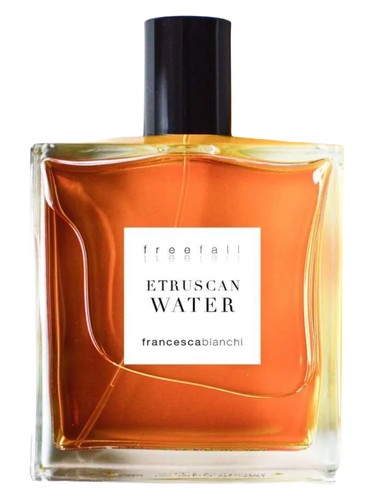
Dans le propre catalogue de Francesca Bianchi, The Mariner''s Rhyme se tient aux côtés d''Etruscan Water et de Libertine Neroli comme ses explorations de la fraîcheur—bien que ceux-ci penchent vers la luminosité méditerranéenne et le caractère amer-sucré du néroil, Mariner''s Rhyme s''aventure dans des eaux plus froides et plus septentrionales. La comparaison avec Terre d''Hermès est particulièrement appropriée : les deux équilibrent les aromatiques agrumés avec des qualités terreuses et minérales, bien que la création d''Hermès penche plus décidément masculine et boisée là où celle de Bianchi incorpore cette combinaison distinctive iris-ozoné.
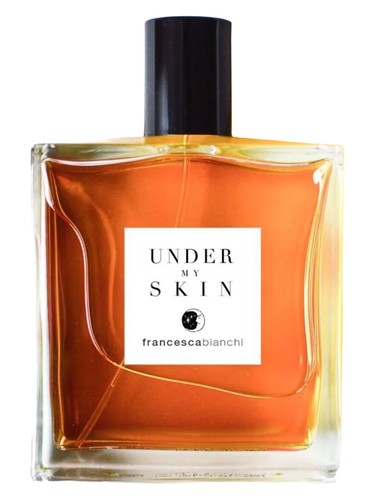
Les mentions d''Under My Skin et d''Encounters comme parfums similaires semblent faire référence à la signature de Bianchi plutôt qu''à un chevauchement olfactif spécifique—ce sont des compositions radicalement différentes unies principalement par la main de leur créateur. Ce qui distingue The Mariner''s Rhyme dans la catégorie aquatique est précisément cette qualité terrestre, le refus de flotter entièrement dans l''abstraction aérienne.
Le Verdict Final
The Mariner''s Rhyme représente Francesca Bianchi prenant un risque calculé, se poussant dans un territoire qui ne s''aligne pas naturellement avec les parfums opulents et centrés sur la peau qui ont construit sa réputation. Le résultat est intrigant plutôt qu''immédiatement adorable—un parfum qui vous demande d''apprécier ses contradictions plutôt que de s''installer dans un confort facile. Cette note de 3,86 se sent honnête ; ce n''est pas un parfum qui plaît à tous, mais il accomplit quelque chose de spécifique et le fait avec intégrité.
Pour ceux qui recherchent un parfum aquatique avec une substance et une complexité réelles, en particulier si vous en avez assez de la transparence synthétique typique du genre, cela mérite attention. Il convient mieux à quelqu''un qui apprécie la volonté de la parfumerie de niche de défier les conventions, qui veut la fraîcheur estivale sans sacrifier la profondeur, et qui trouve la beauté dans les espaces liminaux—les rivages, les horizons, les seuils entre les éléments. Attendez-vous simplement pas à la chaleur et à la sensualité des œuvres les plus connues de Bianchi. C''est elle dans une humeur entièrement différente, celle qui vaut la peine d''être explorée si vous êtes disposé à la rencontrer à ses propres conditions.
Critique éditoriale générée par IA