First Impressions
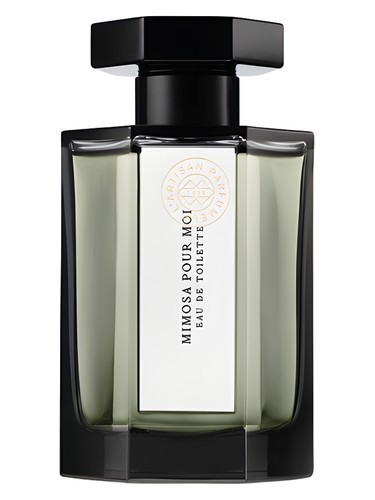
The first spray of Mimosa Pour Moi feels like stepping into unexpected sunlight after a spring rain. There's an immediate brightness—almost startling in its clarity—that reads as both powdery and fresh, a contradiction that shouldn't work but absolutely does. This is mimosa stripped of the cloying sweetness that can plague yellow florals, presented instead with an airy, almost ozonic quality that lifts it skyward. The opening moments suggest both vintage elegance and modern restraint, a balancing act that speaks to L'Artisan Parfumeur's deft hand in 1992, when the house was still establishing its reputation for naturalistic, thoughtful compositions.
What strikes you first isn't just the mimosa itself—though it dominates at 100% of the accord profile—but the peculiar freshness surrounding it. There's a green edge, a hint of wetness in the air, as if these golden pom-poms of bloom have been gathered while still damp with morning dew.
The Scent Profile
While the specific note breakdown remains undisclosed—perhaps intentionally, given L'Artisan's often minimalist approach—the accord structure tells a clear story. The yellow floral dominance is unmistakable, anchored entirely by mimosa's honeyed, slightly hay-like character. But this isn't mimosa in isolation; it's mimosa as experience, as memory, as place.
The powdery element, registering at 75%, weaves through the composition like silk thread through linen. This isn't the heavy, cosmetic powder of mid-century makeup compacts, but something softer, more natural—think iris root, perhaps, or the dusty sweetness of pollen itself. It tempers the mimosa's intensity without muffling it, creating a halo effect around the central bloom.
Then comes the surprise: a 53% ozonic accord that gives the fragrance its distinctive airiness. This is where Mimosa Pour Moi reveals its conceptual sophistication. The ozonic quality—that clean, almost metallic freshness associated with air after a thunderstorm—creates space around the floral elements. It prevents the composition from becoming dense or suffocating, allowing the mimosa to float rather than settle heavily on skin.
The green accord at 48% provides botanical context, suggesting stems and leaves rather than just blooms, while a general floral note at 44% fills in the gaps, rounding out the mimosa with softer, less defined petals. Most intriguingly, there's a 39% aquatic presence that reinforces the wet, fresh quality—imagine mimosa branches reflected in still water, doubled and made dreamlike.
As the fragrance develops, that powdery aspect grows more prominent, settling into something intimate and skin-close. The bright, almost citric aspects of the opening recede, leaving the dusted, honeyed facets of mimosa to have the final word.
Character & Occasion
The data speaks unequivocally: this is spring's fragrance, rating 100% for the season, and it's designed for daylight hours (94% day versus a mere 10% night). These aren't arbitrary designations—Mimosa Pour Moi genuinely belongs to mornings and afternoons, to gardens and open windows, to the first warm days when you can finally shed your coat.
Summer claims 41% suitability, and it's easy to see why. The ozonic and aquatic elements make it surprisingly wearable in warmer weather, provided you're not in oppressive humidity. This is a vacation fragrance, a Mediterranean spring, a picnic on dewy grass. Fall and winter? At 20% and 11% respectively, Mimosa Pour Moi makes its preferences clear. This isn't a fragrance that wants to be bundled up—it wants to breathe.
The feminine designation feels accurate but not restrictive. This is more about aesthetic than strict gender—anyone drawn to bright florals with an artistic, slightly intellectual edge will find something to love here.
Community Verdict
With a solid 4.02 out of 5 rating across 1,011 votes, Mimosa Pour Moi has earned genuine respect. This isn't a cult favorite with twelve passionate devotees—over a thousand people have weighed in, and the overwhelming consensus is positive. That rating suggests a fragrance that delivers on its promises without necessarily being revolutionary. It's very good at what it does, and what it does is specific enough that those seeking it will be satisfied, while those looking for something else will simply look elsewhere.
The vote count itself is telling: for a fragrance from 1992, maintaining this level of engagement suggests enduring appeal rather than nostalgic loyalty alone.
How It Compares
The company Mimosa Pour Moi keeps is illustrious: Guerlain's L'Heure Bleue, Frederic Malle's En Passant, Hermès' Un Jardin Sur Le Nil, and Chanel's No. 5 and Coco. These aren't casual comparisons—they're pillars of perfumery. What they share with Mimosa Pour Moi is a certain refinement, a commitment to specific floral visions executed with confidence.
En Passant makes the most obvious parallel, given its own focus on a single floral note (lilac) rendered with similar airiness. Un Jardin Sur Le Nil shares that aquatic-green freshness. But where those fragrances might feel deliberately modern or conceptual, Mimosa Pour Moi has a warmer, more traditionally feminine quality—it's closer in spirit to the Chanels, though lighter in execution.
The Bottom Line
Mimosa Pour Moi isn't trying to be everything to everyone, and that's precisely its strength. This is a fragrance for those who understand that spring isn't just a season but a feeling—that particular combination of hope, freshness, and fleeting beauty. At over three decades old, it has earned its place not through constant reinvention but through consistent excellence at a very specific thing.
The 4.02 rating reflects exactly what's in the bottle: a well-executed, beautiful, somewhat specialized fragrance that will delight its intended audience without necessarily converting skeptics. If you've ever found yourself leaning close to a mimosa branch, breathing in that honeyed, powdery, impossibly sunny scent, this perfume is for you. If you live for spring, for daylight, for florals that feel like optimism rather than seduction, seek this out. Just don't expect it to perform in contexts it never intended to occupy—save it for the golden hours it was made for.
Critique éditoriale générée par IA