First Impressions
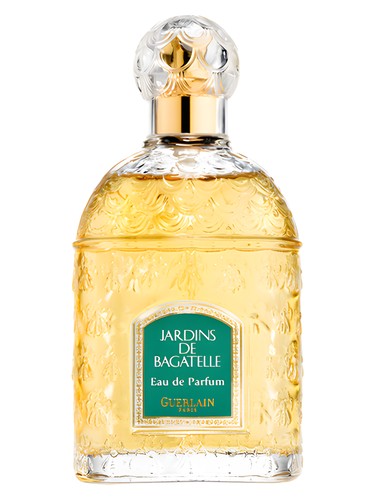
The first spray of Jardins de Bagatelle feels like pushing open the wrought-iron gates to an immaculate Parisian garden at dawn. There''s an immediate brightness—aldehydes lifting citrus and violet into the air like morning mist catching sunlight—but underneath, something richer awaits. The jasmine announces itself almost immediately, not shy or demure, but confident in its placement alongside bergamot and lemon. This is Guerlain in 1983, after all: a house that understood how to marry classical elegance with unabashed florality. The opening doesn''t whisper; it speaks clearly, establishing from the first moment that you''re wearing something thoroughly, unapologetically floral.
The Scent Profile
Jardins de Bagatelle builds its composition like a carefully planned garden layout, with each layer revealing new blooms as you walk deeper into its heart. The aldehydic-citrus opening—bergamot and lemon sharpened with violet and softened with jasmine—creates that classic French perfume sparkle that feels both vintage and somehow perpetually elegant. These top notes don''t linger long, perhaps fifteen to twenty minutes, before the composition shifts dramatically.
The heart is where Jardins de Bagatelle truly lives up to its name. This is an unrelenting white floral bouquet that reads as thoroughly committed to its vision: tuberose, narcissus, gardenia, ylang-ylang, orange blossom, lily-of-the-valley, magnolia, rose, and orchid create a dense, heady centerpiece. At 100% white floral accord with a 36% yellow floral presence, this isn''t a perfume that apologizes for its intensity. The tuberose—appearing both in the heart and base—acts as the backbone, giving the composition a creamy, slightly narcotic quality that prevents all these blooms from feeling airy or watercolor-light. The orange blossom and ylang-ylang add honeyed warmth, while lily-of-the-valley provides brief moments of green freshness that keep the florals from becoming oppressive.
The base brings unexpected structure to all this floral abundance. Tuberose continues its dominance, but now it''s grounded by vetiver, cedar, and patchouli—earthy elements that anchor the composition. Neroli adds a bitter-citrus brightness, while musk softens everything into skin. This foundation keeps Jardins de Bagatelle from floating away entirely into powder and petals, giving it a subtle woody-green backbone that emerges more clearly as the perfume dries down over several hours.
Character & Occasion
The data tells a clear story about when Jardins de Bagatelle thrives: this is overwhelmingly a spring fragrance (92%), with strong showings in summer (58%) and fall (57%), but considerably less enthusiasm for winter wear (29%). That makes perfect sense. This is a perfume that needs warmth to bloom properly, but also benefits from fresh air to keep its white floral intensity from becoming claustrophobic indoors.
At 100% day and only 39% night suitability, Jardins de Bagatelle positions itself as a garden party companion rather than an evening seductress. Picture it at outdoor luncheons, spring weddings, afternoon tea, gallery openings on sunny Saturday afternoons. The 31% fresh accord helps explain why it doesn''t transition easily into evening wear—there''s something fundamentally daylit about this composition, something that wants natural light rather than candlelight.
This is explicitly feminine perfume in the classical sense, created in an era when such distinctions were clearly drawn. The intensity of the white floral heart requires confidence; this isn''t a fragrance for someone tentatively exploring florals. It''s for those who want to smell distinctly, memorably floral without apology.
Community Verdict
The available community data presents an interesting gap: while Jardins de Bagatelle holds a solid 3.98 out of 5 rating from 1,706 votes, specific Reddit discussions about this fragrance appear notably absent from recent community conversations. This silence is itself informative—Jardins de Bagatelle exists in that interesting space of well-regarded vintage Guerlain releases that haven''t captured contemporary social media attention the way newer releases or controversial classics have.
The rating suggests general appreciation without passionate devotion. At nearly 4 out of 5, it''s clearly respected, but perhaps not obsessed over. This might reflect generational shifts in taste, or simply that heavy white florals have fallen somewhat out of fashion in an era that celebrates fresh, minimalist compositions.
How It Compares
Jardins de Bagatelle sits comfortably among other grand floral statements: Organza by Givenchy, 24 Faubourg by Hermès, Arpège by Lanvin, and Poème by Lancôme all share its commitment to unabashed florality. The inclusion of Alien by Mugler in its similar fragrances is initially surprising until you consider that both fragrances feature dominant white florals (jasmine in Alien''s case) and aren''t afraid of intensity.
Where Jardins de Bagatelle distinguishes itself is in its particular focus on tuberose and its multiple-bloom approach. While 24 Faubourg leans more ambery-spicy and Poème goes creamier, Jardins de Bagatelle maintains that garden-like quality—the sense of multiple flowers blooming simultaneously rather than a singular floral note in sharp focus.
The Bottom Line
Jardins de Bagatelle represents a particular moment in perfumery—1983''s vision of timeless French elegance—and it wears that heritage beautifully. The 3.98 rating from over 1,700 voters suggests it delivers on its promises without necessarily converting skeptics of the genre. If you love white florals, particularly tuberose-centered compositions with classical structure, this deserves sampling. If heavy florals make you reach for minimalist citruses, no amount of aldehydic sparkle will change your mind.
At forty years old, it remains remarkably wearable for those who appreciate its aesthetic. The price point for vintage Guerlain varies wildly depending on source and concentration, making value assessment difficult, but for lovers of this style, it''s often more accessible than some of its contemporaries. Best approached in spring, worn during daylight hours, by someone who wants to smell distinctly like flowers—not like the idea of flowers, but like an actual, abundant, slightly overwhelming garden in full bloom.
Critique éditoriale générée par IA