Premières Impressions
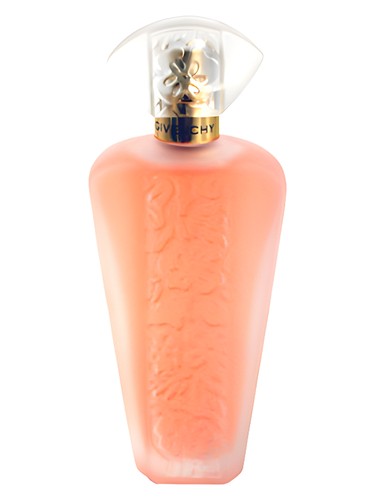
Le premier vaporisateur de Fleur d''Interdit ressemble à entrer dans une serre après une pluie matinale—sauf que cette serre contient également un étal de fruits. C''est une combinaison inattendue qui ne devrait pas fonctionner mais qui fonctionne d''une certaine manière. Les notes de pastèque et de melon ne sont pas la douceur cloying et artificielle que vous pourriez craindre ; au lieu de cela, elles arrivent avec une fraîcheur presque aquatique, tempérée par des tiges vertes et des pétales imbibés de rosée. Il y a une qualité cristalline ici, une luminosité ozonée qui élève l''ouverture fruitée vers quelque chose de plus éthéré que comestible. C''est Givenchy au milieu des années 90, quand la parfumerie expérimentait audacieusement les florales aquatiques et découvrait que les fleurs blanches n''avaient pas besoin de paraître lourdes pour se sentir luxueuses.
Le Profil Olfactif
L''ouverture est un chef-d''œuvre de l''abondance contrôlée. Oui, il y a du melon et de la pastèque, mais ils sont rejoints par un chœur de framboise, fraise et pêche qui pourrait facilement basculer vers un territoire de salade de fruits. Ce qui le sauve—ce qui le rend élégant—ce sont les notes vertes et la bergamote qui tranchent la douceur, ainsi que la jacinthe et la freesia qui commencent à introduire le thème floral dès le premier moment. Ce n''est pas un gourmand ; c''est un jardin vu à travers la pluie de printemps.
Au fur et à mesure que Fleur d''Interdit s''installe, le cœur révèle ses véritables ambitions. C''est ici que le « Fleur » dans le nom gagne sa place. Le cyclamen et la lilas mènent une procession de fleurs blanches et pastel : le muguet avec sa fraîcheur croustillante, la rose avec sa féminité intemporelle, le jasmin avec sa chaleur indolique, et le gardénia avec son opulence crémeuse. La violette et la feuille de violette ajoutent une qualité poudreuse et légèrement métallique, tandis que l''orchidée contribue une propreté presque savonneuse. C''est un jardin bondé, certes, mais il y a une légèreté dans la composition qui l''empêche de devenir claustrophobique. Les qualités ozonées et aquatiques persistent à travers le cœur, donnant à ces florales traditionnelles une qualité moderne et translucide qui définit l''esthétique des années 90.
La base est l''endroit où Fleur d''Interdit révèle sa sophistication et sa longévité. La mousse de chêne fournit une base de type chypre classique, bien que ce soit beaucoup plus léger que les chypres traditionnels. L''iris et l''orris contribuent une poudreuse raffinée et légèrement terreuse qui se sent chère et discrète. Le musc et l''héliotrope ajoutent de la douceur et une douceur subtile, tandis que la vanille fournit juste assez de chaleur pour empêcher la composition de se sentir trop froide. Le bois de santal et le cèdre donnent une structure boisée douce sans lourdeur—tout ici concerne la légèreté, suggérer plutôt que déclarer.
Caractère et Occasion
Les données racontent une histoire claire : c''est avant tout un parfum de printemps, avec une remarquable convenance saisonnière de 90% quand les fleurs fleurissent réellement. L''été revendique 68%, ce qui en fait une option respectable par temps chaud, tandis que l''automne et l''hiver voient des chutes précipitées à 31% et 15% respectivement. Ce n''est pas un parfum qui s''adapte au temps des pulls ; il exige du soleil et de l''air frais.
Comme parfum de jour, c''est presque parfait—100% de convenance diurne contre seulement 23% pour le port en soirée. C''est votre parfum de brunch, votre compagnon de garden-party, votre option appropriée au bureau quand vous voulez sentir poli et féminin sans annoncer votre présence de l''autre côté de la pièce. Les qualités ozonées et aquatiques (59% et 55% respectivement) le maintiennent frais et professionnel, tandis que l''accord floral dominant (100%) assure une féminité indéniable.
Les éléments verts et fruités (61% et 57%) le rendent particulièrement attrayant pour ceux qui trouvent les parfums purement floraux trop sérieux ou maternels. Il y a une jeunesse ici, une légèreté qui était très de son époque mais n''est pas devenue complètement dépassée. L''accord poudré à 52% ajoute juste assez de raffinement vintage pour ancrer la composition.
Verdict de la Communauté
Avec une solide note de 4,09 sur 5 de la part de 747 votants, Fleur d''Interdit a gagné une appréciation genuine de la part de ceux qui l''ont rencontré. Ce n''est pas un blockbuster avec des milliers d''avis, mais le nombre de votes respectable suggère un parfum qui a trouvé ses admirateurs—des gens qui le recherchent, s''en souviennent, et prennent le temps de le noter. Cette note le place fermement dans le territoire « très bon » : pas parfait, mais notablement au-dessus de la moyenne, avec plus de forces que de faiblesses. Pour un parfum de 1994 qui n''a jamais atteint le statut iconique de certains de ses frères et sœurs, cela représente un suivi loyal de ceux qui comprennent ce qu''il fait bien.
Comment il se Compare
La liste des parfums similaires lit comme un qui est qui de la féminité élégante des années 90 et du début des années 2000 : Champs Elysees de Guerlain, J''adore de Dior, 5th Avenue d''Elizabeth Arden, Trésor de Lancôme, et Anais Anais de Cacharel. Ce sont tous des parfums qui privilégient la beauté florale sophistiquée à la valeur de choc ou à la chasse aux tendances. Là où Fleur d''Interdit se distingue, c''est dans son caractère aquatique-ozonée—c''est plus propre et plus transparent que la chaleur de Trésor, moins ouvertement poudré qu''Anais Anais, et plus ludiquement fruité que le J''adore raffiné. Il occupe un doux spot entre l''élégance florale classique et la fraîcheur des années 90.
Le Résultat Final
Fleur d''Interdit est un parfum qui mérite plus de reconnaissance qu''il ne la reçoit. Il n''essaie pas d''être révolutionnaire ou provocateur ; au lieu de cela, il vise à être beau, portable et revigorant—et il réussit. La note de 4,09 reflète une composition qui sait ce qu''elle est et exécute cette vision bien. Oui, c''est daté aux années 90 dans son approche aquatique-florale, mais ce n''est pas nécessairement un défaut pour ceux qui apprécient cette esthétique ou trouvent les parfums modernes trop sucrés ou trop synthétiques.
C''est pour la femme qui veut sentir le printemps sans sentir juvénile, qui apprécie les florales mais ne veut pas porter le parfum de sa grand-mère, qui a besoin de quelque chose d''approprié au bureau qui se sent toujours spécial. Si vous chassez des flacons Givenchy vintage ou explorez les joyaux oubliés de la parfumerie des années 90, Fleur d''Interdit mérite une place sur votre liste de test. Portez-le simplement quand les fleurs fleurissent—il attend depuis 1994 le jour de printemps parfait.
Critique éditoriale générée par IA