First Impressions
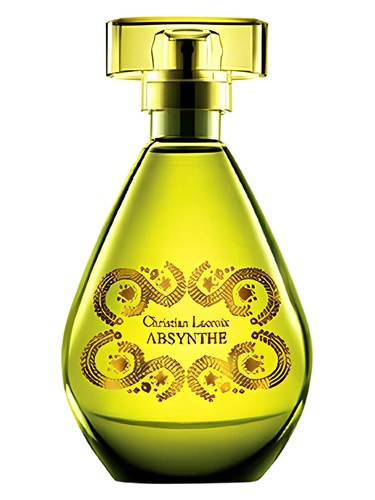
The first spray of Christian Lacroix Absynthe delivers exactly what its name promises—and yet nothing you''d expect from an Avon fragrance circa 2009. There''s an immediate herbal sharpness, that distinctive bitter-green bite of wormwood cutting through the air like a well-aimed secret. Anise follows close behind, creating that classic absinthe association, but before this becomes too literal, too costume-y, freesia softens the edges with its delicate, slightly soapy floralcy. This opening feels deliberately provocative, a knowing wink to the Belle Époque and its infamous green fairy, yet grounded enough to wear without feeling like you''ve wandered out of a Toulouse-Lautrec painting.
What strikes me most in these first moments is the audacity. This isn''t playing it safe with fruity florals or vanilla comfort—this is Lacroix flexing his avant-garde sensibilities even within the constraints of mass-market distribution. The aromatic accord dominates at a staggering 90%, and you feel every percentage point of it.
The Scent Profile
As Absynthe settles into its heart, the composition reveals its true ambition. Saffron enters with its leathery, almost medicinal warmth, a note that was still relatively adventurous in feminine fragrances of this era. It weaves through narcissus—that heady, slightly indolic white floral—while artemisia reinforces the wormwood''s herbal bitterness with a dusty, camphorous quality. Orchid makes an appearance, though it reads more as textural smoothness than distinct floral identity, tempering what could otherwise become overwhelmingly austere.
This is where Absynthe earns its 56% floral accord rating, but these aren''t your grandmother''s flowers. They''re shadowy, complex, tinged with green and spice. The 63% warm spicy accord begins asserting itself here, that saffron doing considerable work to bridge the gap between the aromatic top and what''s coming in the base.
The drydown is where the fragrance truly distinguishes itself from its absinthe-inspired opening. Those woody notes—listed at a perfect 100% accord dominance—emerge in force. Ebony wood and unspecified woody notes create a dark, almost resinous foundation, while myrrh adds that characteristic incense-like sweetness with slightly bitter undertones. Amber rounds everything out with warmth, earning its 80% accord presence, wrapping the earlier green-herbal sharpness in something golden and enveloping.
The journey from bright aromatic to deep woody-amber is surprisingly linear yet satisfying, each phase bleeding into the next without jarring transitions.
Character & Occasion
Here''s where Absynthe reveals itself as something of a chameleon. The data shows it as suitable for all seasons, and surprisingly, there''s truth to this claim. The aromatic-woody backbone gives it enough weight for autumn and winter, while the fresh spicy elements (49% accord) and that initial herbal brightness prevent it from feeling too heavy for warmer months.
The day/night split is intriguingly neutral—neither specifically marketed for day nor evening wear. In practice, this reads as a fragrance that defies the conventional wisdom of "office-appropriate" or "date night." It''s more about attitude than timing. This is for the woman who wants to smell interesting rather than simply pleasant, who appreciates that fragrance can be conversational without being confrontational.
The woody-aromatic profile skews slightly masculine by traditional standards, but worn on skin with confidence, it becomes a statement of sophisticated androgyny. This isn''t a perfume for someone seeking compliments from strangers—it''s for the wearer first, admirers second.
Community Verdict
With a rating of 3.87 out of 5 from 1,466 votes, Absynthe sits comfortably in "very good" territory. This is notable for several reasons. First, that vote count suggests genuine interest and availability—people are seeking this out and forming opinions. Second, the rating itself indicates a fragrance that delivers on its promise without quite achieving masterpiece status.
The score suggests a split audience: those who appreciate its daring composition rate it highly, while others likely find it too unconventional or perhaps expected more from the Lacroix name. That near-1,500-person sample size gives the rating real credibility—this isn''t a niche curiosity with fifty reviews, but a fragrance that''s been genuinely tested in the market.
How It Compares
The comparison set is revealing: Euphoria, Dune, Poison, Kenzo Jungle L''Elephant, and Ange ou Demon. What these share with Absynthe is a willingness to embrace woody, spicy, and oriental elements in unexpected ways. Like Dune, it has that slightly austere, mineral-woody quality. Like Poison and Kenzo Jungle, it doesn''t apologize for being bold. Like Ange ou Demon, it plays in that angel-devil duality of light florals against dark woods.
Where Absynthe distinguishes itself is in its aromatic herbal opening—none of its comparisons lean quite so heavily into that bitter-green territory. It''s arguably more wearable than Poison, less abstract than Dune, and more coherent than Jungle L''Elephant''s experimental tendencies.
The Bottom Line
Christian Lacroix Absynthe represents something increasingly rare: a designer-mass market collaboration that took genuine creative risks. That it was produced by Avon makes it all the more remarkable—and potentially more accessible than its comparisons. The 3.87 rating tells you this isn''t a safe blind buy, but rather a fragrance that rewards those whose tastes align with its woody-aromatic vision.
Should you try it? Absolutely, if you find yourself drawn to fragrances that challenge rather than comfort, if you appreciate herbal bitterness balanced with amber warmth, or if you''re curious about what Christian Lacroix''s olfactory imagination looks like when given unusual raw materials to play with. For the adventurous fragrance wearer seeking something distinctive without venturing into niche price territory, Absynthe deserves serious consideration—green fairy and all.
Critique éditoriale générée par IA